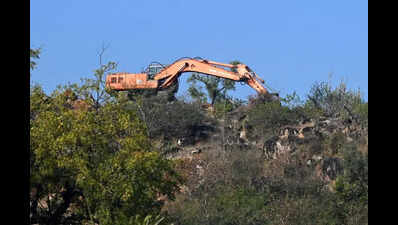
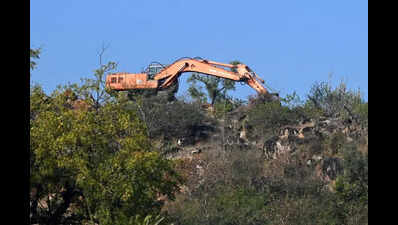
To counter the fierce backlash over the controversial definition of Aravalli hills, the Bhajan Lal Sharma govt Wednesday announced two major provisions for the conservation of the Aravallis and and desert ecology.Allocating Rs 130 crore for Aravalli conservation, Diya Kumari said 4,000 hectares of the hill region will be developed with permanent boundary walls, water conservation structures, and large-scale tree plantations.With nearly 80% of the 700-kilometre-long Aravalli range passing through 27 districts of Rajasthan, the move is expected to form the ecological backbone of the state. The hills play a crucial role in groundwater recharge, soil conservation, and climate resilience. “These measures are designed to protect the ecosystem while promoting sustainable livelihoods,” a senior govt official said.With the setting up of solar projects and wind parks resulting in large-scale tree felling, the budget has also mandated that 10% of land used for such projects must be mandatorily dedicated to tree plantation.As a measure to intensify greening, every panchayat will also have a “Namo Van” and a “Namo Nursery”, while modern garden oxygen zones will be set up in 16 districts. “A target has been set to plant 10 crore saplings by next year to enhance green cover and restore biodiversity. So far, we planted 19 crore trees under the Green Initiative programme. This enhances greenery in Rajasthan, and the Namo Van will further improve the state’s environment,” Diya Kumari said.The Budget also mandated strict action against illegal mining, and a Rs 1,000 crore land bank to compensate for damaged forest land, ensuring environmental restoration alongside legal compliance.The plan also includes the establishment of Natural Farming Centres of Excellence at Narendra Jobner Agricultural University to promote sustainable farming practices and improve soil health. Eco-friendly cremation centres will be set up in all districts to reduce environmental impact.To support long-term sustainability, the govt will launch a pilot project for carbon credit ratings, offering incentives for climate-friendly practices and sustainable land management.