

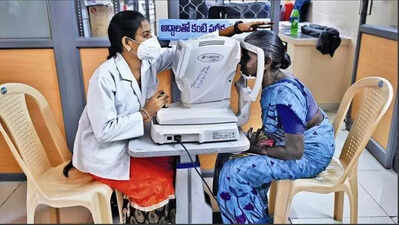
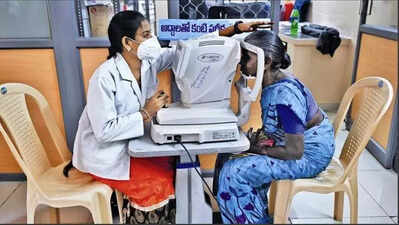
Hyderabad: Quality cataract care does not have to be confined to big city hospitals. When eye care services are taken closer to villages and patients are supported through regular follow-ups, cataract surgeries performed in rural settings can restore vision just as effectively, a new study has shown.According to research published in the ‘Indian Journal of Ophthalmology’, cataract surgeries carried out at rural secondary eye care centres have delivered strong visual outcomes, challenging the long-held belief that advanced eye care is possible only in urban hospitals. The study was conducted by doctors from the LV Prasad Eye Institute (LVPEI), Hyderabad. The researchers analysed 1,23,685 cataract surgeries performed between 2016 and 2020 at 20 rural secondary eye care centres operated by LVPEI across four Indian states, including Telangana. Cataract remains the leading cause of blindness globally, and in rural India, treatment is often delayed due to limited access to hospitals, lack of awareness, and financial constraints. Women and the elderly are particularly vulnerable. Effective techniqueThe findings were encouraging. More than 91% of patients regained good vision following surgery, while nearly 94% achieved functional vision at their final follow-up. Most patients were over 60 years old, and more than half were women. A majority of the procedures were carried out using manual small incision cataract surgery, a technique widely adopted in rural settings for its safety, effectiveness, and affordability. Cases with poorer outcomes were largely associated with advanced age, pre-existing eye conditions, or surgical complications. The study also highlighted a critical challenge: nearly 20% of patients did not return for follow-up visits. Those most likely to miss follow-ups were elderly patients, women, and individuals who had undergone free surgeries, pointing to persistent social and economic barriers. Economic barriers“Screening and follow-up care should be provided at nearby vision centres, while surgeries should be done at secondary centres located close to rural communities. The findings show that while quality cataract care is possible in rural areas, social and economic barriers still affect follow-up and long-term outcomes,” Dr Rohit Khanna, network director for the public health unit at LVPEI and one of the study’s authors. “Setting up permanent eye care centres in rural areas improves access, quality, and follow-up care, in line with national and global eye health goals,” he further said.Policy initiativesThe LVPEI study’s conclusions align with recent policy initiatives in the state. Last month, health minister Damodar Raja Narasimha announced that the state govt would establish eye care clinics across Telangana to expand access to continuous eye care services. Unlike short-term eye camps, these clinics will provide round-the-clock care, with Sarojini Devi Eye Hospital in Hyderabad serving as the central hub for coordination and management.The scale of cataract care in the state has already grown significantly. In 2024 and 2025 combined, a total of 6,12,973 cataract surgeries were performed. During the same period, eye screening was conducted for 33,65,832 school students, and spectacles were distributed to 76,176 children who required vision correction. Together, the findings underline a clear message—sustained, locally rooted eye care systems can significantly reduce preventable blindness and bring sight-saving treatment within reach of rural communities.