
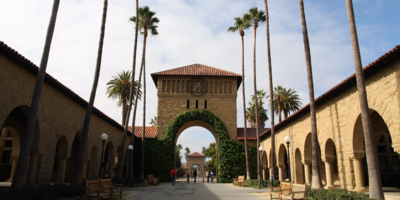
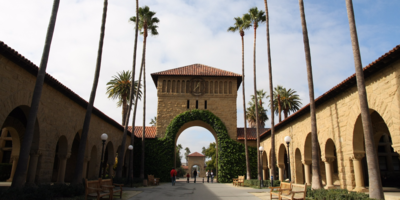
The Council on American-Islamic Relations has again designated Stanford University a “hostile campus” in its 2025 Hostile Campus Ratings Report, marking the second consecutive year the university has received the label.The report, released on Feb. 11 and shared with The Stanford Daily under embargo, evaluated 51 universities on administrative policies, leadership decisions, disciplinary actions and public statements related to the rights of students affected by Islamophobia. Stanford received an overall score of 37 percent.According to the report, campuses were classified as “unhostile” with scores of 90 percent or above, “under watch” between 70 and 89 percent, and “hostile” below 70 percent. None of the institutions evaluated reached the unhostile category. The average score across universities was 37.667 percent.
How the ratings were determined
The Council on American-Islamic Relations, established in 1994 to advance Muslim American civil rights, said points were deducted when institutions failed to develop policies addressing Islamophobia, inadequately responded to student reports of harassment or maintained weak free speech protections.The findings also drew from the organization’s 2024 Campus Climate survey on Muslim student experiences. The report cited incidents dating back to 2023 in which Muslim students reported Islamophobia or racism.In addition, the report criticized Stanford’s response to campus protests in 2024, including arrests, the pressing of charges and the suspension of students who barricaded themselves inside the university president’s office.
Free speech and protest policies under scrutiny
University spokesperson Angie Davis told The Stanford Daily that “Free speech at Stanford University is central to our mission of education and research and is legally protected under California law.” She added that the university maintains viewpoint neutral time, place and manner rules intended to prevent disruption of operations, consistent with United States Supreme Court interpretations of the First Amendment.Stanford allows community use of several campus spaces. White Plaza may be used without advance permission, while Meyer Green, Manzanita Field and Panama Street Clearing require advance registration. University policy largely prohibits overnight camping and disruptions to classes or other institutional business.Jeffrey Wang, legal representative for the Council on American-Islamic Relations’ San Francisco Bay Area office, said at a 2025 press conference that Stanford’s free speech guidelines could further limit discourse around Palestine and student activism, according to The Stanford Daily.
Student perspectives
Iman Deriche, a member of Students for Justice in Palestine who worked for the Council on American-Islamic Relations last summer, told The Stanford Daily she was not surprised by the repeated designation. She cited what she described as frequent administrative scrutiny of student organizing activities, including communications regarding logos and event coordination.In a February 2025 statement, the Council on American-Islamic Relations said Stanford’s actions had a chilling effect on campus activism and created an environment of fear for students advocating against Israel’s actions in Gaza.Deriche also said the student group faced pushback when coordinating events, including a vigil held on Oct. 7 to center lives lost in Palestine.
A broader campus climate debate
The renewed designation places Stanford within a wider national debate over campus speech, protest regulation and the treatment of Muslim and pro-Palestinian students. For the Council on American-Islamic Relations, the rating reflects institutional responsibility for campus climate. For Stanford, the issue centers on balancing free expression with operational continuity and legal obligations.As universities continue to navigate activism related to Israel and Palestine, ratings such as these are likely to remain part of the public record. Whether they lead to policy adjustments or further dispute will depend on how institutions and advocacy groups interpret the boundaries between safety, protest and speech.