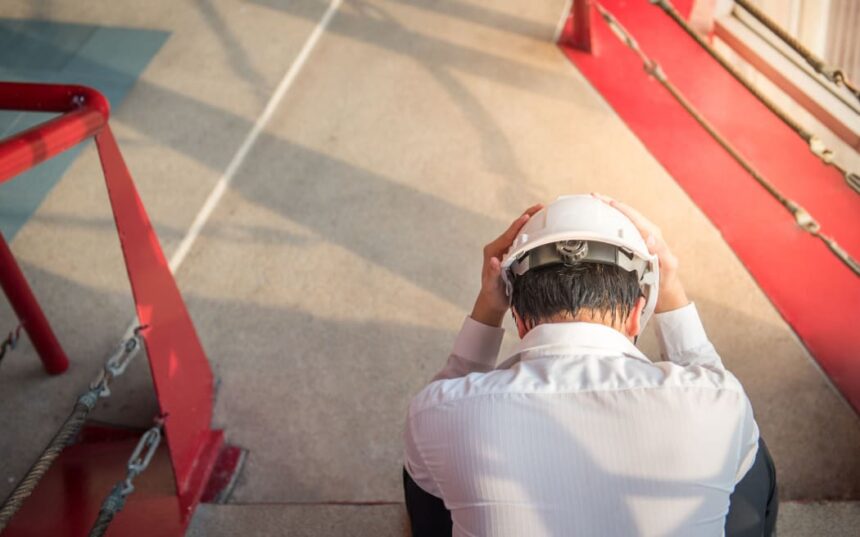

Minister for Workplace Relations Brooke van Velden says she is looking to cut health and safety red tape for low-risk businesses.
Photo: 123RF
A work safety group says a new bill before Parliament is likely to increase harm to people and cause cost blowouts from accidents.
The amendment bill is the first big change proposed in a decade to health and safety laws brought in after the Pike River disaster.
The bill sets out to cut death and injury rates, and compliance costs, by focusing on the most serious critical risks and reducing confusion.
But the Institute of Safety Management said this ignored the fact most workplace harm was not at the critical end.
“All of the back injuries, the psychological harm, violence and aggression, all of the things that are the most common, the most costly and overall the most harmful, wouldn’t meet the definition of critical risk,” spokesperson Mike Cosman told RNZ on Tuesday.
The bill would increase compliance costs for firms that would need to keep checking if they qualified as “small” enough under the law to avoid managing many risks, he added.
The bill adds a new definition of critical risk and businesses would be responsible for checking if it applied to them.
The official disclosure about the bill said the law in place since 2016 put too many duties on to businesses, and the “broad nature … has led to confusion and overcompliance” with many finding it difficult to prove to regulators they were complying.
“Focusing the system on critical risks is designed to direct attention and resources towards preventing serious workplace harms and away from more minor issues,” it said.
The government aims for the bill to enable stronger approved codes of practice (ACOPs) within particular high-risk industries to help tamp down on risks. The forestry industry recently launched a new ACOP.
Cosman retorted that the bill should not take an “either-or” approach.
Most businesses wanted to do the right thing but “the clear message is if you’re a small firm, you don’t have to provide instruction, training, supervision, even PPE for your workers … unless it’s in relation to a critical risk”, he said.
“So for those firms who are looking for a way out, this will provide it.”
Workplace Relations and Safety Minister Brooke van Velden has talked about dealing to the “huge culture of fear” around Worksafe by changing it to prioritise education over punishment.
However, a common theme of criticism for years had been that Worksafe was too soft and, for instance, did not go after company directors and executives enough.
Cosman said the bill reflected a dogma that compliance costs were inherently bad, rather than reflecting accurately the submissions to a nationwide roadshow and review that van Velden fronted.
“We see this as a significant missed opportunity to improve New Zealand’s patchy record on health and safety,” he said in a statement.
“These changes are likely to increase harm to workers, families, businesses, communities along with cost blowouts for the Government books in ACC, health and welfare.”
Sign up for Ngā Pitopito Kōrero, a daily newsletter curated by our editors and delivered straight to your inbox every weekday.