


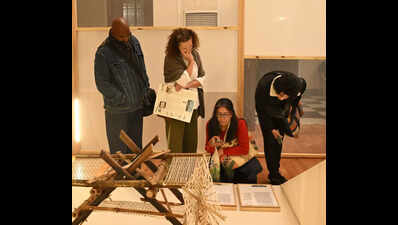
Has the climate change narrative started to feel redundant? If yes, a range of refreshing artworks can change that perspective. At Sustaina India 3: Bitter Nector, curated by Thukral and Tagra and presented by CEEW, fellows and invited artists examine the politics and complexities in fruiting cycles and food systems.
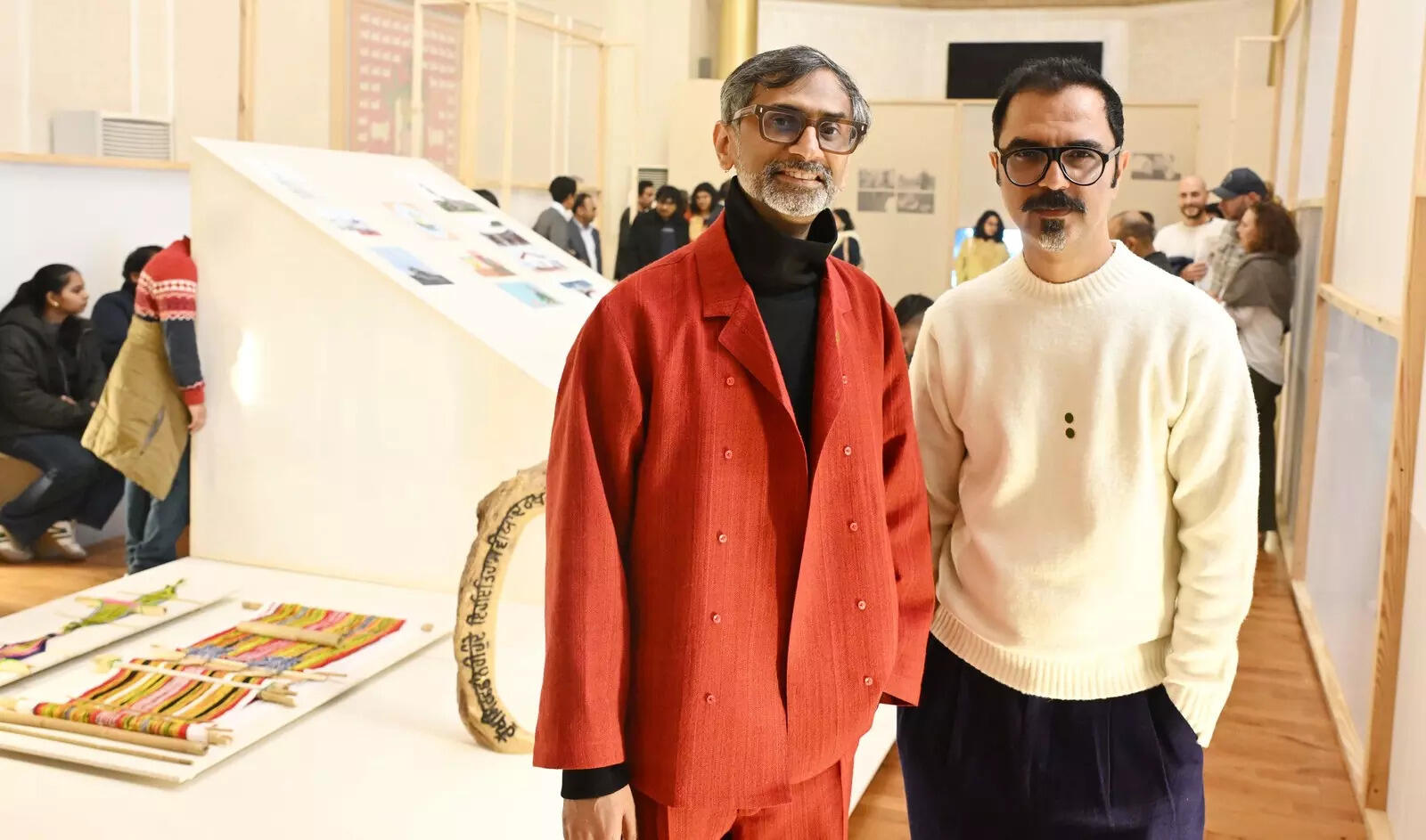
Jiten Thukral and Sumir Tagra
From the impact of the changing fruiting cycles to erratic shifting of seasons, the exhibition traces the impact of climate change through art, material, memory and lived experiences. Sumir Tagra says, “These artists have worked on people’s changing relationships with milk, mangoes and apricot, each rooted in a distinct geography. Each of their work is a mean of design, policy making, architecture, arts, and cultural resonance.”
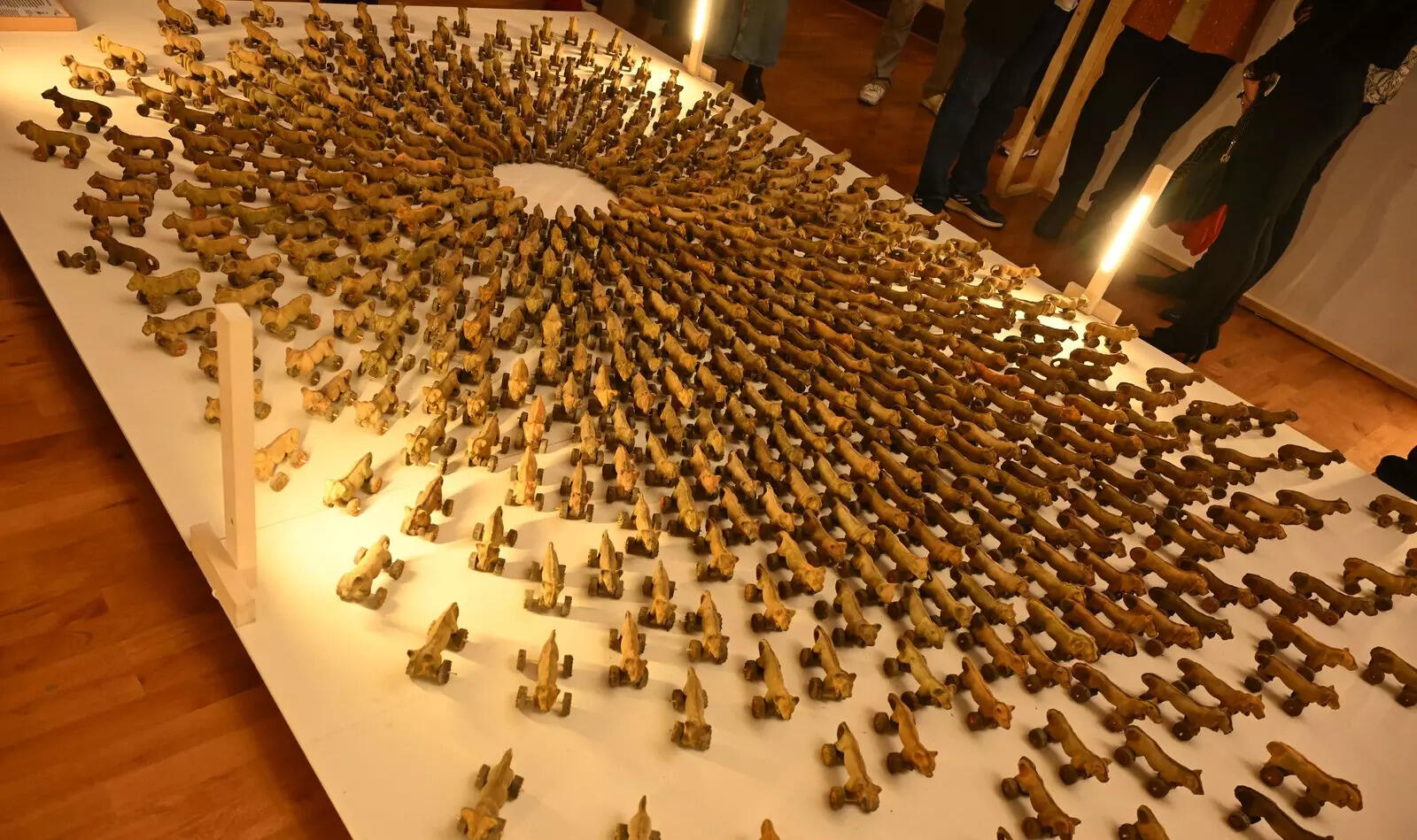
Mrugen Rathod’s Mari Vaadi ma
He adds, “The exhibition allows the viewers to bend down to see the work, closer to the earth. Discarded bedsheets from a hotel chain have been repurposed as walls, and along with discarded agro nets used on fruiting trees.”
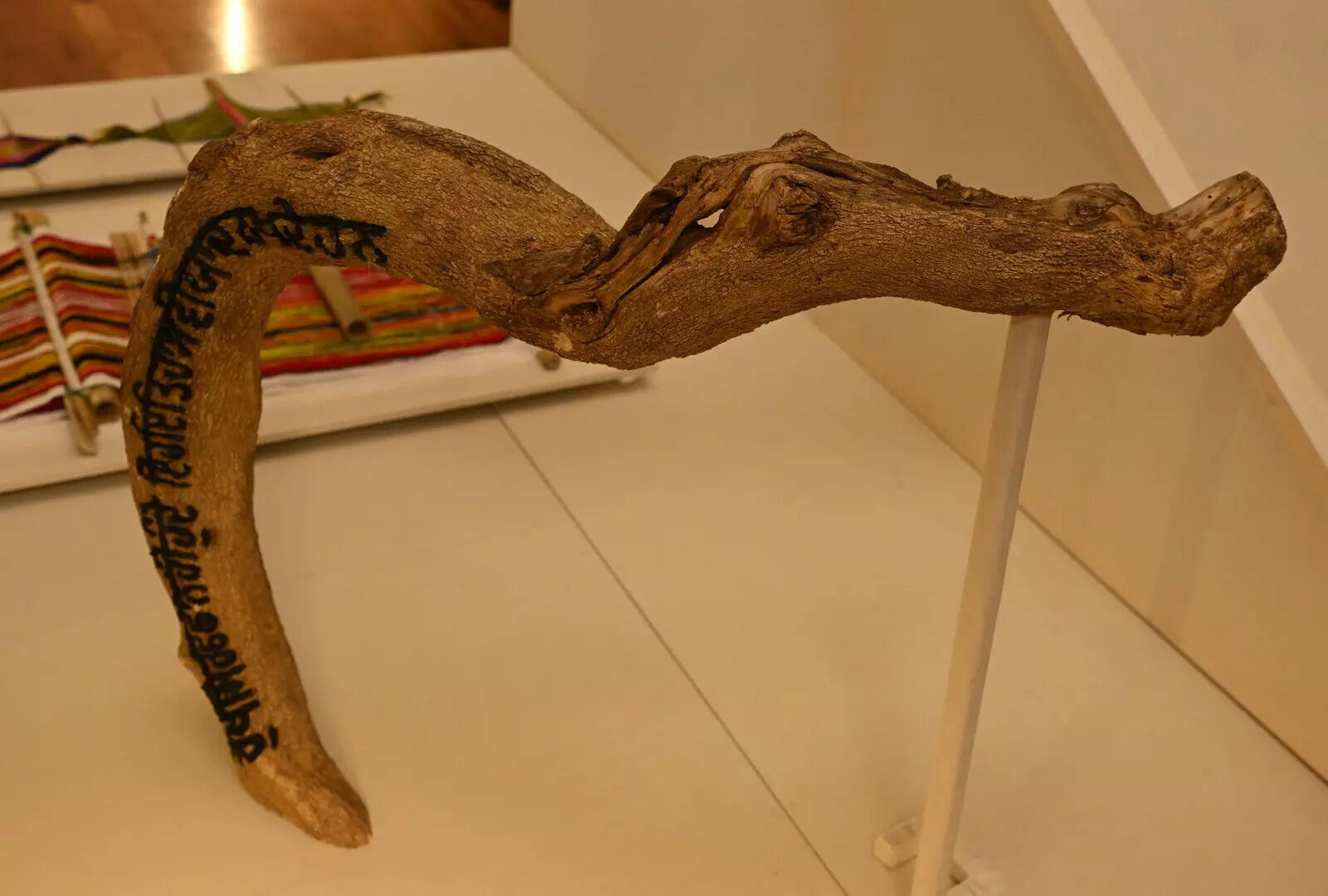
Harmeet Singh Rattan’s Pickled – Diptych
‘The idea is to make sustainability cooler and easier to talk about’ Climate action becomes mainstream when it enters everyday decisions and spaces. Mihir Shah, director of strategic communications at CEEW, says, “Sustaina approaches the climate change story with a mixing of the science and the art world, and bridging each other to tell the story better. This edition gives people a good entry point to start exploring climate change and their relationship with nature as well. With such collaborations, the idea is to make sustainability cooler and easier to talk about on dinner tables.”
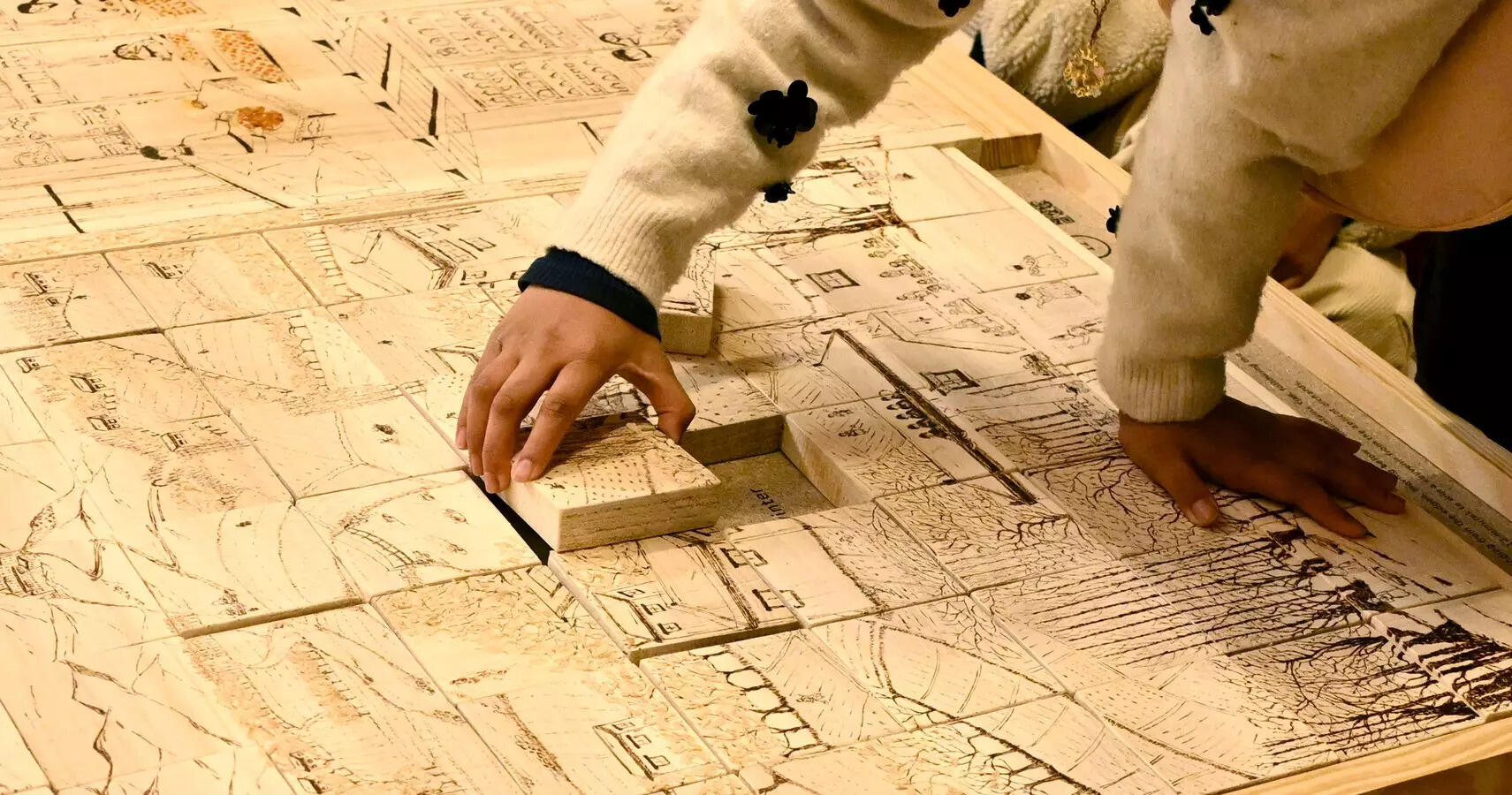
Anuja Dasgupta’s work, titled (Re)Frame, traces the apricot cycle in Ladakh
The exhibition approaches the climate change story with a mixing of the science and the art world, and bridging each other to tell the story better. This edition gives people an entry point to start exploring climate change and their relationship with nature as well
Mihir Shah, director of strategic communications, CEEW
In Mrugen Rathod’s Mari Vaadi ma, 500 kesari lion sculptures register the shifting distribution of the species in Gir Forest, now dominated by mango trees – altering the ecology from being a forest to orchards. Anuja Dasgupta’s work, titled (Re)Frame, traces the apricot cycle in Ladakh. An interactive puzzle board, crafted from repurposed poplar wood, helped visitors understand that how the fate of the apricot is pressured by climate crisis, an ongoing reality disturbing Leh region’s weather pattern. Harmeet Singh Rattan collaborated with his father Amarjit Singh, a sign painter, and showcased his artwork – a fallen piece of bark of desi keekar (acacia). A tasting menu was centred around the fruit of the keekar tree, and complemented by hand-painted bowls made of clay, each having Punjabi poetic verses written over it with keekar ink
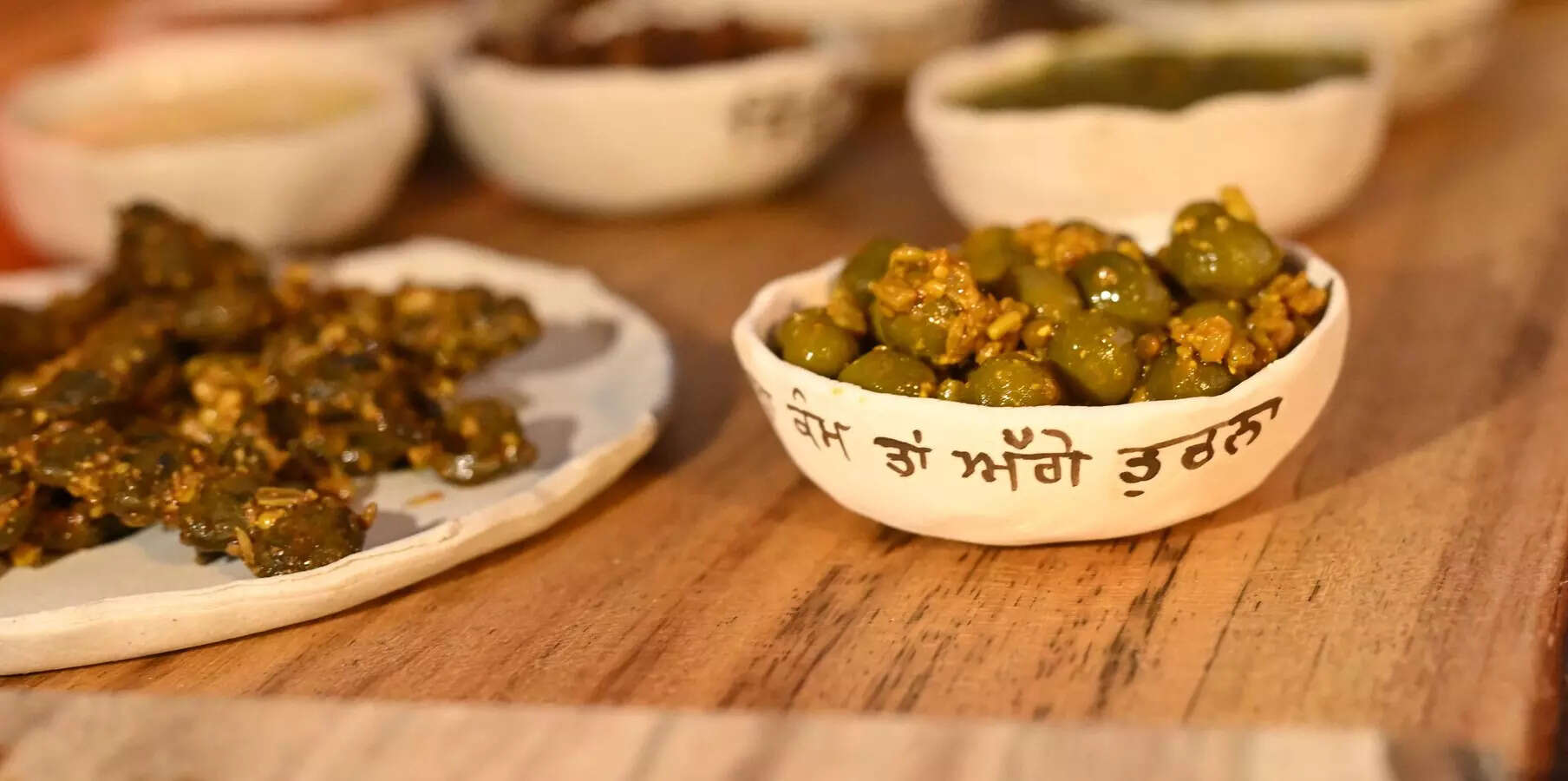
The tasting menu, prepared by Harmeet, was centred around the fruit of the keekar tree
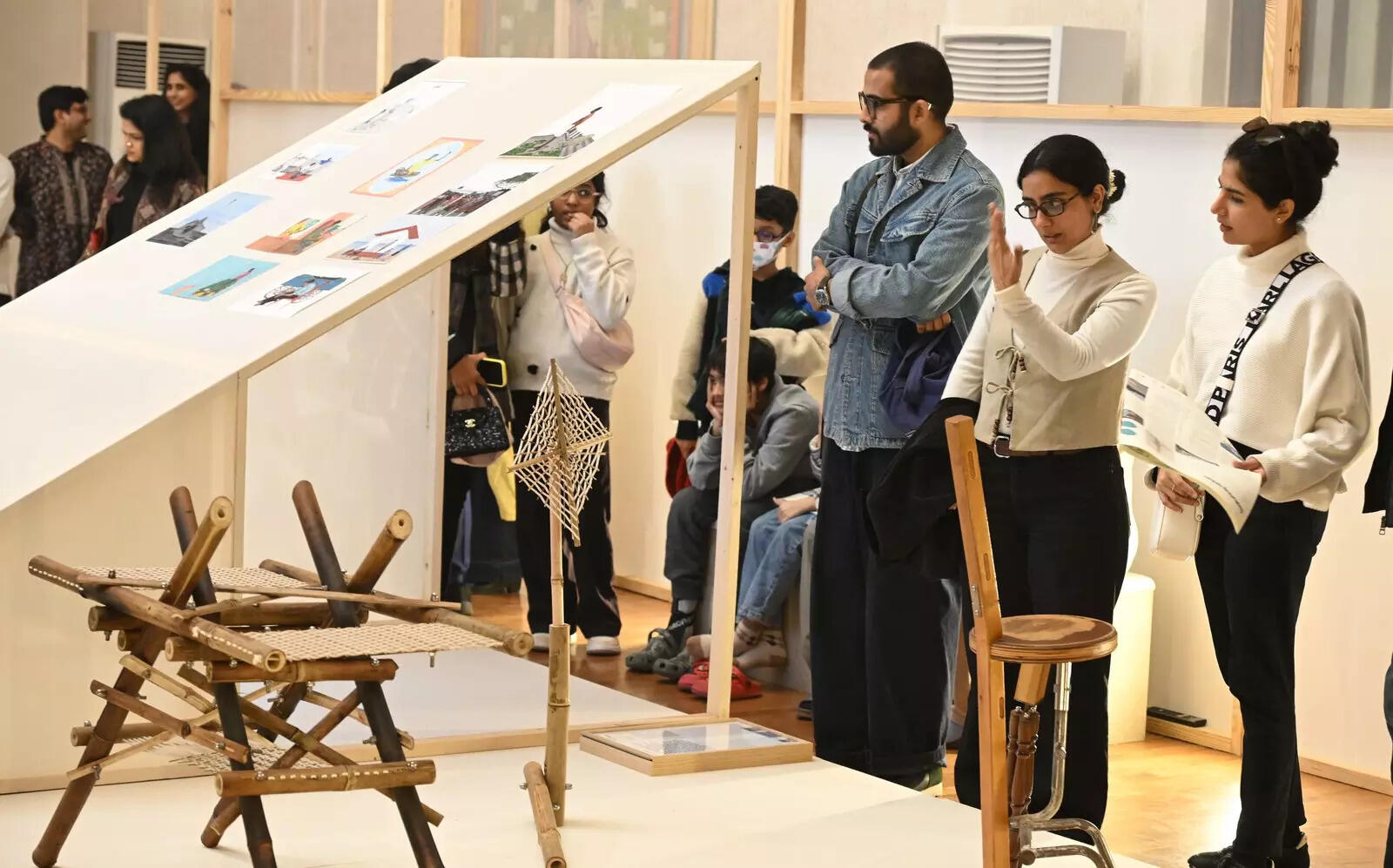
Visitors at Sustaina