The UK issued Eritrea with an ultimatum on Thursday, telling the African nation it must either accept the return of illegal immigrants or lose all access to British visas.
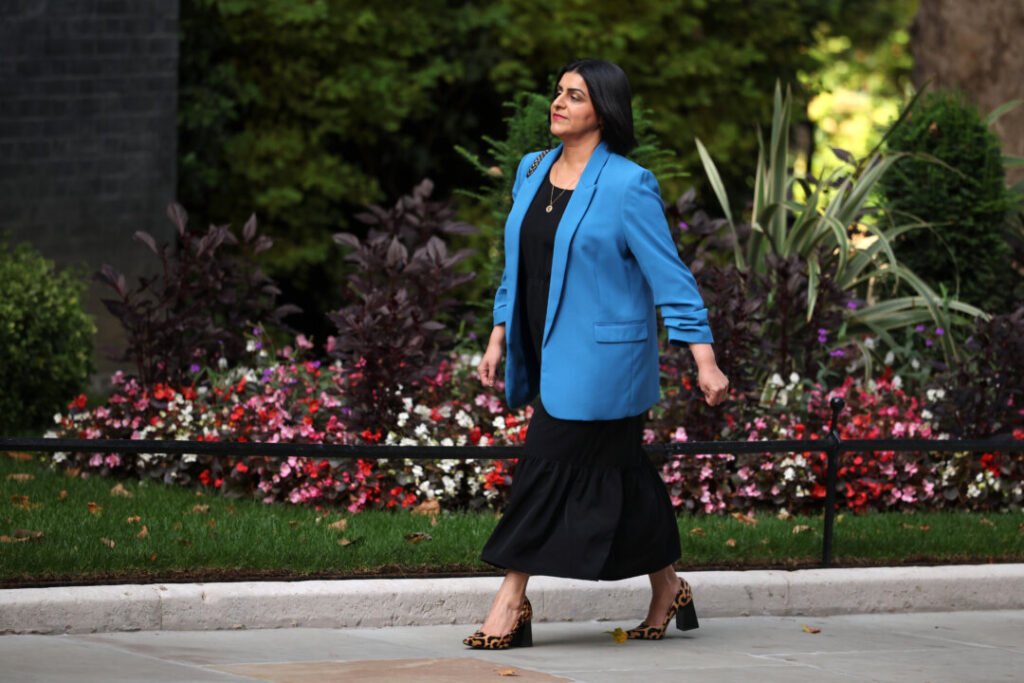
British Home Secretary Shabana Mahmood announced the move after the Eritrean government earlier this year withdrew its cooperation with London on the return of its citizens who are illegally in the UK.
According to the British Home Office, the UK’s interior ministry, Eritrea has for months “refused to engage constructively” in private negotiations to improve the facilitation of illegal immigrant returns.
As a result, as of Oct. 15, the UK has stripped Eritrean VIPs and officials of fast-track access to UK visas, and barred the nation’s diplomats from traveling 60 kilometers (37 miles) beyond London without permission from the British Foreign Office.
The restrictions on diplomats’ travel within the UK, according to the statement, mirror similar prohibitions placed on the UK’s diplomats stationed in the Eritrean capital of Asmara.
Mahmood said that the country, located on the Horn of Africa, along the continent’s Red Sea coast, has had “every chance to accept the return of criminals and those with no right to be in the UK. Unlike other countries, it has refused.”
Related Stories


“My message to the Eritrean government is simple: take back your nationals or face a complete ban on your citizens entering the UK,” she added, saying she would not hesitate to impose further measures on Eritrea, or other countries refusing to cooperate with the UK over the issue.
Eritreans made up the largest group of migrants entering the UK illegally via small boats across the English Channel in the year ending June 2026, accounting for 18 percent of all arrivals, according to figures from the House of Commons Library.
The remaining four of the top five countries of origin for small boat migrants were Sudan (13 percent), Afghanistan (12 percent), Somalia (12 percent) and Iran (11 percent).
The small boat crossings have been a perennial issue in the UK for almost a decade, with more than 200,000 illegal immigrants making the dangerous journey from the northern coast of France since 2018, according to Home Office data.
The Home Office said that Mahmood had, in her first week in office, threatened Eritrea and three other countries, Angola, Namibia, and the Democratic Republic of Congo, over the issue.
Unlike Eritrea, however, the other African nations have since taken steps to improve cooperation with London on illegal immigrant and criminal returns, according to the statement.
The Eritrean Embassy in London said in a statement dated Oct. 14 that it categorically rejects the allegation that it “abruptly” withdrew cooperation on the issue.
“Eritrea does not accept the forced return of its citizens and has duly communicated this fact to British government officials on various occasions,” the embassy said.
It said that despite “repeated requests for constructive discussion with relevant UK authorities on the dignified return of its citizens, the UK has shown no interest to engage in meaningful and appropriate dialogue.”
The embassy accused the UK of deciding to politicize its asylum system and trying to undermine the government of Eritrea.
On Oct. 1, Asmara severed all diplomatic ties with Addis Ababa after Ethiopian government forces clashed with rebels in the Tigray region, which borders Eritrea.
Eritrea, a former Italian colony, was federated with Ethiopia in 1952 before being annexed by the country in 1962, prompting the Eritrean People’s Liberation Front and other groups to fight a long war to gain independence from Addis Ababa.
Eritrea’s ownership of the Red Sea coast leaves Ethiopia completely landlocked.
The two countries later fought a border war over the Badme Triangle from 1998 to 2000.