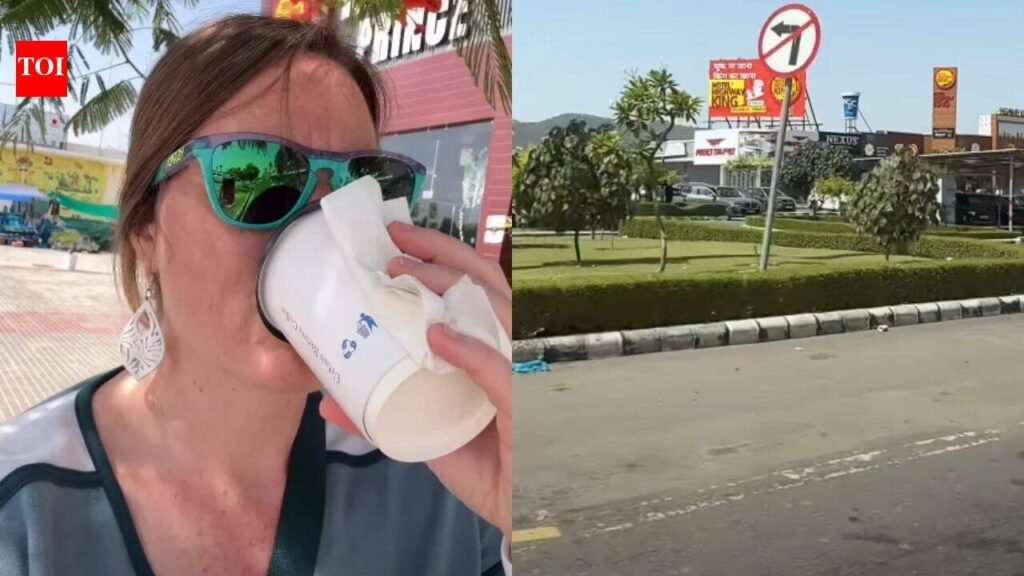

A road trip that once meant rough roads, uncomfortable journeys and carefully planned bathroom breaks has become a very different experience for one foreign traveller returning to India after 17 years. Driving from Jaipur to Delhi, she was surprised by the improvements she encountered along the way, from smoother highways to cleaner washrooms and convenient places to stop for coffee.The traveller, who posts on Instagram as @stayingboundless, shared a video documenting her experience on the Delhi-Mumbai Expressway. Her observations struck a chord with viewers, prompting a discussion about how India’s road infrastructure has changed and what still needs to improve. “Seventeen years ago, a road trip in India filled me with dread,” she wrote, recalling the discomfort of travelling on rough roads and the difficulty of finding clean facilities along the route. Her latest journey, however, offered a striking contrast to those memories.
‘You planned your water intake around the bathrooms’
For the traveller, the difference was not just about reaching her destination faster. It was also about the comfort and convenience of the journey itself. Looking back at her earlier trips, she described hours spent bouncing along uneven roads and struggling to find decent places to stop. Access to clean washrooms was a particular concern, making even something as simple as drinking water a matter of planning.“You planned your water intake around the bathrooms or the lack of them,” she added. This time, she found the experience considerably more comfortable. The smoother road surface, cleaner bathrooms, organised rest stops and availability of coffee made a strong impression on her. “It’s one of the most impressive changes I’ve seen in India,” she wrote. Her reaction highlights an aspect of road travel that can easily be overlooked. While highways are often judged by their length, speed limits and travel times, facilities along the route can also shape how people experience long journeys.
What makes the Delhi-Mumbai Expressway significant?
The Delhi-Mumbai Expressway, also known as National Expressway 4 (NE 4), is a major infrastructure project designed to improve road connectivity between the national capital and Mumbai. The planned expressway stretches approximately 1,350 km. Once the full route is operational, it is expected to reduce the road journey between the two cities from around 24 hours to approximately 12 hours, although actual travel times will depend on the route, traffic and conditions.The project is being developed in sections, and not every stretch is operational yet. Travellers therefore need to check which sections are open and plan their journeys accordingly. The expressway is also designed to include wayside amenities at 93 locations. These are planned to offer facilities such as hotels, food courts, retail shops, ATMs, fuel stations and electric vehicle charging points.For people travelling long distances, such stops can make a considerable difference. Access to food, restrooms, fuel and places to take a break can make a journey more manageable, particularly for families and those travelling with children. However, the facilities available can vary from one operational stretch to another, so travellers should verify what is open along their route before leaving.
‘At least efforts are being made’: Internet reacts
The traveller’s video prompted viewers to share their own experiences of road travel in India. Several agreed that infrastructure had improved over the years, while acknowledging that the country still has considerable work to do. “People don’t realize how much things have changed compared to before. A long way to go still, but at least efforts are being made,” one person commented.Another viewer shared a recent experience of travelling on the expressway, writing, “Oh yes. Just last month. Had coffee at Starbucks on the way.” For some, the availability of organised rest stops and familiar food and beverage outlets reflected how highway travel has become more convenient on certain routes. Others, however, argued that such amenities should be treated as basic requirements rather than extraordinary achievements. One commenter wrote, “This is basic. A loooong way to go !”
Better highways are only part of the picture
The discussion also moved beyond expressways to the everyday infrastructure that people rely on in smaller towns and rural areas. One commenter from rural India noted that highways connecting nearby cities had improved but said other problems remained, including waste management, proper drainage and footpaths. The observation points to the difference between improvements on major transport corridors and the quality of infrastructure people experience in their neighbourhoods. Smooth expressways can make intercity travel faster, but local roads, pedestrian facilities, drainage and waste disposal remain important to everyday life.For the traveller, the journey from Jaipur to Delhi was a reminder of how much can change in 17 years. For viewers, it also opened a broader conversation about the progress made in India’s road infrastructure and the work that remains. Her video captures a personal experience rather than a complete picture of road conditions across the country. Still, it shows how improvements in highways and roadside facilities can change not only how quickly people travel, but also how comfortable they feel along the way.