Hong Kong health authorities have implemented screening measures for Russian arrivals after a laboratory worker at an anti-plague research institute in Siberia died from pneumonia, following some regions in China issuing plague risk alerts.
Hong Kong’s Centre for Health Protection (CHP) of the Department of Health said on Oct. 12 that, as a precautionary measure, it had implemented a series of control and prevention measures to guard against imported plague cases. Hong Kong health authorities are separate from the Chinese regime’s health authorities on the mainland.
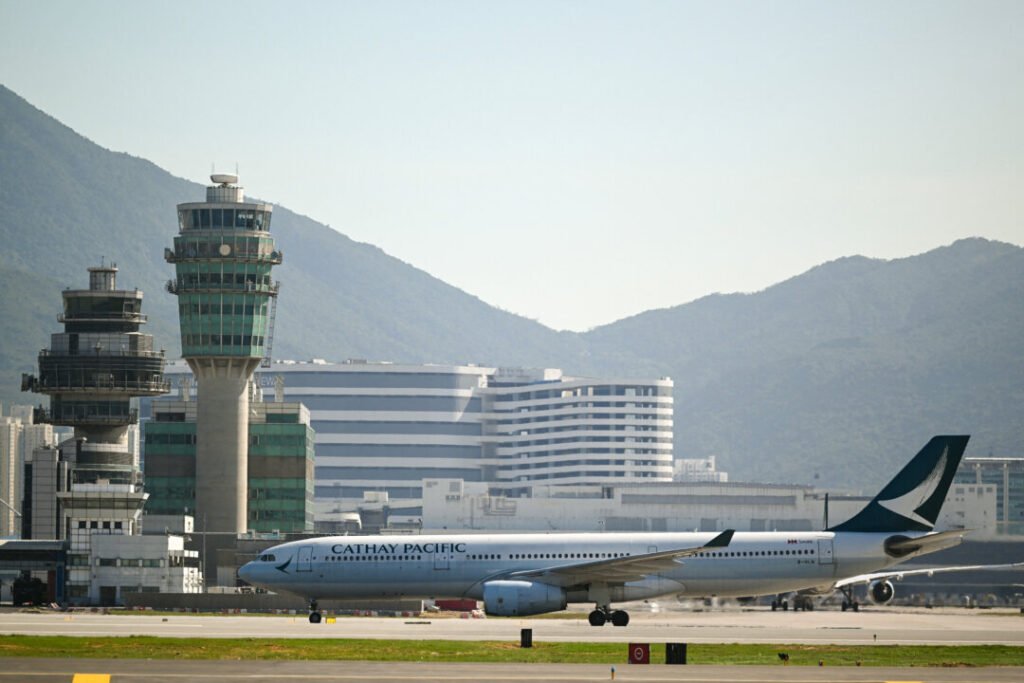
These measures include temperature checks at airport gates for passengers arriving on flights from Russia, conducting health assessments for passengers exhibiting symptoms, and transferring them to public hospitals for further testing.
The CHP will also display signage and broadcast announcements in the airport arrival area and through airlines to urge passengers who have visited Irkutsk Oblast of Siberia, Russia, within the past 14 days to declare their travel history.
The center will also provide Airport Authority Hong Kong and airlines with the latest information regarding the case in Russia, and urge airlines to remind their flight crews to strictly enforce established prevention and control measures if they identify suspected cases on their flights.
In addition, the CHP will also send letters to all doctors and hospitals in Hong Kong, reminding them to remain highly vigilant and to strengthen surveillance. Any patient who has visited Irkutsk within 14 days before the onset of symptoms and has developed pneumonia of an undetermined origin must immediately report to the centre for further testing.
Related Stories


The CHP’s new measures are in response to the recent death of a lab worker from pneumonia of unknown origin at the Irkutsk Anti-Plague Institute of Siberia and the Far East in Russia, which has drawn widespread international attention.
The quarantine was lifted on Oct. 8 by Russian officials.
Irkutsk Gov. Igor Kobzev stated that the cause of death was pneumonia of unknown origin.
Soon after Shipilova’s death, Russia’s neighboring countries—including Uzbekistan, Kazakhstan, Kyrgyzstan, Tajikistan, and Mongolia—stepped up quarantine measures and testing to prevent a potential epidemic from spreading to their territories.

A view of the entrance to the grounds of the anti-plague institute in the city of Irkutsk, Russia, on Oct. 6, 2026. AFP via Getty Images
International Concerns
Maria Van Kerkhove, the WHO’s director of epidemic and pandemic management, asked for more information at a news conference on Oct. 7. “We would like more information to understand which laboratory tests were conducted, which pathogens were evaluated, and if this individual didn’t die from plague, then then how did she die?”
Russian authorities haven’t given any information about the exact cause of death of Shipilova besides “pneumonia of unknown origin.”
The WHO said it will continue to monitor the situation and assess any potential public health implications as further information becomes available.

This undated photo, released in 2019 by the Irkutsk Anti-Plague Research Institute of Siberia and Far East, shows institute workers in a lab. The Irkutsk Anti-Plague Research Institute of Siberia and Far East via AP
Hong Kong has now stepped up monitoring of travelers arriving from Russia, which shows that “people do not trust the official statements from Russia,” Dr. Jonathan Liu, a professor of Chinese medicine at Georgian College in Canada, told The Epoch Times.
Xiaoxu Sean Lin, a former U.S. Army microbiologist and associate professor of biomedical science at Fei Tian College Northern Campus in New York, called on Russian officials to release specific information about what medication and treatment were given to Shipilova, as well as the results of her PCR and genetic testing.
Experts said they believed that with modern testing technology, the Russian authorities should know the exact cause of death by now. “In this era of advanced molecular biology, the situation cannot simply be dismissed as ‘pneumonia of unknown origin,’” Lin told The Epoch Times.
Other questions also remain, such as what prompted the extensive monitoring of Shipilova’s contacts. “Official diagnoses remain vague, yet disease control measures were extremely strict. This discrepancy itself requires further explanation,” Lin said.
Besides the Russian government’s lack of transparency, the international community’s concerns were also fueled by possible links to biological weapons.
The U.S. intelligence community’s annual assessment report in 2025 identified Russia as one of a few countries in the world that have a clandestine biological weapons program. The former Soviet Union included Yersinia pestis, the causative agent of plague, in its armamentarium.
Marshall Billingslea, who served as President Donald Trump’s special presidential envoy for arms control at the State Department, revealed on the social media platform X on Oct. 6 that he worked in the 1990s with Ken Alibek, “the former No. 2 in the Soviet biological weapons program, after he defected to the US.”
“He claimed that they had engineered a strain of plague that was antibiotic-resistant & that they had worked on plague chimeras (fusing 2 or more pathogens). He specifically called out Irkutsk for being involved in the [biological weapons] program,” Billingslea wrote in the post.
“This outbreak is deeply worrisome. This may not be just ‘the plague.’ It may be far worse.”
Luo Ya and Xia Song contributed to this report.