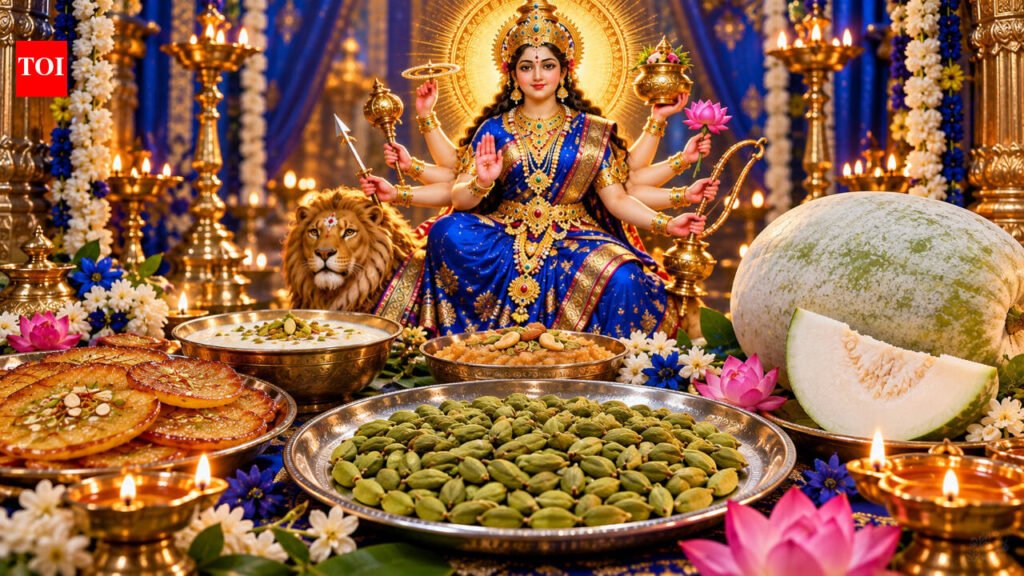
A hundred and eight green cardamom pods arranged on a steel plate form the basis of a traditional remedy for creativity associated with Maa Kushmanda. It is a small, fragrant ritual, and it is especially relevant to Wednesday, 14 October 2026, when she is worshipped on the Chaturthi tithi (lunar day) of Shardiya Navratri. The colour of the day is royal blue.
Where creativity, fertility, and inner energy meet
Tradition associates Maa Kushmanda with creativity, fertility, and the awakening of inner energy, as well as with spiritual and material well-being. When a devotee turns to her, the prayer is not only for outward progress. It also touches the quieter realm in which energy gathers and becomes steady.Creativity needs a clear channel. Fertility calls for protection and grace. Inner energy needs awakening. Worshipping Maa Kushmanda is believed to support all three, with devotion at the centre. The mantra, offering, and prasad (blessed food) are all part of the practice through which devotees seek her blessings and carry that sense of purpose into their daily lives.
The heart chakra and her place within it
Maa Kushmanda is said to preside over the Anahata chakra, the heart centre located near the middle of the chest. As the body’s central energy centre, it holds a special place in spiritual traditions. Worship in her name is believed to help awaken it.Such an awakening is not considered a casual event. It calls for faith, attention, and steadiness, with the heart opening gradually through her grace.
Two remedies: One for creativity and one for protection
For creativity, devotees are encouraged in some traditions to offer 108 green cardamom pods to the Goddess. Recite her mantra while offering the pods one at a time. Once all 108 have been offered, leave them before the Goddess for some time. Later, receive them as prasad.Whenever you sit down to write or engage in creative work, you may place one cardamom pod in your mouth, following the traditional practice. Some families also believe this ritual is beneficial for children.A separate traditional remedy is described for women who have experienced repeated miscarriages. The practice involves offering malpua (a pancake soaked in sugar syrup) and the Kushmanda fruit, or ash gourd. Devotees chant the Goddess’s mantra, cut the gourd as part of the ritual offering, and drink its juice.Followers of this tradition believe that the mantra and offerings invoke divine protection. However, this is a matter of religious faith, not a guarantee of any outcome. Anyone experiencing recurrent miscarriages should seek appropriate medical evaluation and care; devotional practices should complement, never replace, professional medical advice.
Root, seed, and hymn: The mantras before the offering
Reciting these mantras is believed to help devotees move forward with a joyful and creative spirit.
- The Mool Mantra (root mantra): ॐ देवी कुष्माण्डायै नमः। (Om Devi Kushmandayai Namah.)Meaning: I bow to Mother Kushmanda.
- The Beej Mantra (seed mantra): ॐ ऐं ह्रीं देव्यै नमः। (Om Aim Hreem Devyai Namah.)Meaning: I bow to the Divine Goddess, Adishakti, and seek her blessings for knowledge, energy, and spiritual strength.
- The Stuti Mantra (hymn of praise): Ya Devi Sarvabhuteshu Kushmanda Rupena Samsthita, Namastasyai Namastasyai Namastasyai Namo Namah.Meaning: Repeated salutations to the Goddess who resides in all beings in the form of Maa Kushmanda.
- A mantra for advanced practitioners: Om Yam.Some traditions reserve this mantra for practitioners engaged in yoga and tantra. Most household devotees may choose to focus on the other devotional mantras instead.
Count the cardamom pods slowly. There is no hurry. Let each offering become an act of devotion, and allow the ritual to unfold with patience, faith, and a peaceful mind.