Lucknow’s cultural landscape is undergoing a subtle but significant shift. A city long associated with chikankari, nawabi architecture and its syncretic traditions is increasingly becoming a space where heritage and contemporary art coexist with technology. Museums are being reimagined, independent galleries are opening their doors to younger audiences and immersive experiences are giving Gen-Z new reasons to engage with the city’s cultural past.For a generation accustomed to reels, gaming and digital experiences, art is no longer necessarily something to be viewed from a distance. In Lucknow, it is increasingly becoming something to explore, discuss, photograph and experience.Galleries become community spacesThe change is not confined to museums. Independent spaces such as Kokoro Art Gallery on Madan Mohan Malviya Marg are also helping make contemporary art less intimidating for first-time visitors.Named after the Japanese word associated with the heart, mind and spirit, Kokoro is a free-entry, inclusive space where traditional and contemporary practices come together. Its minimalist setting and changing exhibitions of paintings, photography and installations have increasingly attracted art students, young designers and audiences who may not traditionally have considered themselves gallery-goers.
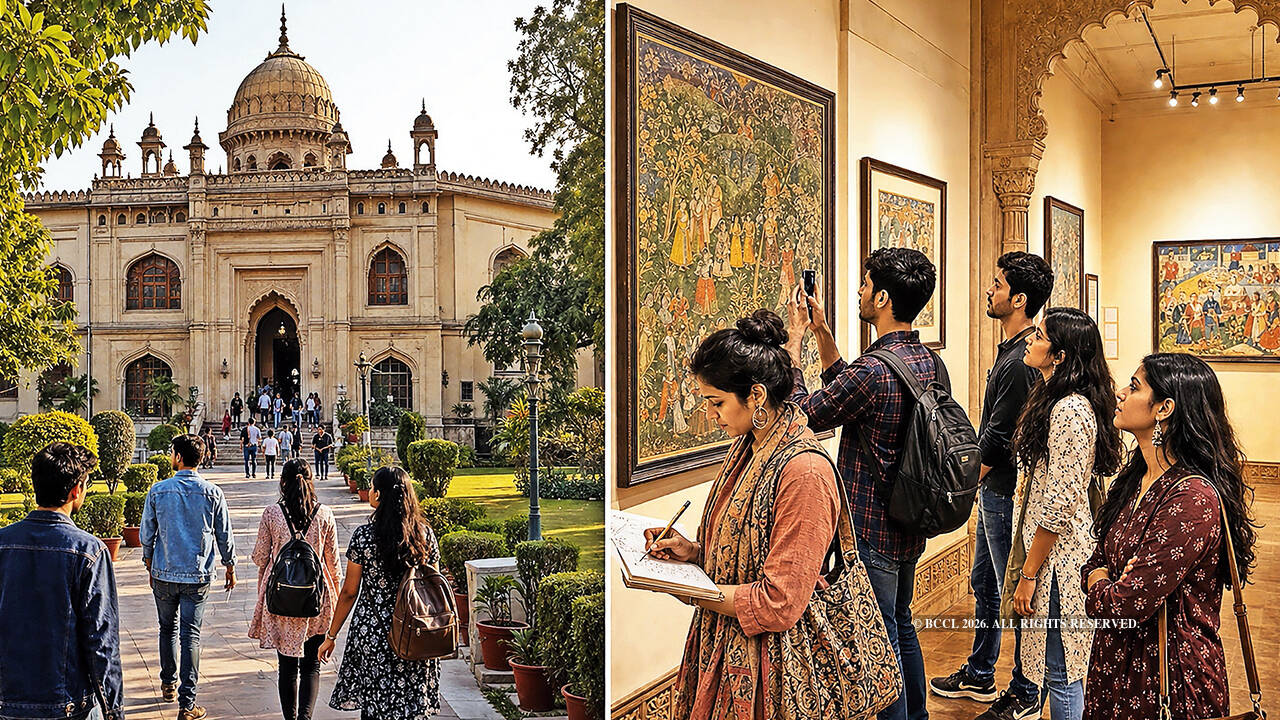
Picture is for representational purposes only (LT AI imagery)
“Earlier, galleries felt intimidating, like you needed to ‘know’ art to enter,” says 23-year-old graphic designer Zain Abbas. “Kokoro feels like a community space. We go after class, discuss the work, sometimes just sit and sketch. It’s become part of our routine.”That sense of informality could be one of the biggest reasons independent galleries are finding favour with younger audiences. Art is becoming less about expertise and more about participation.A platform for the next generationIn Aliganj, the Kala Srot Art Gallery, which has been running since 2014, has played a different but equally important role in nurturing this ecosystem. Alongside exhibitions, the space offers studios, camps and workshops, giving emerging artists opportunities to experiment, exhibit and build connections.Its programming, ranging from student printmaking and sculpture exhibitions to the Bioscope-2 rare film-poster archive and the inclusive Art for Ability exhibition, has continued to bring artists and audiences together.“For my generation, art isn’t just something you see, it’s something you do,” says 20-year-old painter and College of Arts & Crafts student Riya, adding, “Spaces like this give us visibility, feedback and the confidence to experiment beyond academics.”The grand old lady gets a Gen-Z glow-upNo account of Lucknow’s museum culture can begin without a visit to the Buddha Gallery at the Uttar Pradesh State Museum located within the grounds of the Nawab Wajid Ali Shah Zoological Gardens. Established in 1863 and shifted to its present building in 1963, the museum houses an extensive collection spanning archaeological finds, sculptures, coins, manuscripts, miniature paintings, textiles and ethnographic objects. For years, however, it remained largely associated with school excursions, academic visits and researchers but that perception is gradually changing. Conservation efforts, improved lighting, bilingual labels and more curated approaches to displaying the collection are making the museum more accessible to younger visitors.College students now turn up for photography and design projects, art students study its terracotta and stone sculptures, while history enthusiasts use its collections to piece together the social and cultural life of Awadh.“Earlier, State Museum felt like a syllabus chapter,” says 20-year-old history student Ananya Gupta. “Now, with guided tours and social-media reels explaining the stories behind artefacts, it feels like stepping into a living timeline.”
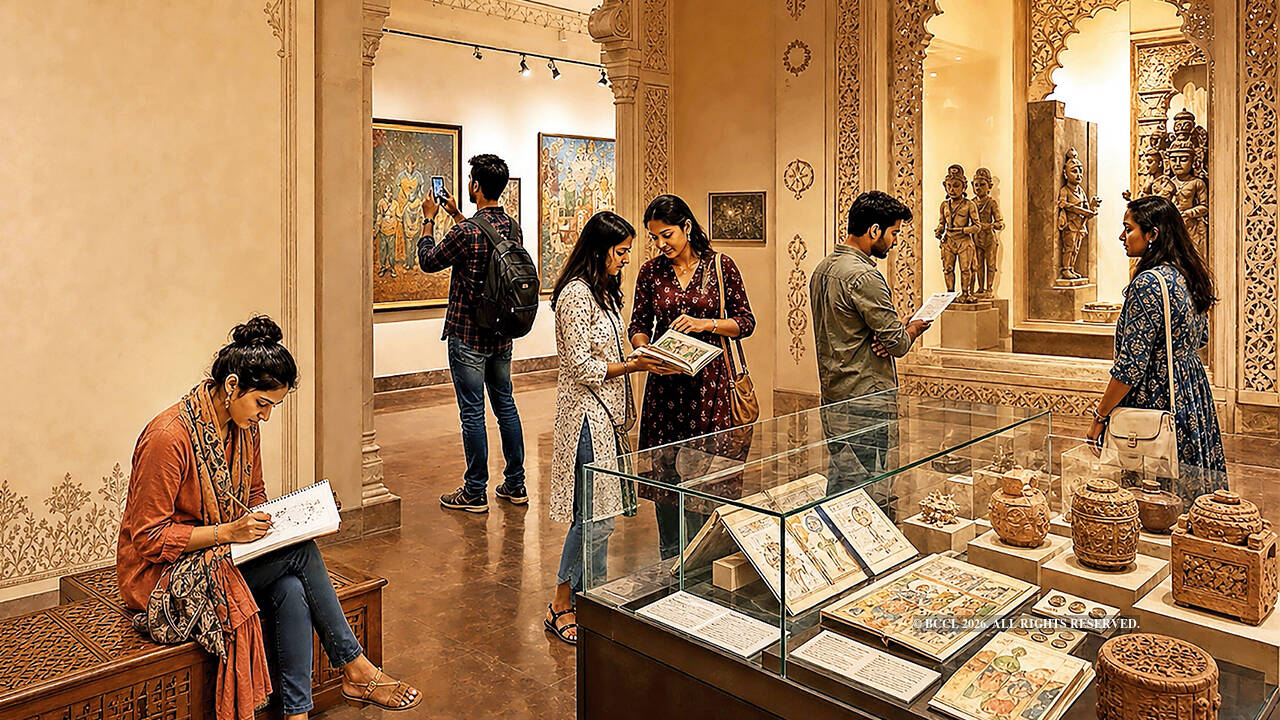
Picture is for representational purposes only (LT AI imagery)
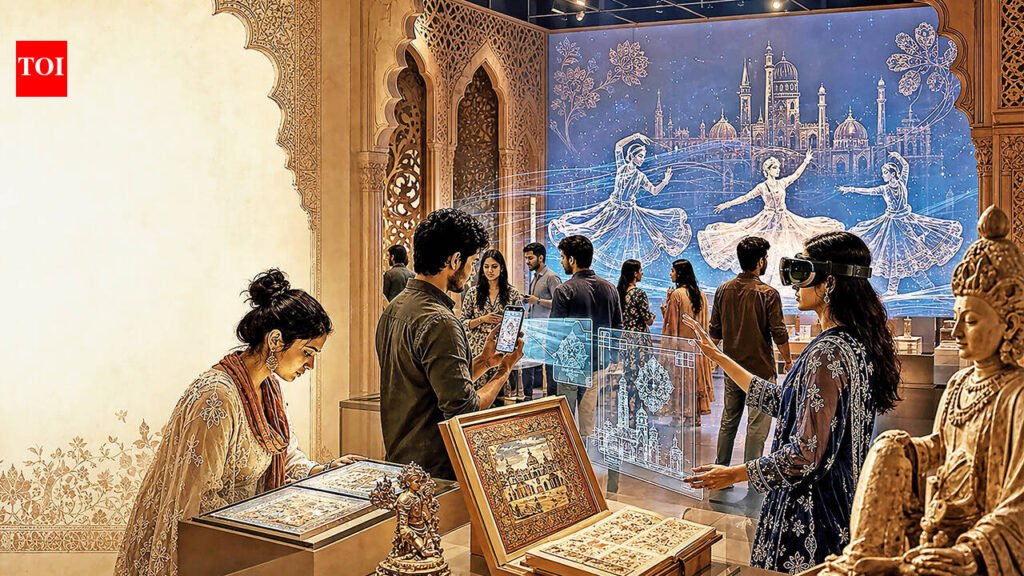
When history meets technologyIf the State Museum represents Lucknow’s rich cultural archive finding a new audience, the Lucknow Museum of Heritage & Art (LMHA), represents the next step in that journey.Opened in Hussainabad in April 2026, LMHA brings together 13 thematic galleries exploring Lucknow’s architecture, theatre, music, food and syncretic culture through archival material, artefacts and local crafts. But it is the museum’s use of technology that has particularly helped it connect with younger visitors.A VR gaming arena, interactive projection mapping that recreates Kathak movements, touch-enabled narrative panels and a mini-theatre turn the museum visit into an immersive experience rather than a conventional walk through galleries.For 21-year-old college student Aarohi Verma, that distinction matters. “It feels like stepping into a film set of old Lucknow, but with games and tech. We come here not just to learn, but to hang out, take reels and discuss art.”That combination of heritage and technology reflects a larger change in the way younger audiences are consuming culture. The question is no longer simply what an exhibition displays, but how it allows visitors to interact with it.-Amina Ashraf