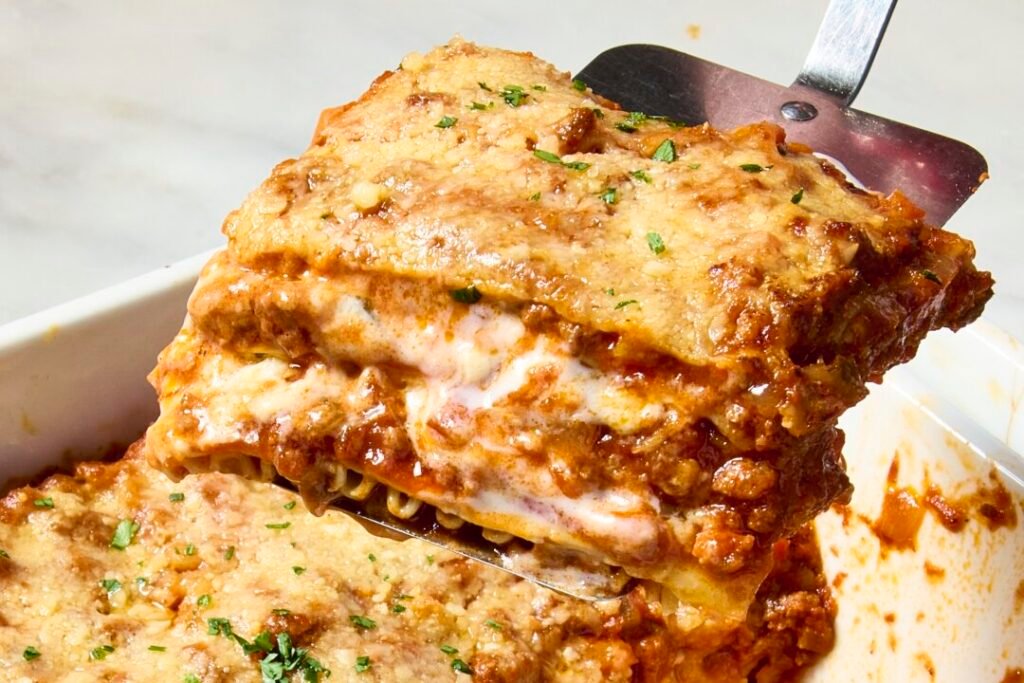
When I recently embarked on developing a more traditional lasagna, I talked with a few lasagna experts. First up was my friend Maria, who grew up just outside Venice, Italy, and has strong, prideful feelings on cooking traditional Italian food. I knew that she’d have a lot to say about lasagna, including advice from her mother, who is a private chef.
The most important thing Maria had to say was: “Ricotta is a hard no! Lasagna must be made with béchamel sauce—and you should season it with a pinch of nutmeg.” When asked about meat sauce versus Bolognese, Maria was adamant about Bolognese. Even though it’s a lot of work, she said it makes a more flavorful lasagna. Lastly, she emphasized that a good lasagna starts with high-quality ingredients. This point sounds so simple, but having tested this recipe using a variety of brands, I wholeheartedly agree.
I also spoke with Jeanette Donnarumma (a recipe developer and culinary producer formerly of “The Rachael Ray Show”), whose take on lasagna I was especially excited about. Donnarumma explained that she’s an Italian American who grew up in a ricotta lasagna home but that she now swears by lasagna made with a Parmesan-heavy béchamel. She went on to say that béchamel is the best option for a great lasagna because ricotta “just isn’t moist enough for a juicy lasagna, and nobody likes a dry lasagna.”
This is my spin on a traditional Italian lasagna (lasagna Bolognese, if you will). It has all the components you’d expect, but I’ve taken a few liberties to minimize both prep and cook time. It’s creamy, saucy, and feels incredibly special without tasting overly rich or heavy, and it’s the furthest thing from being dry. Making lasagna is a labor of love since it takes a fair amount of time, but the good news is that nothing about this recipe is tricky or complicated, and it uses readily available, easy-to-find ingredients.
Why You’ll Love It
Related Stories

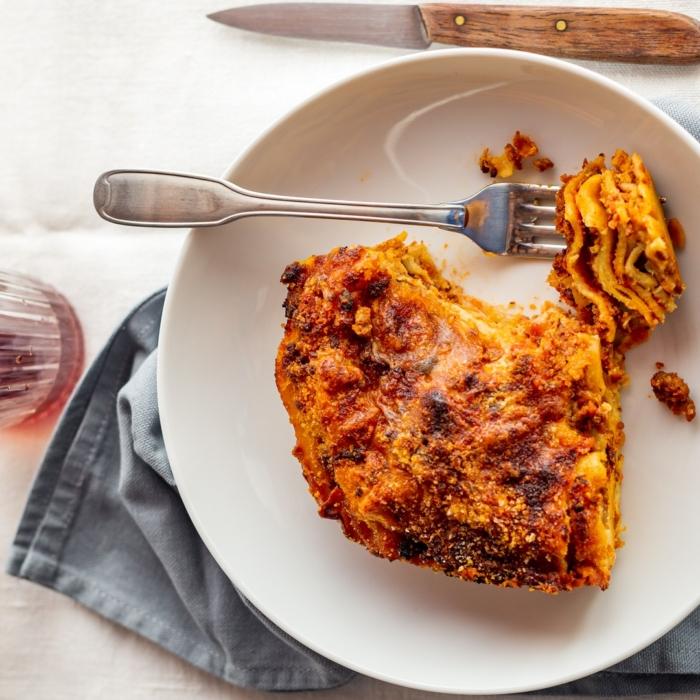
It uses béchamel instead of ricotta. Above all else, this creamy sauce makes the lasagna taste totally luxurious without feeling heavy. It also keeps the filling moist so it doesn’t dry out or get that crumbly texture that sometimes happens with ricotta.
Many of the components are make-ahead. There are a couple of opportunities to get a head start with this recipe. My favorite is making the Bolognese and béchamel sauces a day in advance and then the next day assembling and baking the lasagna. You can also fully assemble the lasagna a day before baking.
Key Ingredients
Diced pancetta: The rendered fat is used to cook the ground meat and vegetables, and it adds more flavor and the tiniest hint of richness to the Bolognese.
Ground meat: Go for lean ground beef so there’s no need to drain off excess grease.
Tomato paste: A few tablespoons deepen the tomato flavor in the Bolognese.
Milk: I love whole milk, which makes a slightly richer béchamel sauce, though 2 percent milk works well and does also make a good sauce.
Dried lasagna noodles: Maria emphasized the importance of using high-quality pasta, and after testing this recipe with several different brands, I 100 percent agree. I can’t stress this enough: Good-quality dried pasta makes all the difference here (my favorite brands are De Cecco and Rummo).
Parmesan cheese: You can grate your own or use store-bought grated Parm—both work well.
Helpful Swaps
No-boil noodles: These noodles work quite well as an alternative to regular dried lasagna noodles, and do a nice job of mimicking the texture of thinner, fresh lasagna noodles. If using no-boil noodles, you’ll need just enough for the three layers of pasta (a 9-ounce box of Barilla noodles was sufficient for me), and there’s no need to soak them before assembling.
Make-Ahead, Freezing, and Reheating Tips
Make ahead: The Bolognese sauce and béchamel can be made up to two days ahead. Refrigerate in separate airtight containers, placing a sheet of plastic wrap or parchment paper directly against the surface of the béchamel to prevent a skin from forming before sealing the container. Gently reheat each sauce until warmed through before assembling the lasagna.
Assemble ahead: The lasagna can be assembled up to one day ahead of baking. Let cool completely, cover, and refrigerate. Let sit at room temperature for 30 minutes before baking uncovered.