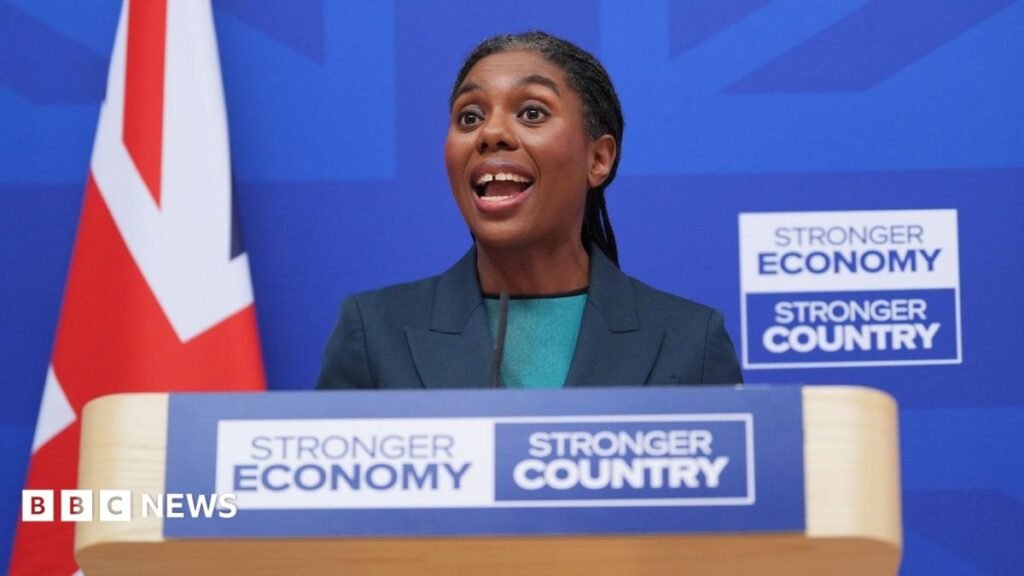
Welfare spending is increasingly seen by the Conservatives as a core battleground with Labour.
During Labour conference they derided the event as the “Welfare Party Conference”. Whereas Sir Keir Starmer sought to cut welfare spending before backing down in the face of a rebellion by his own MPs, Burnham has made clear that he believes the way to reduce the benefits bill in the long-term is more up-front investment in support for those out of work.
This is a clear ideological difference which both parties are happy to embrace. Conservative strategists believe there is a broader lesson there.
“The differences between the parties have been quite muddled for a while,” one says. “Now that Burnham is prime minister we have a more traditional left-right split.”
Another area where Badenoch will embrace that divide in the coming days is the pensions triple-lock.
The policy currently guarantees the state pension goes up each year in line with either inflation, wage increases, or 2.5% – whichever is the highest.
Badenoch will make clear that the Conservatives continue to support that policy in its current form, breaking with some generally supportive think tanks and policy experts who believe Badenoch should follow Burnham’s lead.
In his conference speech on Tuesday, Burnham set out plans to end the existing triple lock from 2030, so the state pension increases at least by inflation or 2.5% – but remove the automatic annual link with average earnings.
The Conservatives hope the sharpening left-right split leaves Reform UK in a strategic bind, occupying a less obvious place on that spectrum.
A year ago some senior Conservatives feared being usurped by Reform as the leading party of the right was a near-inevitability, but now they are optimistic that Nigel Farage’s party is on an inexorable slide.
That bullishness is fuelled in large part by the difficulties Reform has faced over Nigel Farage’s £5m gift from Christopher Harborne and the fallout – including a police inquiry – from the recent Channel 4 News investigation.
“I find more and more voters raise concerns about Reform with me – people who weren’t previously giving us the time of day,” one MP said.
“These are successful people with big garages and good jobs who do not necessarily pay that much attention but want a small-c conservative government.
“They were switching to Reform because they were fed up with us and thought Farage was now the main option on the right. But they are starting to come back.”
Others are less positive, pointing out that Reform still often record higher shares than the Conservatives in the polls — and more importantly have now won far more votes than them in successive years of local and national elections.