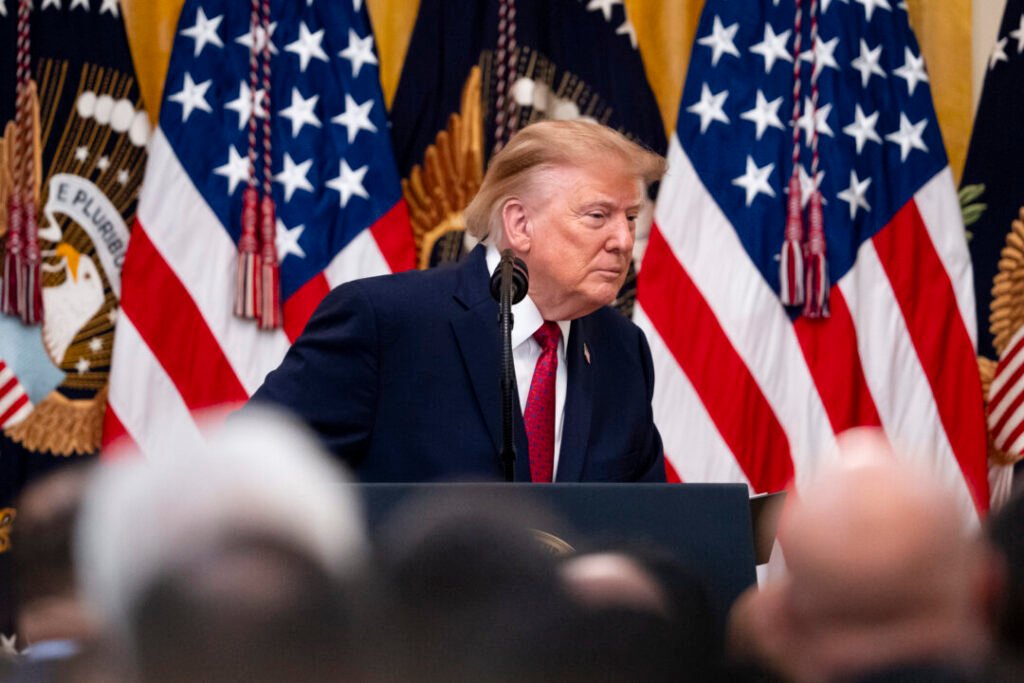
President Donald Trump has said he discussed with Chinese leader Xi Jinping the release of political prisoners in China, including Hong Kong publisher Jimmy Lai and American scholar U Min Zin.
“I did,” Trump told reporters at the Oval Office on Sept. 30 when asked if he raised the cases of Lai, Min Zin, and other political prisoners with Xi during their summit in Washington last week.
“We talked, and I think we had some very, very important discussions. Hopefully, fruitful discussions,” Trump added.
Related Stories


“His imprisonment makes him a symbol of injustice. His death in prison would be a disgrace,” he said.
The Support Jimmy Lai campaign, led by Sebastien Lai and his sister, Claire Lai, called Trump’s remarks “very hopeful,” according to a Sept. 30 post on X.
“It’s imperative that Xi knows that the US will not back down until Jimmy is free,” the group said.
Sylvin Zin, the wife of Min Zin, told lawmakers during a hearing in September that her husband was initially subjected to interrogations lasting four to six hours a day and held in a small cell where the lights remained on around the clock.
She said that he was allowed outside only when being transported to and from meetings with U.S. consular officials, and that he was hooded and shackled during those trips.
“My husband’s sudden detention has upended our lives, leaving our fourteen-year-old daughter, Suu, deeply anxious and unsure about our future,” she wrote in her testimony.
She said Trump’s remarks have given her family “renewed hope,” according to her X post on Sept. 30.
At the same September congressional hearing that Sebastian Lai attended, Peter Mattis, president of The Jamestown Foundation, argued that Washington should respond “asymmetrically or disproportionately,” using leverage in areas that matter to CCP leadership to deter future detentions and restrictions on U.S. citizens.
Mattis pointed to China’s continued reliance on U.S. technology and its economic vulnerabilities as potential sources of leverage. He added that Washington should make clear that arbitrary detention of Americans is “inherently escalatory and destabilizing” and could jeopardize the CCP’s broader interests in maintaining a stable relationship with Washington.