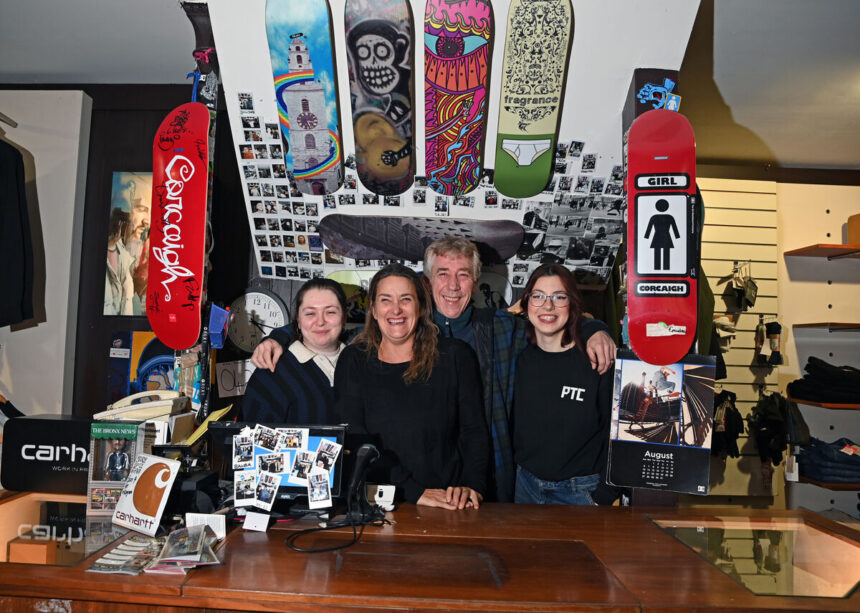
It was 1995 when Niall Hasset walked into Primetime. The store, still in its infancy, was opened three years prior in 1992 by his now business partner and co-owner, Louisa Heckett.
Heckett, only 19 at the time, had just come home from travelling, bringing back with her bumbags and other streetwear accessories from Camden Town in London with the intent to sell them in her hometown of Cork.
Buoyed by early success at a farmers’ market in Crosshaven, Heckett opened her own space, championing streetwear in a city on the precipice of a burgeoning alternative movement.
The day Hasset walked into Primetime, the pair became partners in the business, running and operating the pioneering store as a team ever since.
“I was in a bit of a dodgy spot at the time,” Hasset recalls. “But walking in [here] on that day changed my life forever.
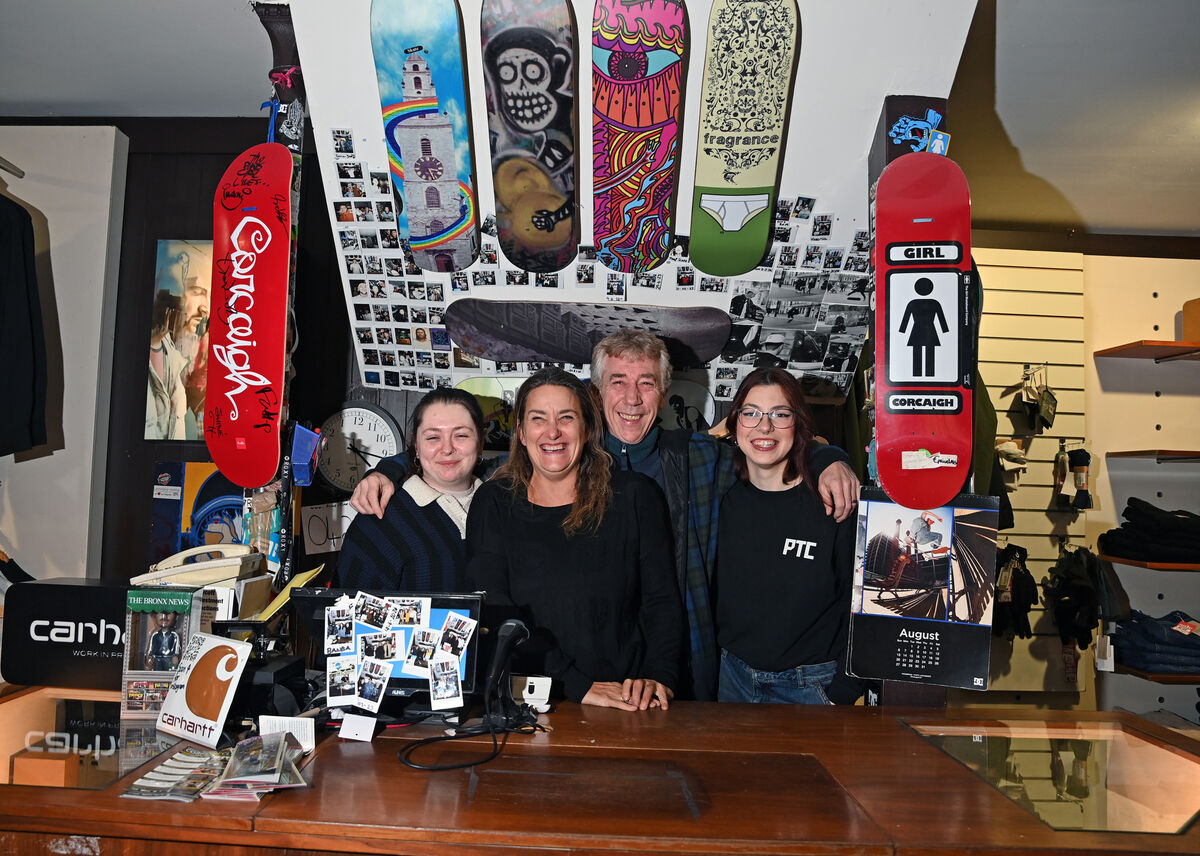
“I could have ended up in a lot of different and more difficult places. But Louisa turned around and told me to have faith. She said if you give out good, it will come back to you.
“For the last 30 years, I’ve held onto that statement. I trusted her, and to this day, that trust has never been broken.
The duo’s friendship, lasting over three decades, is emblematic of Primetime’s wider impact, one that reaches far beyond retail. Over the years, the store became deeply embedded in the city’s art, skating and music scene, acting as everything from sponsors to organisers of landmark events celebrated by Cork’s alternative community.
“I remember one time, we put a gig on in Reardens,” Hassett recalls. “It was a dark and dirty Thursday night in September, and we really didn’t think anyone would show up. But thankfully, it ended up being Leaving Cert night. All of a sudden, 2,500 people were queuing up outside.”
Hassett attributes much of their success to the already budding local music scene at the time, helped by the popular Sir Henry’s bar and music venue, now remembered for hosting a little-known band in 1991 called Nirvana. He also credits the establishment of homegrown record labels with which Louisa regularly collaborated.
“What we created here was a community. It can be defined by various circles, from the gang at Sir Henry’s to the homegrown street artists and the up-and-coming skaters who frequented the store.” Although it didn’t begin as a skate shop, Primetime quickly found itself at the epicentre of the local skate scene, even going on to host the first-ever Irish skate championships.
“It was incredible,” Hassett recalls. “We had it in the former Arcadia. There were skaters, roller-bladers, DJs, music, MCs, artists – everyone uniting to make their mark and strengthen the alternative culture of the times.”
In 2001, Primetime also established its own indoor skate park, Woodwork. Although short-lived, operating for just nine months before closing again after losing its insurance in September of that year, its contribution to the sport endured, inspiring several other indoor parks to open throughout the years.
“We did a lot, but my proudest moment when it comes to the skate community was being able to sponsor Ross Doyle,” Hassett says.
Doyle, a former employee at Primetime, has since gone on to work with DC, one of the world’s largest skating companies.
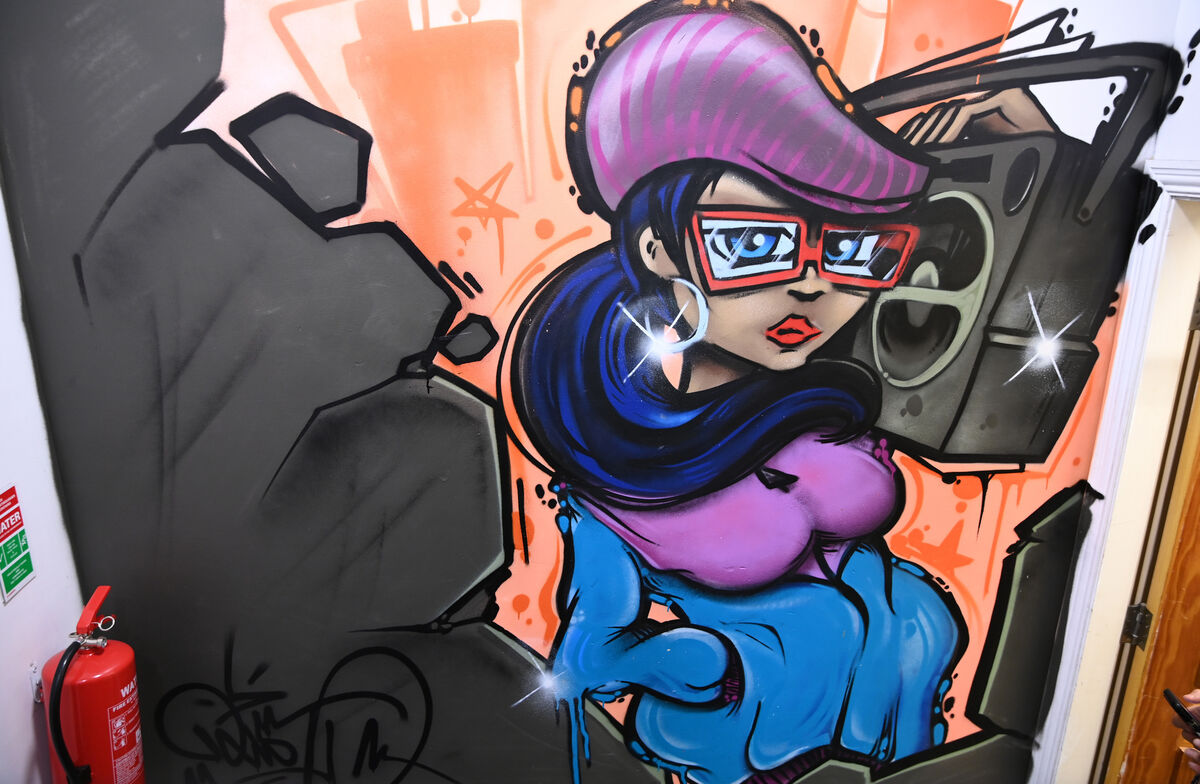
In a similar vein, Hassett points fondly to the work he owns by Cork artist Conor Harrington, another creative supported in his early years by the store. Now living in London, the Cork native has become world famous for his distinctive style that blends street art with classical paintings, with his work exhibited across Europe, the US, India, and the UK.
“We did a bit of an exercise, where around 60% of every penny that came in our front door went directly back into the Cork economy,” says Hassett. “It’s another thing we’re extremely proud of. Our customers came in here knowing that their cash would be spent locally.”
News of Primetime’s closure spread like wildfire. Posting on social media, the store said that it would shut its doors for the final time on February 28, adding that while it was lucky to be an integral part of Cork City’s culture and story for more than three decades, nothing lasts forever.
Like many long-standing brick-and-mortar stores, the pressure of rising business costs and shifting consumer habits hit Primetime hard, with the impacts being felt most acutely in the aftermath of the pandemic.
“It comes to a point when you just get too tired,” says Niall. “With the cost of living going through the roof, people simply didn’t have the money to spend like before.
“The face of retail is also changing, and we have only one thing to blame for that. The pandemic allowed our mobile phones to take over – that really was the killer.”
“There are an increasing number of people out there spending their whole lives on their phones. You have to ask, what does that mean for our community? What does that mean for our city? What will the impact of this be?” Despite this, Hassett is clear that individuals are not to blame.
“This is not the customer’s fault. Not at all. We’re all responsible for the death of travel agents. When Ryanair started offering cheap flights with the touch of a button on our phones, we all hopped on board.
“Times are changing, and individuals are not to blame. Our customers have given us everything, and they are the reason why we did what we did for so long.”
Since announcing the store’s closure, Primetime has been inundated with calls, messages and walk-ins from customers queueing up to share their memories and personal connections with the store. For Niall, this presents a double-edged sword. While he welcomes it, his sense of responsibility ultimately takes over.
“Someone told us that when they were 12, they walked in here to buy their confirmation shoes. They said they felt safe and able to be who they were. This person is gay, who, at the time, was growing up in an era where that was difficult.
“To hear that, or to hear my buddy say he has nowhere to go, knowing before you could bring them in here for a bit while they sorted themselves out, is hard. The guilt is real, and I fear what the city is about to lose.”
He reiterates that if there is anything he can say to customers ahead of the store’s closure, it is to shop local, support home-grown businesses, and stay involved with the workings of the city.
“It’s an easy thing to say, but it is critical. You need to get out and go to Three Fools, you need to get that coffee from Cork Coffee Roasters, you need to pick up that pastry from the Grumpy Bakers. If we don’t, we will lose all of it.”
Looking back on 34 years of Primetime, Niall recalls the numerous milestones that passed through its doors, including births, deaths, friendships, and relationships, as well as his own marriage to his wife Jackie, whom he met through the store.
For many, Primetime was more than a shop. It was a meeting point, a hangout, and a place where people knew they’d find familiar faces.
“We’re a bit of a strange place,” says Hasset. “We allowed things to happen that a lot of other shops wouldn’t. We did things that a lot of other places didn’t. But ultimately, we were a safe space for people to come, figure stuff out, and move on.
“Cork needs people on the ground. For us, we’re going. That part is certain. But the rest of it doesn’t have to be.”