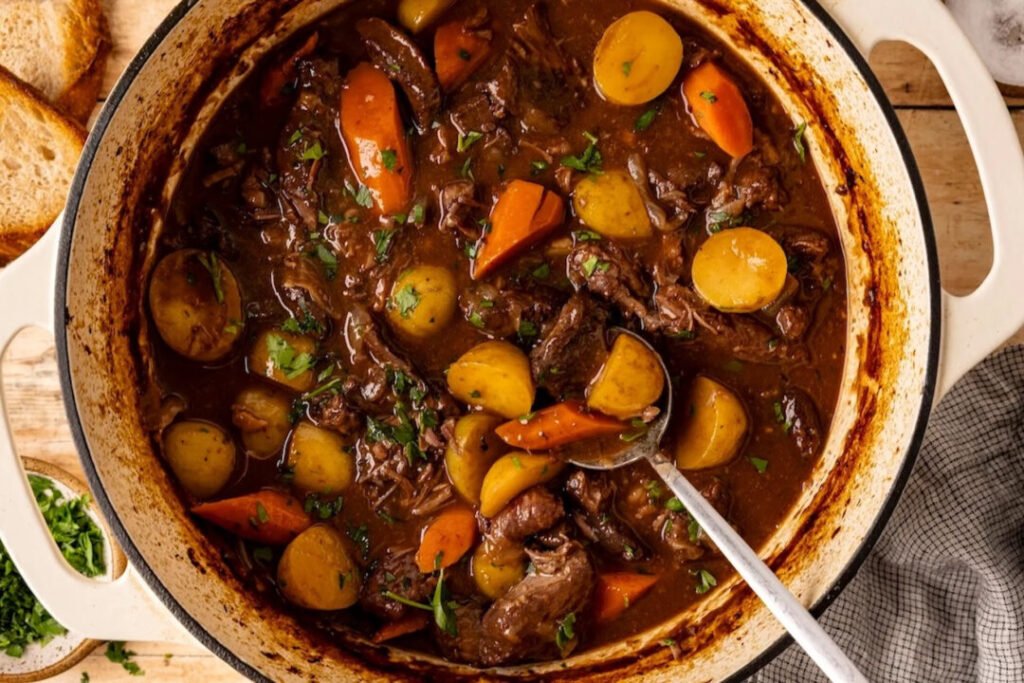
With thousands of 5-star reviews, this beef stew recipe is the most popular dish on my site—and for good reason. Well-marbled beef chuck is seared until deeply browned, then slowly braised with onions and garlic in a rich wine-based sauce. After a few hours in the oven, the beef is meltingly tender, the vegetables are perfectly cooked, and the sauce is rich and deeply savory.
What You’ll Need To Make Beef Stew

Jennifer Segal
-
Boneless beef chuck: My favorite cut for beef stew because its marbling and connective tissue make it especially well suited to slow braising—the meat becomes juicy and fork-tender as it cooks. Look for a well-marbled chuck roast and cut it into chunks yourself rather than buying packaged “stew meat,” which can contain leaner pieces from different cuts that cook unevenly.
-
Yellow onions and garlic: These aromatics build the savory flavor base of the stew.
-
Tomato paste and balsamic vinegar: Tomato paste adds richness and body while balsamic vinegar adds depth and acidity.
-
All-purpose flour: Thickens the cooking liquid into a rich sauce that clings to the beef and vegetables.
-
Red Wine, Beef Broth, and Water: Form the flavorful braising liquid. For the wine, use an inexpensive dry red such as Pinot Noir, Merlot, or Cabernet Sauvignon—something good enough to drink.
-
Bay leaf, thyme, and parsley: Bay leaf and thyme add earthy flavor as the stew braises; fresh parsley adds a bright finish just before serving.
-
Carrots and white boiling potatoes (baby Yukons): Add sweetness, texture, and heartiness. Baby Yukons hold their shape well during braising while becoming tender and creamy inside. For extra vegetables and a pop of green, you can add frozen peas toward the end of cooking.
Related Stories


How To Make Beef Stew
Step 1: Prep the beef. Trim away any large, hard pieces of fat that are easy to get to, but don’t overdo it. The marbling running through the meat helps keep the beef juicy and tender as it braises. Pat the beef dry, which helps it brown rather than steam, then season with salt and freshly ground black pepper.

Jennifer Segal
Step 2: Brown the beef. Heat a bit of oil in a Dutch oven or large pot and sear the beef in batches, leaving enough space between the pieces so they brown rather than steam. Take your time here; you’re looking for a deep brown crust, not just a change in color. The browned bits that collect on the bottom of the pot are important, too, as they’ll form part of the flavor base for the stew.

Jennifer Segal
Step 3: Cook the aromatics. Add the onions, garlic, and balsamic vinegar to the pot. As the vinegar hits the hot pan, it will help loosen the flavorful browned bits stuck to the bottom, so scrape them up with a wooden spoon as the onions cook. Once the onions begin to soften, stir in the tomato paste and cook briefly to deepen its flavor.

Jennifer Segal
Step 4: Return the beef and add the flour. Return the beef and any juices on the plate to the pot, then stir in the flour until no dry streaks remain. The flour will thicken the braising liquid as the stew cooks, giving the finished sauce body.

Jennifer Segal
Step 5: Braise the stew. Pour in the wine, broth, and water, then add the bay leaf, thyme, and sugar. Stir well, scraping up any browned bits from the bottom of the pot. Bring to a boil, cover, and transfer to the oven. Braise for 2 hours, then stir in the carrots and potatoes and continue cooking until the beef is fork-tender and the vegetables are cooked through. Adding the vegetables later keeps them from becoming too soft or falling apart. Remove the bay leaf and adjust the seasoning before serving.
Pro tip: No Dutch oven? You can also cook the stew on the stovetop. Keep it covered over the lowest heat and stir occasionally to prevent sticking; the cooking time will be about the same.

Jennifer Segal

Jennifer Segal
Step 6: Serve. Taste and adjust the seasoning if needed, then ladle the stew into bowls and garnish with fresh parsley. Serve with crusty bread for soaking up the rich sauce. Like most stews, it’s even better the next day, and it freezes beautifully, too.

Jennifer Segal
How to Thicken Beef Stew
Don’t worry if the stew seems thin during cooking; it won’t fully thicken until the very end. If you’d still prefer a thicker sauce once it’s done, mash 2 tablespoons each of softened butter and flour into a smooth paste (this is called a beurre manié). Bring the stew to a simmer on the stovetop, then whisk in the paste a little at a time until the sauce reaches your desired consistency.

Jennifer Segal
Can I Make Beef Stew in a Slow Cooker?
Yes, but for best results, begin on the stovetop as directed. Brown the beef, then cook the onions, garlic, and balsamic vinegar. Return the beef to the pot, sprinkle with the flour, and stir until incorporated. Transfer everything to the slow cooker, including the carrots and potatoes, and add the remaining ingredients. Cook on high for 4 to 5 hours, until the beef is tender and the vegetables are cooked through.