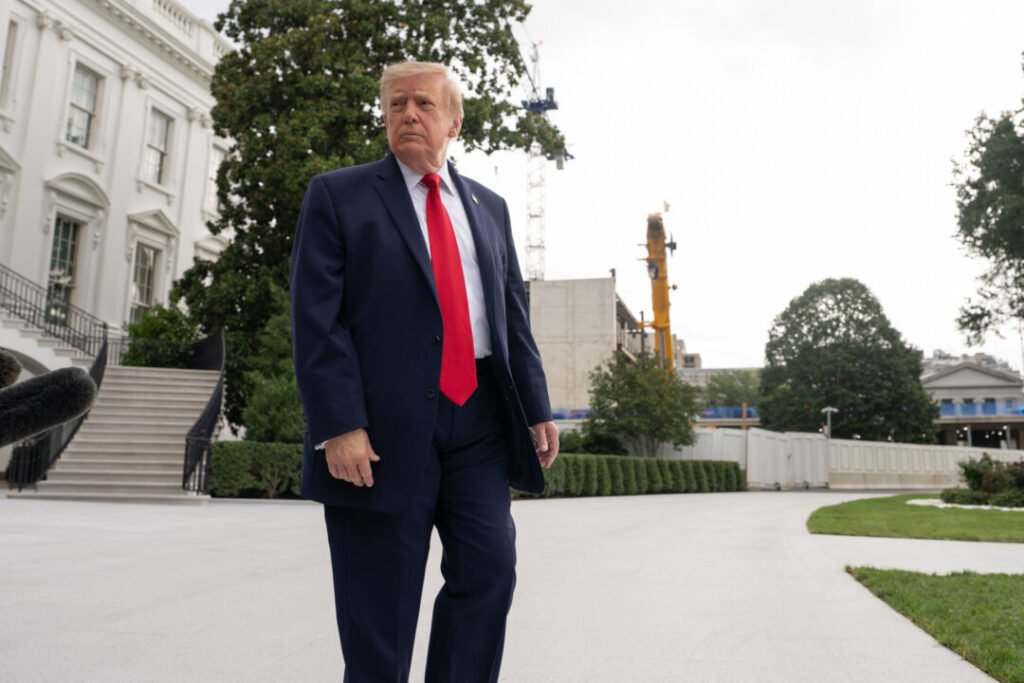

U.S. President Donald Trump on the South Lawn of the White House in Washington on Sept. 26, 2026. Trump is traveling to Knoxville, Tennessee to attend the University of Tennessee vs. University of Texas College football game. Aaron Schwartz/Getty Images
U.S. President Donald Trump has rejected the idea of cooperating with Beijing on artificial intelligence (AI), despite discussing the emerging technology with Chinese leader Xi Jinping last week.
The United States leads China by “at least a year, and maybe a year and a half” in the AI race, Trump said.
“I’m not looking to open it up,” he added. “And we really didn’t talk much about it. We did talk about the name super intelligence.”
Trump, speaking to reporters on Sept. 26, dismissed such fears as “a hoax” that would benefit only America’s adversary.
Related Stories


“The United States of America is not going to be putting on break,” Trump said. “They want to stop our progress, because we’re leading China by a lot, and we’re going to keep it that way.”
“Artificial means it’s fake, and it’s not fake. It’s very strong intelligence. I think a lot of people are doing that now. I call it SI.”
China’s foreign ministry said in a Sept. 26 statement that Beijing “attaches great importance” to and “respects” Washington’s shift to the term “super intelligence.”
This marked the first time Beijing directly addressed the Trump administration’s adoption of the new term.
Unlike the debate in Washington, which focused on AI’s potential threats to humanity’s future, Chinese officials’ concerns largely center on the technology’s risk to the CCP’s grip on power.
China’s spy chief, Chen Yixin, warned that AI could be misused by what he called “hostile forces” and poses “direct threats to China’s political security, institutional security, and ideological security,” according to a Sept. 13 article published in the official Cyberspace magazine. He also called for greater Party control over AI.