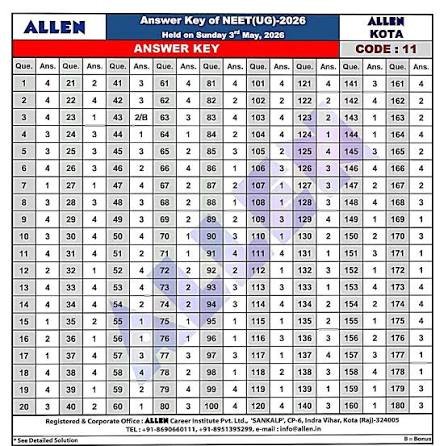
If you have ever walked out of an exam hall with a knot in your stomach, second-guessing whether you shaded the right bubble for question 47 or whether the English section was actually as tricky as it felt, you already know why the Answer Key matters so much. It is not just a sheet of correct responses. It is the first honest conversation you get to have with your performance, long before the official results arrive.
For millions of candidates in India preparing for government exams, the answer key has become something close to a survival tool. It is the bridge between the chaos of exam day and the clarity of results. It tells you where you stand, what you did right, and, sometimes painfully, what went wrong.
But here is the thing: most candidates use the answer key badly. They glance at it, feel either relieved or devastated, and then move on. That is a mistake. The answer key is far more powerful than that. Used correctly, it can help you predict your score within a few marks, decide whether to start preparing for the next stage or reconsider your strategy, and even challenge questions that were genuinely wrong.
This guide is built to change how you think about the answer key. We will walk through everything, from what it actually is, to how to download it for major exams like SSC, UPSC, and RRB, to the almost-forgotten art of raising a successful objection. By the end, you will know not just where to find the answer key, but how to make it work for you.
Let us begin with the basics, because even something this familiar deserves a clear definition.
What Exactly Is an Answer Key?
At its simplest, an answer key is the set of correct answers to an examination. For a multiple-choice test, it might be a list of letters: 1-A, 2-C, 3-B, and so on. For a fill-in-the-blank section, it could be the exact words expected. For a more complex constructed-response question, it might be an exemplar response that demonstrates what a full-credit answer looks like.
The purpose is straightforward: to create a single, consistent standard against which every candidate’s responses can be measured. Without an answer key, grading becomes subjective, inconsistent, and open to error. With one, the process becomes mechanical, replicable, and fair.
But not all answer keys are created equal. Some are bare lists of letters. Others are detailed documents that explain why a particular answer is correct and why the other options are wrong. The best ones function as diagnostic tools, not just scoring sheets. They tell you not only what you got wrong but what kind of mistake you made.
This distinction matters more than most candidates realize. A simple key tells you your score. A well-designed key tells you what to fix.
The Different Types of Answer Keys You Will Encounter
Not every answer key serves the same purpose. Understanding the differences will save you from confusion and, in some cases, panic.
Provisional Answer Key
This is the first version released by the examining authority, usually within one to three weeks after the exam. Its purpose is to invite feedback. The commission is essentially saying, “Here is what we think the answers are. Check them and tell us if you disagree.”
The provisional key is not final. It is a draft, open to challenge. For SSC exams, this window is typically three to four days. Miss it, and you lose your chance to object.
Final Answer Key
After the objection window closes, the examining body reviews all challenges. Some objections are accepted, and the answer key is modified accordingly. The final answer key is the definitive version, the one used to calculate your actual score and prepare the merit list.
The final key is usually released alongside the scorecard and response sheet. For SSC CGL Tier 1 2025, for example, the final answer key and marks were released on January 9, 2026, and remained available for download only until February 8, 2026. After that, the data is removed from the website permanently.
Official vs. Unofficial Answer Keys
Official answer keys come directly from the examining authority, such as the Staff Selection Commission (SSC), Union Public Service Commission (UPSC), Railway Recruitment Boards (RRB), or National Testing Agency (NTA).
Unofficial answer keys are prepared by coaching institutes, education portals, and independent experts. They are released much faster, often on the same day as the exam, but they are educated guesses, not official positions. Use them for a quick estimate, not for final conclusions.
The best strategy is to use the unofficial key immediately after the exam to get a rough sense of your performance, then wait for the official provisional key for accurate assessment, and finally rely on the final key for your true score.
Where to Find Answer Keys for Major Exams
The single most reliable source is always the official website of the examining body. Here is a quick reference guide for the most popular exams.
SSC Exams
The Staff Selection Commission conducts some of the largest recruitment exams in India, including CGL, CHSL, MTS, CPO, and GD Constable. Answer keys are released on the official portal at ssc.gov.in.
The process typically follows this timeline:
-
Exam held
-
Provisional answer key released (usually within 2-4 weeks)
-
Objection window open for 3-4 days
-
Final answer key and scorecard released alongside results
For SSC CGL Tier 1 2025, the exam was held from September 12 to 26, 2025. The provisional key came out on October 16, the objection window closed on October 19, and the final key was released on January 9, 2026, alongside the Tier 1 result.
UPSC Exams
The Union Public Service Commission releases answer keys for Civil Services (Prelims), CDS, NDA, and other exams. UPSC typically publishes the answer key after the entire examination process for that cycle is complete. For Civil Services Prelims, this often means months after the exam. The official website is upsc.gov.in.
Railway (RRB) Exams
Railway Recruitment Boards release answer keys for NTPC, Group D, ALP, JE, and other exams. The process involves a provisional key, objection window, and final key. Candidates can access these on the official RRB regional websites.
Banking Exams
IBPS, SBI, and RBI release answer keys for PO, Clerk, and Specialist Officer exams. These are typically available on the respective official portals after the completion of the selection process for that stage.
State PSC and Other Exams
State Public Service Commissions, state selection boards (like MPESB, MPSC, OSSC), and other recruiting bodies release answer keys on their official websites. The formats and timelines vary widely, but the general pattern of provisional key followed by final key is common across most major recruiters.
How to Download Your Answer Key: Step-by-Step
The exact process varies slightly depending on the exam, but the general structure is consistent. Here is the most common procedure, based on the SSC model.
Step 1: Visit the Official Website
Go to the official portal. For SSC, it is ssc.gov.in. For UPSC, upsc.gov.in. Never rely on third-party websites for the actual download; use them only for updates and links.
Step 2: Log In to Your Account
Most answer keys are personalized. You need to log in with your registration number and password. For SSC, this is the same login you used for your application.
Step 3: Navigate to the Answer Key Section
Once logged in, look for the “Answer Key” or “Result” section on your candidate dashboard. For SSC, you click on the specific examination link, such as “Combined Graduate Level Examination, 2025 (Tier-I)”.
Step 4: Download the Key and Response Sheet
You will typically find two things: the answer key itself (which may cover all shifts) and your individual response sheet. Download both. The response sheet shows what you marked; the answer key shows what was correct.
Step 5: Save a Copy
This is critical. The final answer key and response sheet are available only for a limited time. For SSC CGL 2025 Tier 1, the deadline was February 8, 2026, at 6 PM. After that, no requests are entertained. Take a screenshot, download the PDF, and save it in multiple places.
How to Calculate Your Score Using the Answer Key
This is where the answer key transforms from a curiosity into a practical tool. Calculating your estimated score helps you decide whether to start preparing for the next stage, begin looking for other opportunities, or wait.
Step 1: Compare Your Responses
Open your response sheet and the official answer key side by side. Mark each question as correct, incorrect, or unattempted.
Step 2: Apply the Marking Scheme
Every exam has its own marking scheme. Here are a few common examples:
-
SSC CGL Tier 1: +2 for each correct answer, -0.5 for each incorrect answer
-
SSC CGL Tier 2 (Paper 1, Sections I-III): +3 for correct, -1 for incorrect
-
SSC CGL Tier 2 (Paper 2, Statistics): +2 for correct, -0.5 for incorrect
-
UPSC Prelims: +2 for correct, -0.66 for incorrect (one-third negative marking)
Step 3: Calculate Your Total
Multiply the number of correct answers by the positive marks. Multiply the number of incorrect answers by the negative marks. Subtract the negative total from the positive total. The result is your estimated score.
Step 4: Account for Challenges
If you have raised objections to any questions, and those objections are accepted, your score may change. If a question is dropped entirely, full marks are typically awarded to all candidates, regardless of whether they attempted it.
Step 5: Compare with Previous Cut-offs
Once you have your estimated score, compare it with the cut-off trends from previous years for your category. This gives you a realistic sense of your chances. Remember that cut-offs fluctuate based on exam difficulty, number of vacancies, and the candidate pool.
The Objection Process: How to Challenge an Answer Key
This is the part most candidates ignore, and it is the part that can actually change your fate. If you genuinely believe a question’s official answer is wrong, you have the right to challenge it. But doing so effectively requires strategy.
When Can You Object?
The objection window is typically open for three to four days after the provisional answer key is released. For SSC exams, it is usually around three days. For NTA exams like JEE Main, the window may be shorter. You must act fast.
How to Raise an Objection
The process is almost always online. Here are the general steps:
-
Log in to the official portal with your credentials.
-
Navigate to the objection link. This is usually visible only during the objection window.
-
Select the question you want to challenge.
-
Provide justification. This is where most candidates fail. You cannot simply say “I think the answer is wrong.” You need to provide a valid reason, ideally with supporting evidence such as a textbook reference, a standard source, or a logical explanation.
-
Pay the fee. Most examining bodies charge a nominal fee per question, typically around ₹100. This fee is usually non-refundable, even if your objection is accepted.
What Makes a Good Objection?
A good objection is specific, evidence-based, and respectful. Here is what works:
-
Referencing an authoritative source: “According to NCERT Class 10 Science, Chapter 4, page 72, the correct answer is B, not C.”
-
Pointing out ambiguity: “The question asks for the ‘most appropriate’ answer, but options A and B are both factually correct.”
-
Identifying a factual error: “The question states that X happened in 1947, but it actually happened in 1946, making option D incorrect.”
What does not work:
-
“I am sure this is wrong.”
-
“My coaching institute says the answer is different.”
-
“Everyone in my exam centre marked B.”
The objection process is not a popularity contest. It is an evidence-based review.
What Happens After You Object?
The examining body reviews all objections. Some are accepted, some are rejected. If your objection is accepted, the answer key is revised. If a question is found to be flawed beyond correction, it may be dropped entirely, and marks awarded to all candidates.
The final answer key reflects these decisions. Your score is calculated based on the final key, not the provisional one.
Why Answer Keys Sometimes Contain Errors
It is tempting to assume that the official answer key is infallible. It is not. Errors happen, and they happen more often than most candidates realize.
In 2025, the National Testing Agency (NTA) faced widespread complaints about errors in the JEE Main answer key. Questions were dropped, answers were changed, and the final key was uploaded and then removed from the website within an hour, reportedly due to errors. Students and coaching institutes alleged that correct answers in the provisional key were changed to incorrect ones in the final key.
This is not an isolated incident. Research on answer keys has shown that even expert-developed keys can contain errors, particularly for complex judgment-based questions where even experts disagree on the correct response.
The lesson is simple: do not assume the answer key is perfect. Check it carefully. If something seems wrong, it might be.
The Psychology of Answer Keys: Why They Feel So Stressful
There is something uniquely anxiety-inducing about the answer key. You have already done the hard work. The exam is over. But the answer key reopens the wound. It forces you to confront your performance before you are emotionally ready.
Part of this is because the answer key represents a loss of control. During the exam, you were in charge. After the exam, you wait. The answer key is the first moment you get to see how you did, and that moment can be brutal.
But it is also useful. The uncertainty of waiting for results can be worse than knowing. The answer key gives you information. It lets you plan. It converts anxiety into action.
Research on how people perceive answer keys reveals something fascinating: most people have strong intuitions about what an answer key “should” look like. They expect variety, frequent switches between options, and no long runs of the same letter. When an answer key violates these expectations, people judge it as less likely to be real, even if, statistically, it is just as probable as any other sequence.
This matters because it explains why candidates sometimes distrust answer keys that are actually correct. If you see five B’s in a row, your instinct says something is wrong. But sometimes, five B’s in a row is exactly right.
Frequently Asked Questions About Answer Keys
What is the difference between a provisional and final answer key?
A provisional answer key is the initial draft released for candidate feedback. It is open to challenge. A final answer key is the definitive version released after all objections have been reviewed. Your final score is based on the final key.
Can I download the answer key without logging in?
For most exams, no. Answer keys and response sheets are personalized and require login with your registration number and password. Some exams release a general answer key PDF that is accessible to everyone, but your individual response sheet always requires login.
How long is the answer key available for download?
It varies. For SSC CGL 2025 Tier 1, the final answer key was available from January 9 to February 8, 2026. For other exams, it may be available for a similar period or longer. Always download and save a copy immediately.
Is there a fee to challenge an answer key?
Yes, most examining bodies charge a nominal fee per question, typically around ₹100. This fee is usually non-refundable.
What happens if my objection is accepted?
If your objection is accepted, the answer key is revised. If the question is dropped, full marks are awarded to all candidates. Your score is recalculated based on the final key.
Can I calculate my score before the final answer key is released?
Yes. You can use the provisional answer key and your response sheet to estimate your score. Just remember that the score may change if objections are accepted and the key is revised.
What if I find an error in the answer key after the objection window has closed?
Unfortunately, there is usually nothing you can do. The objection window is the only official opportunity to challenge the key. After it closes, the final key is prepared, and no further changes are entertained.
Final Thoughts: Making the Answer Key Work for You
The answer key is not just a document. It is a decision-making tool. It tells you whether to celebrate or regroup. It tells you whether to start preparing for the next stage or start looking at other options. It tells you, with sometimes brutal clarity, how close you came.
But it is also imperfect. It contains errors. It is subject to revision. It is not the final word until the final key is released. Treat it with respect, but do not treat it as infallible.
Use it strategically. Download it immediately. Compare it carefully. Calculate your score honestly. If something seems wrong, challenge it with evidence. And then, regardless of what it says, remember that one exam does not define you. The answer key tells you where you stand right now. It does not tell you where you will end up.