WASHINGTON—President Donald Trump’s meetings with Chinese President Xi Jinping this week come at a time of mounting tension between the United States and China over artificial intelligence, tariffs, Taiwan, the Iran War, and more.
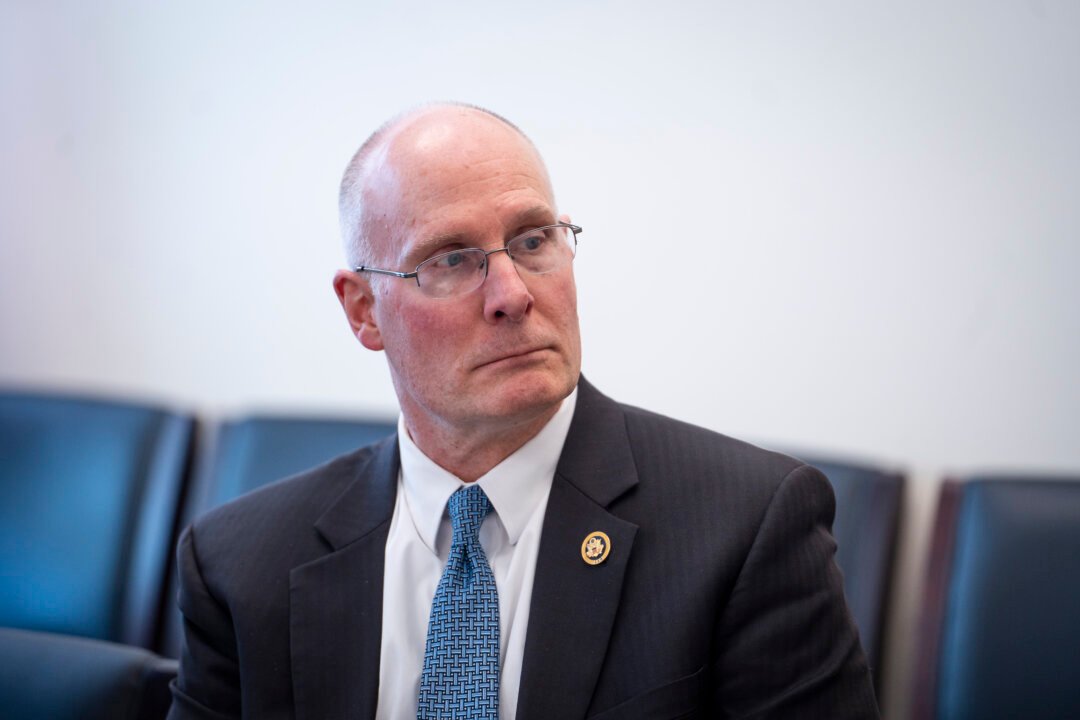
In an interview with The Epoch Times, Rep. John Moolenaar (R-Mich.), chairman of the House Select Committee on Strategic Competition Between the United States and the Chinese Communist Party, said he doesn’t expect concrete deals from the summit.
“I don’t expect a lot of clear policy agreements,” he said. “It will be a relationship-building exercise.”
Yet, the Republican from Michigan still had a few predictions as to how the summit will affect the top issues fueling competition between the world’s two superpowers.
One of those big topics is AI.
Both countries have emerged as leaders in the technology, though with American models still at the forefront.
Related Stories


Industry insiders such as Anthropic CEO Dario Amodei and XAI’s Elon Musk have warned the technology could threaten humanity and called for slowing its development.
Moolenaar voiced support for something like the Moscow–Washington hotline between the United States and China—in this case, a line of communication to squelch the possible threat of a runaway AI system.
Trade is another major theme as the summit begins.
As consumer costs continue to bedevil the Trump administration, Treasury Secretary Scott Bessent has said the United States may ease tariffs on non-critical goods from China.
Asked if he would support such a move, Moolenaar described himself as “open on non-strategic goods.”
He warned of the risks of relaxing restrictions on strategic technologies, such as advanced semiconductors or quantum computing innovations.
Moolenaar also cautioned that the United States would suffer if it became dependent on China for such technologies.
“Once we’re dependent, they have the leverage. We’ve seen that with the critical minerals,” Moolenaar added.
The United States’ military support for Taiwan may also drive discussions.
China is expected to call for the United States to stop selling arms to the country, which it claims is part of its territory with which it must be reunified.
Under the 1979 Taiwan Relations Act, the United States is bound by law to supply Taiwan with the means to defend itself.
China, in its arguments to the United States, has cited a 1982 agreement in which the United States pledged to scale back that military support for Taiwan—but only on the condition of a peaceful resolution to the territorial dispute.
He pointed out that Trump has supplied Taiwan with more arms than his predecessors.
“I don’t see a change in the status quo,” he added. “I think our goal is to keep peace in the Taiwan Strait and keep the status quo there, and my belief is that President Trump will continue that.”
The chairman had a big hope ahead of the Trump–Xi summit.
“I hope he pushes back on China’s role supporting Iran and supporting Russia with their aggression,” he said.
Though not a combatant in either conflict, the Chinese communist regime has assisted Iran in its current conflict with the United States and Russia against Ukraine—in both cases, partly through direct or indirect purchases of energy from the hydrocarbon-producing states.