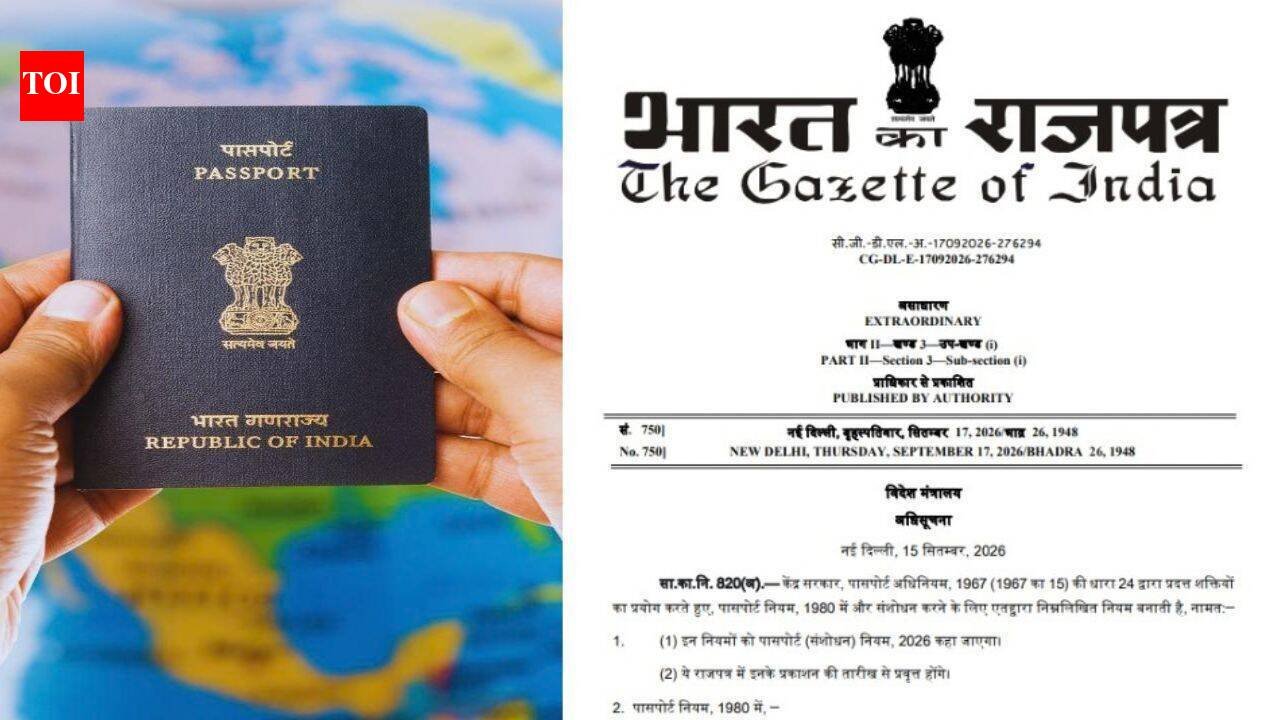
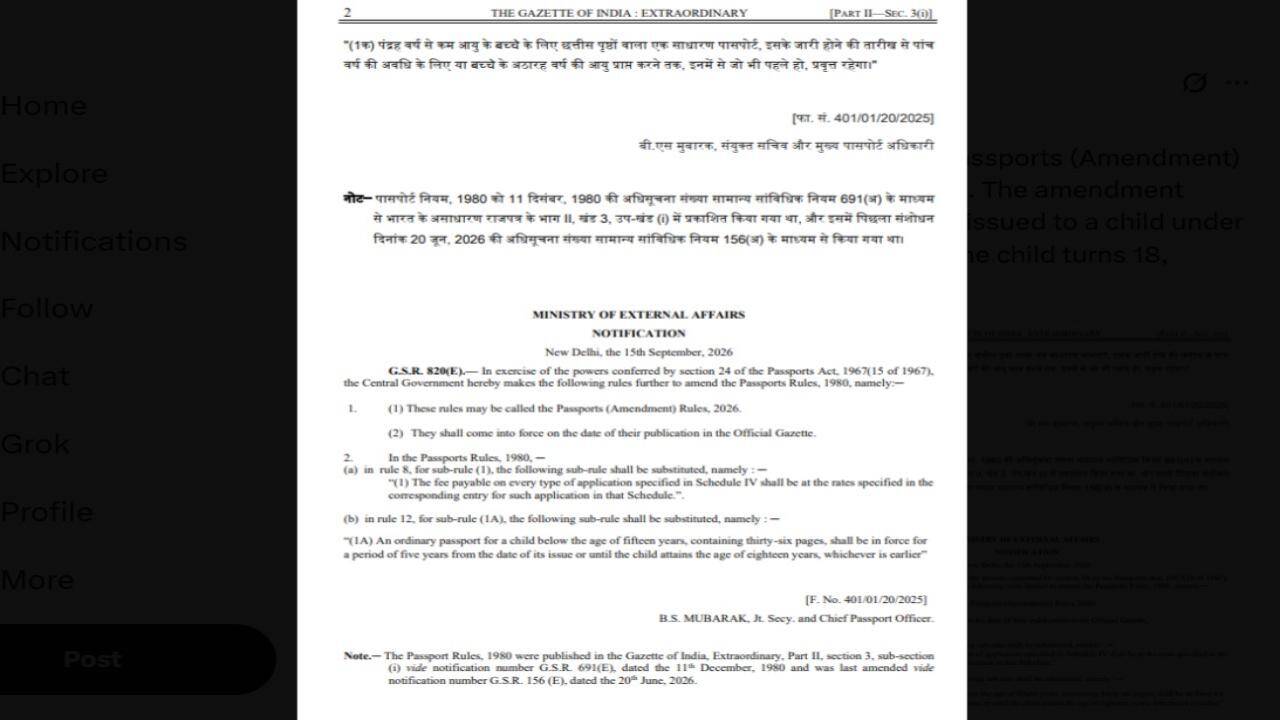
In a recent update, the Ministry of External Affairs (MEA) has introduced some major changes to India’s passport rules. A new validity framework for passports has been introduced for children below 15 years of age. Under the Passports (Amendment) Rules, 2026, an ordinary 36-page passport issued to a child below 15 will be valid for five years from the date of issue or until the child turns 18, whichever comes earlier. The amendment notified in September is now in force. The new changes are not limited to young children as passport validity and fees differ across age groups, including teenagers, adults and senior citizens.Here is everything Indian travellers need to know.Children below 15: Five years or until 18It’s an important change for families planning international holidays, as a child’s passport may now have a shorter validity depending on their age. For kids below 15, a 36-page ordinary passport will remain valid for only five years or until the holder turns 18, whichever comes first.For example, a passport issued to a 10-year-old can remain valid for five years, taking the child to age 15. But if the same passport is issued when the child is 14, it will expire when the child turns 18 rather than completing five years.For parents planning international holidays, this is worth checking before making flight or hotel bookings. A child’s passport may expire much earlier than the parents’ passports.The notification also amended Rule 8, stating: “(1) The fee payable on every type of application specified in Schedule IV shall be at the rates specified in the corresponding entry for such application in that Schedule.”Teenagers aged 15 to 18
MEA Update (X)
Teenagers between 15 and 18 will have an option. According to Passport Seva’s guidance, they can opt for a passport valid until they turn 18 or apply for a full-validity passport.This can be relevant for teenagers travelling abroad for school trips, higher education, sports competitions, family holidays or other international programmes. Families expecting frequent overseas travel may therefore need to consider the validity option at the time of application.Adults aged 18 and above: Up to 10 yearsFor adults aged 18 and above, an ordinary passport can have validity of up to 10 years. The 2026 amendment does not change this basic validity framework. The same full-validity category also covers applicants aged 15 to 18 who choose that option.For frequent international travellers, the longer validity can mean fewer renewal requirements, although the passport’s expiry date and destination-country entry rules should always be checked before travelling.For Senior citizens
Passport New Rules 2026
Senior citizens continue to receive a 10% discount on fresh passport applications, provided they are above 60 years of age. The concession applies to fresh applications and not to passport reissue applications. This can be useful for older travellers planning international pilgrimages, family visits or overseas holidays.Passport fees have also changedThe validity amendment comes after the MEA revised passport service fees from July 1, 2026. The current fee structure covers fresh passports, reissues, Tatkaal applications and replacement of lost or damaged passports.For an ordinary 36-page passport, applicants aged 18 and above and 15-to-18-year-olds applying under the full-validity category will have to pay ₹2,500 under the normal service, while the 60-page passport costs ₹3,500. Tatkaal charges are ₹5,000 and ₹6,000 respectively.For minors, a 36-page fresh or reissue passport costs ₹1,750 under the normal category, while the Tatkaal fee is ₹3,000. Children below eight years and senior citizens above 60 continue to get a 10% discount on fresh passport applications.What travellers should check before booking
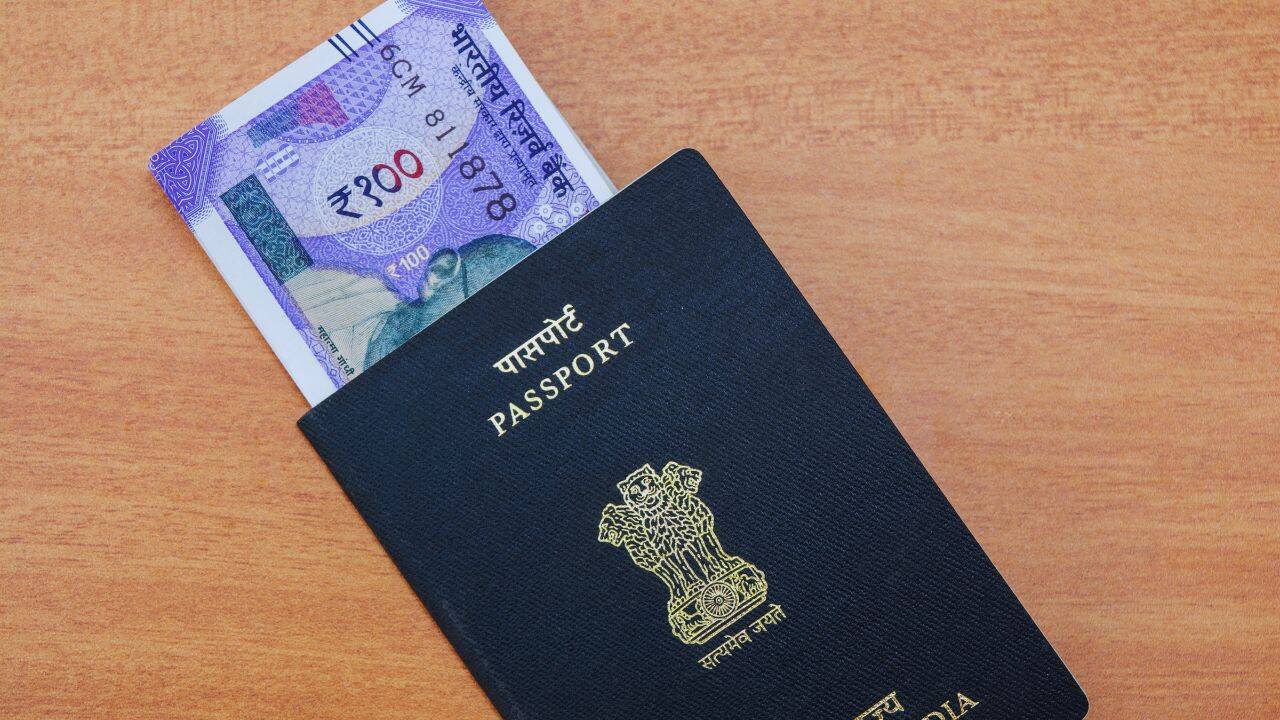
Passport India
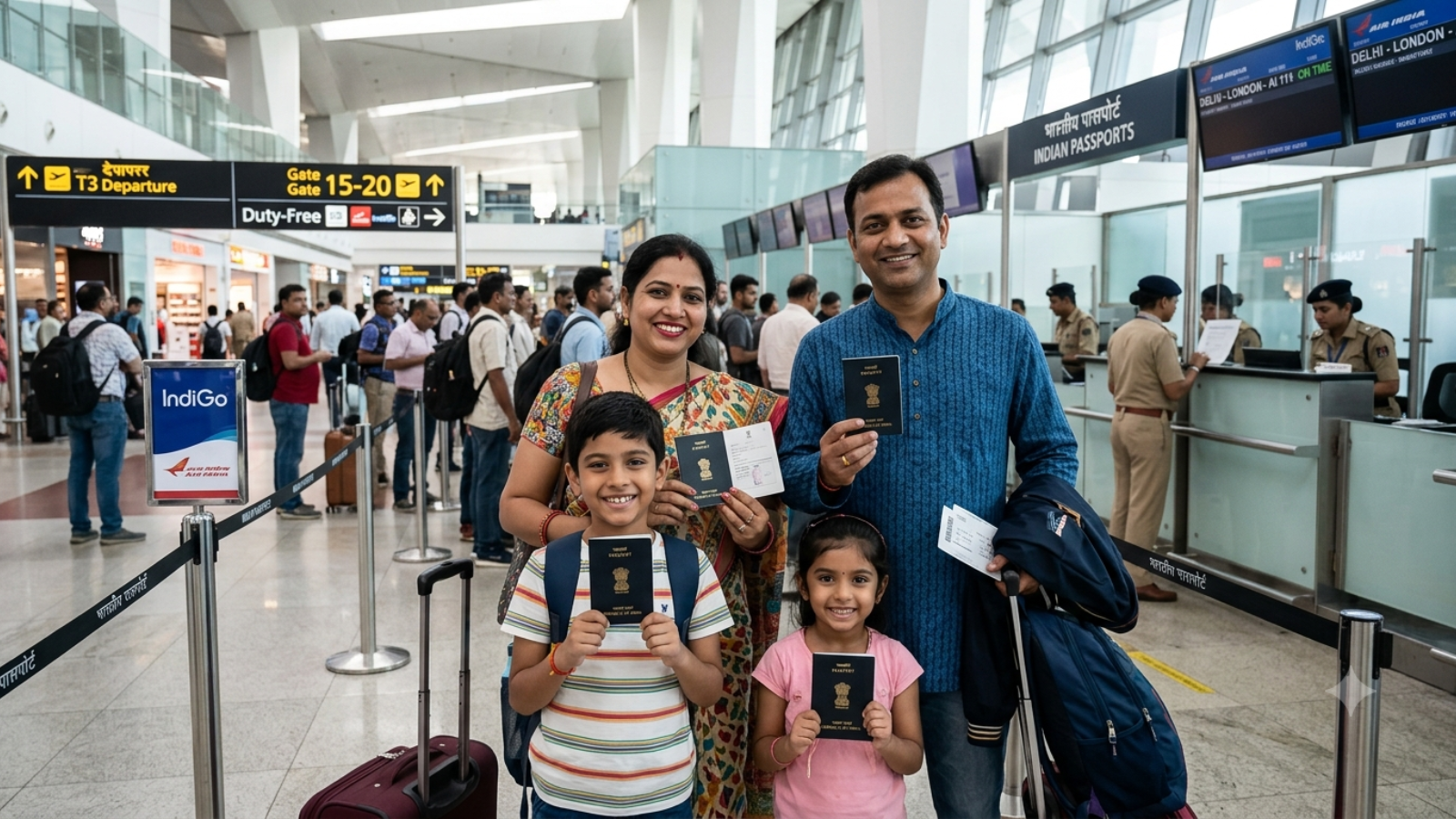
The new rules make one thing particularly important for families: check every traveller’s passport separately before booking an international trip.A parent may have a passport valid for several more years while a child’s passport could expire sooner because of the age-linked validity rule. Travellers should also check the passport-validity requirement of the destination country, as having an unexpired Indian passport does not automatically mean it meets that country’s entry conditions.For families travelling with children, teenagers or elderly parents, checking passport validity well ahead of departure can help avoid last-minute renewals, visa complications and potential problems at the airport.