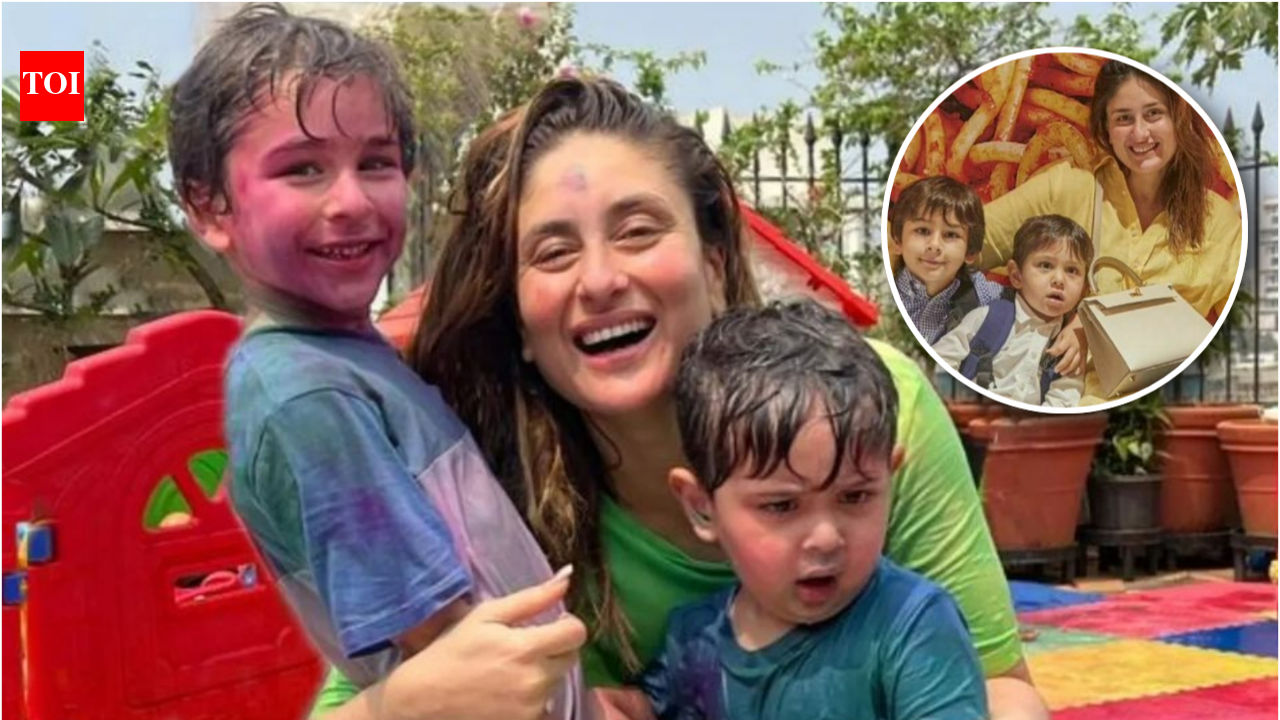
Talking to children about consent, boundaries and safety is rarely a single conversation. As children grow, parents have to find age-appropriate ways to explain difficult realities without making them fearful of the world around them.Actor Kareena Kapoor Khan recently spoke about some of these questions while discussing her work and parenting. In an interview with Brut, she shared how she chose to talk to her almost 10-year-old son after he watched a promo that dealt with difficult realities. What stayed with her was not simply that he found it disturbing, but the conversation that followed.
10 Sept 2026 | 12:19
What’s one thing you swore you’l never do as a parent now you find yourself doing?
“My almost 10-year-old son has even seen the promo. When I was watching it, I showed it to him because he knew that I was shooting for the film,” Kareena said while talking about her upcoming film ‘Daayra.’ She recalled that her son was “visibly kind of disturbed” after watching it. Her instinct, she said, could have been to tell him not to watch something so difficult. Instead, she felt there was value in helping him understand what he had seen.“Normally it would be like, ‘Okay, you know, I don’t want him to see this.’ But I was like I just feel like as a parent and as an actor it’s fine if I’m watching it and I want him to know that you know what’s happening,” she said.
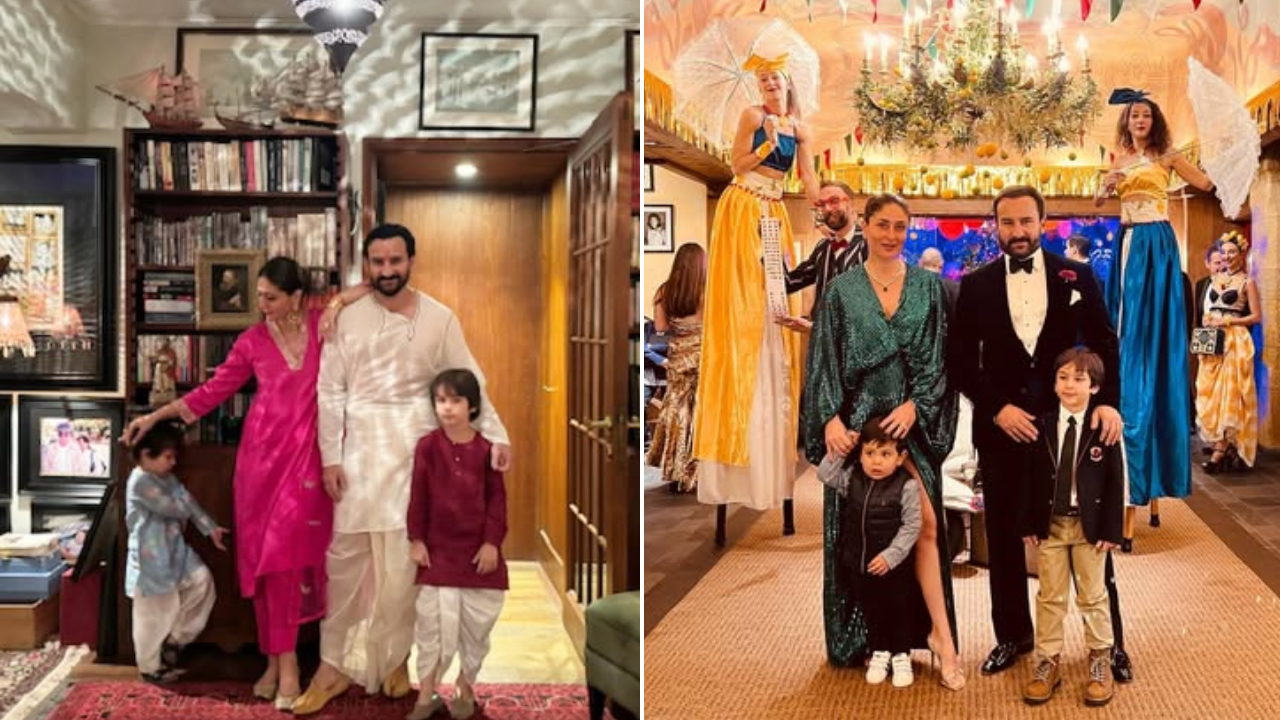
Kareena Kapoor stresses that boys also need conversations around consent and responsibility
Why boys need these conversations too
For Kareena, conversations about safety cannot be framed only as something girls need to learn. Boys also need to understand consent, boundaries and responsibility.“I think it’s important that even today a 10-year-old boy can be aware that this is happening in our society every single day,” she said. She went on to talk about helping children understand “the right and wrong”, responsibility and, importantly, what it means when a girl sets a boundary.“…what responsibility is, what know is what a boundary when a girl sets a boundary what it is and what is the truth and what is not,” she said.The larger parenting lesson is that conversations around consent do not have to begin with a single, serious “talk”. They can be built into everyday conversations- about respecting someone’s personal space, asking before touching someone, listening when another person says no and understanding that discomfort is a reason to stop. And these lessons apply to children of all genders.

Kareena Kapoor says conversations about safety should begin before children face difficult situations.
‘You can’t live under a rock’
Parents often struggle with how much of the world their children should be exposed to. Shielding a child completely may feel protective, particularly when the subject involves violence or sexual safety. But as children grow older, they inevitably encounter difficult information through school, friends, social media and the wider world.During the interview, Kareena, her co-star Prithviraj, and the director Meghna Gulzar were asked whether parents can protect children from such realities. Their response was straightforward. “You can’t… live under a rock or you know build a cocoon around them.” The three agreed that it’s important for them (kids) to know because it’s important for them to be aware that circumstances can present themselves anywhere. “Life is unpredictable and you don’t know when it comes at you. They need to be prepared,” Meghna added.That does not necessarily mean telling young children everything at once. What children need can change with age. For a younger child, it could mean learning the correct names for body parts and knowing that certain areas are private. As they grow, conversations can expand to consent, peer pressure, online interactions, relationships and recognising uncomfortable situations.
Teaching children that ‘no’ is allowed
Kareena also spoke about her own approach to saying no when she is uncomfortable. “If I’m uncomfortable about something or if I don’t want to do something, I’m very clear about like, okay, no, this is not what I’m going to do. And I’m not afraid of saying no,” she said. “And I think most women and most girls shouldn’t be.” Although she was speaking about her own professional and personal boundaries, the principle is relevant to children too.Children need to know that they can refuse unwanted touch or an uncomfortable situation and that they can tell a trusted adult when something does not feel right. At the same time, learning to set one’s own boundaries needs to go hand in hand with learning to respect someone else’s.
The conversation should not wait for a crisis
One of the challenges for parents is knowing when to start. There may never be a perfect moment, and difficult conversations can feel awkward even when parents know they are important.Kareena acknowledged that she might have spoken to her son about some of these things later, but the situation gave them an opportunity to talk.For parents, that may be the most practical takeaway: these conversations do not always need a carefully planned beginning. A question from a child, something they see online, a situation at school or even a conversation about personal space can provide an opening.The goal is not to make children fearful of the world. It is to give them the language and confidence to navigate it- and to understand that their boundaries matter just as much as everyone else’s.