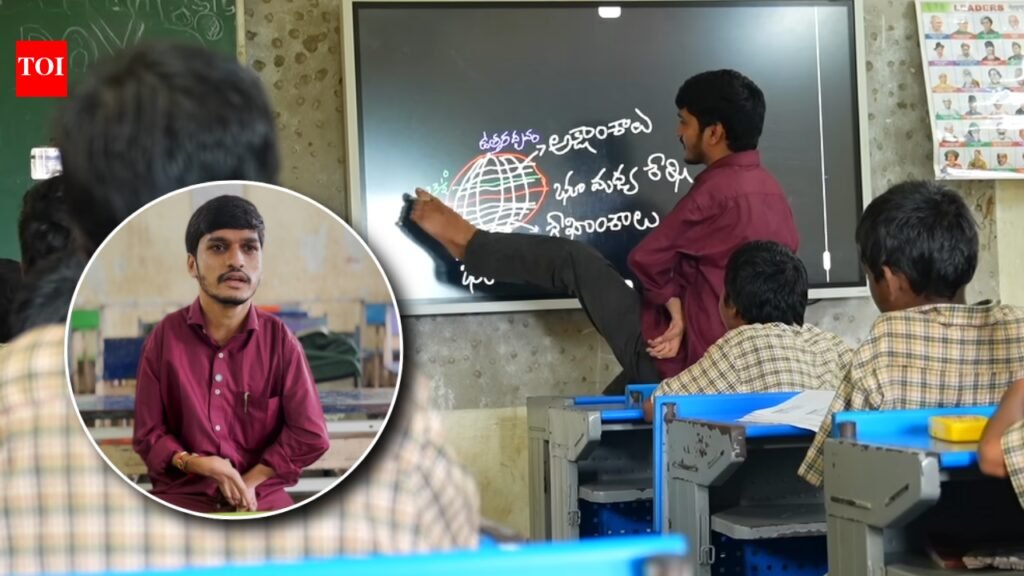
When Jami Simhachalam Naidu was a child, while other students sat at their desks and wrote with their hands, he sat on the floor.Born with disabilities in both his hands and one leg, Naidu had learnt to hold a pen between his toes. He wrote his lessons sitting on the ground, completed his exams the same way and continued his education without ever using a writer.Today, those same feet hold chalk at the blackboard.Naidu, 26, is now a government school teacher, teaching children at a Tribal Welfare High School. Sitting on a table, he grips chalk, pens and pencils between his toes and writes on the blackboard for his students.
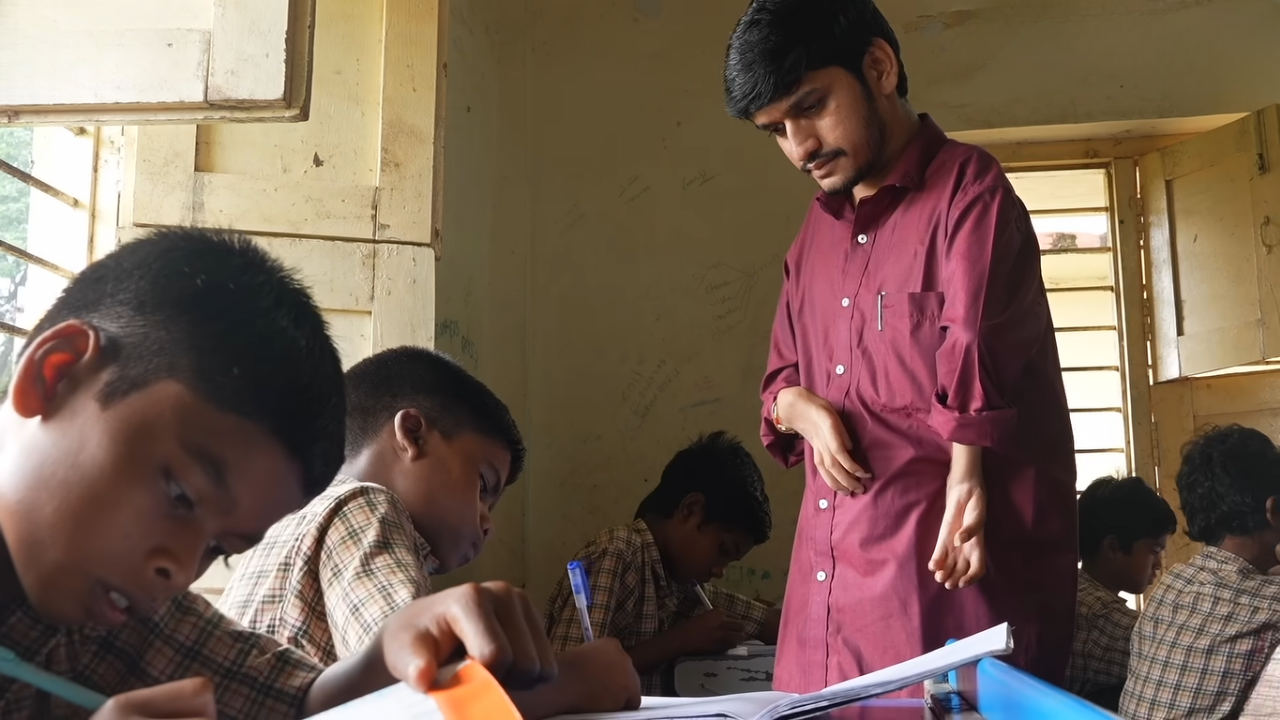
Born with disabilities in both hands and one leg, Naidu learnt to write with his feet. (Photo: BBC News Hindi)
But learning to use his feet as his hands began when he was barely three years old.Naidu was born in Ganisettipalem village of Vizianagaram district, Andhra Pradesh. Coming from a farming family, he learnt from an early age to rely on his feet for writing and everyday tasks.“I was born with a disability in both my hands and one leg. My parents were very worried. They did not know how they would raise me when I grew older or how I would manage in life,” Naidu said in an interview with BBC News Hindi.“At that time, they had no answers. People around us used to say that even if I survived, life ahead would be very difficult for me.”
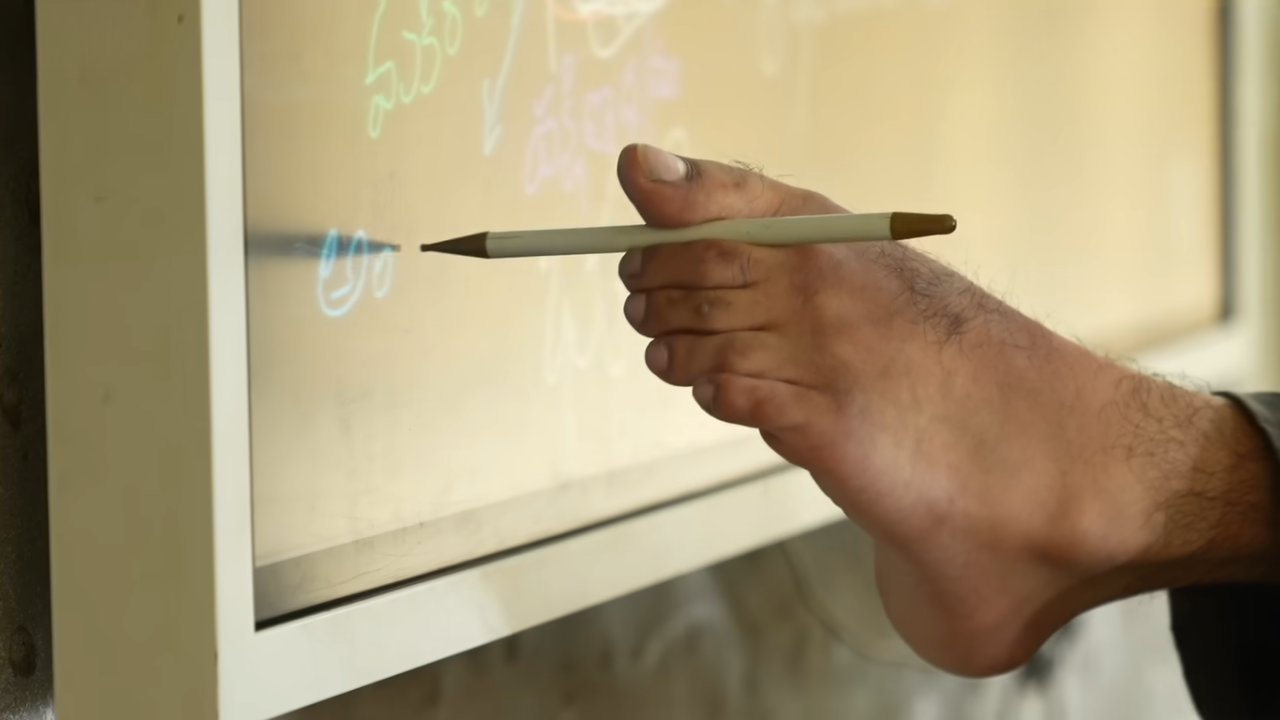
At 3, Naidu’s uncle began teaching him to draw lines with chalk between his toes.(Photo: BBC News Hindi)
When Simhachalam was 3, it was his uncle, Jami Narsimha Rao, who came across an idea that would change the course of his life. “When I was around three years old, my uncle read in a magazine about a person from another country who wrote with his feet. That gave him the idea that I, too, could learn to use my legs instead of my hands,” Naidu says. At around three-and-a-half years of age, Naidu began practising.“My uncle would place a piece of chalk between my toes and teach me. He would make me draw lines on the floor, walls and windows, Naidu recalls.
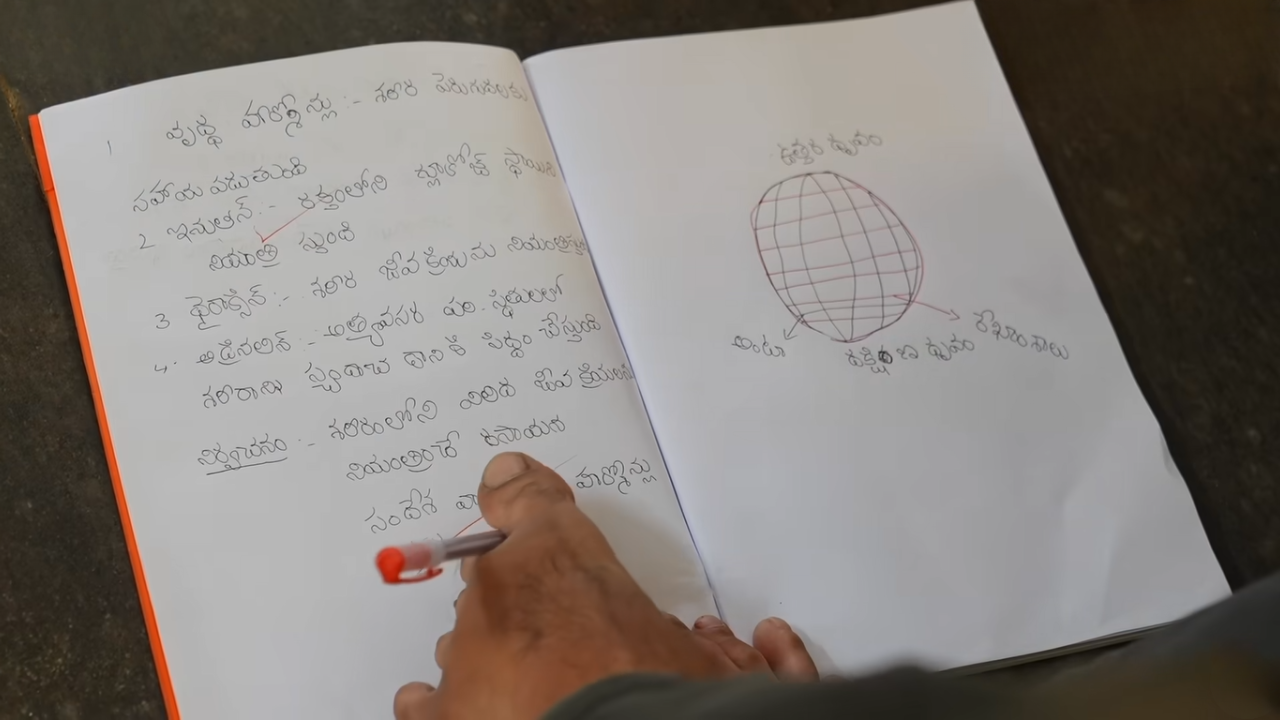
Naidu sat on the floor to write while other children wrote at their school desks.(Photo: BBC News Hindi)
“By the age of five, I had learnt how to hold a pen or pencil with my feet and write letters,” he says. “I studied from Class 1 to Class 5 in a school in my village. The other children would sit on benches and write, but that was not possible for me. I would sit on the floor and write.”He continued his education the same way.“I completed all my studies writing with my feet. Later, I did my intermediate studies, graduation and B.Ed. I never took the help of a writer. I wrote all my exams with my feet and completed them within the given time,” he told BBC News Hindi.Over the years, Naidu says he came to understand that independence, for him, meant accepting his own way of doing things. “I understood from a young age that if I wanted to do everything on my own, I would have to consider my feet as my hands. I made it a habit to do every task with my feet,” he says. “I never felt sad that other people wrote with their hands. To move forward in life, I had to accept that my feet were my hands.”
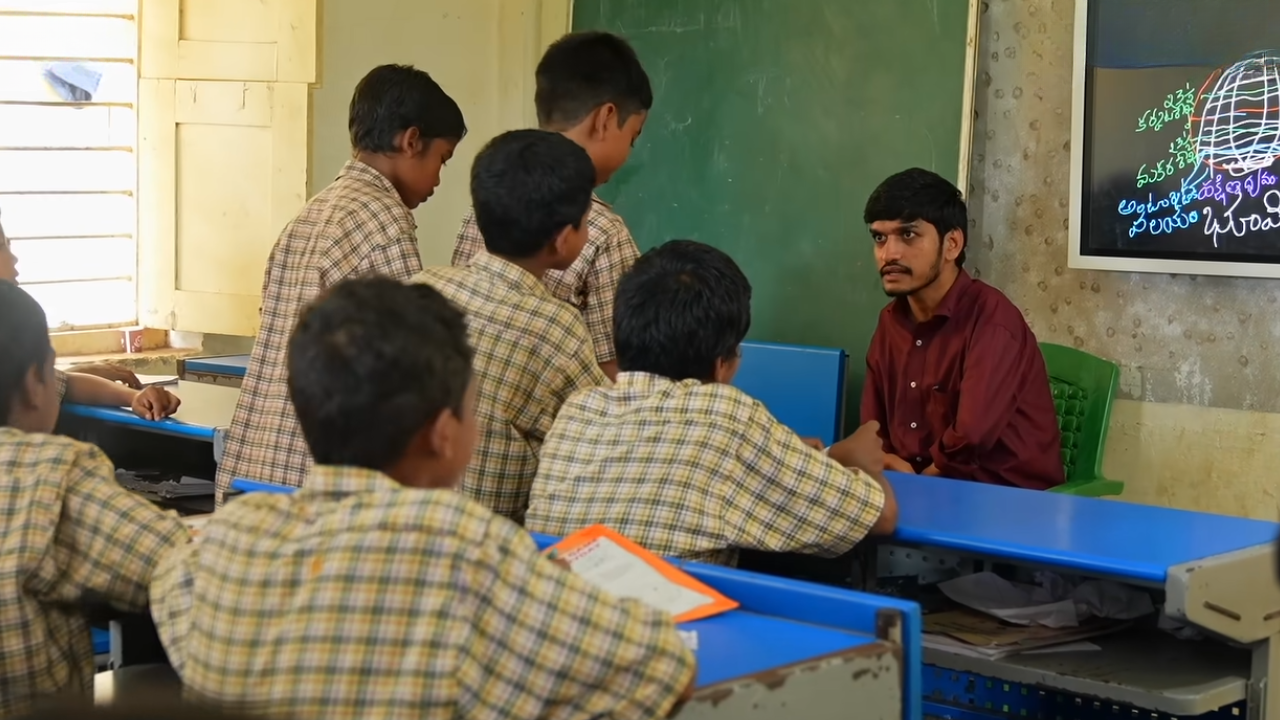
After six years of preparation, Naidu secured third rank at the district level in DSC exam. (Photo: BBC News Hindi)
Preparing for a government teaching job brought another challenge. Because of his circumstances, attending a coaching centre was not easy. “I could not go to a coaching centre, so I stayed at home and studied through online classes and YouTube. I also took guidance from mentors and teachers while preparing for the DSC examination,” he says.Some people, he recalls, assumed that his disability would make it easier for him to get a government job. But Naidu had a different goal. “Many people told me that because I was disabled, I would easily get a government job. I took their words seriously, and they motivated me,” he says. “I wanted to prove that I would get the job in the open category on the basis of my merit.”After six years of preparation, he achieved his goal, securing the third rank at the district level in the DSC examination.His arrival at the government school also left an impression on his colleagues. Kondababu, the deputy headmaster of the Government Tribal Welfare High School where Naidu teaches, recalls the day he joined. “When he joined the school, we asked him to sign some documents. He told us that he would sign with his legs,” he says.
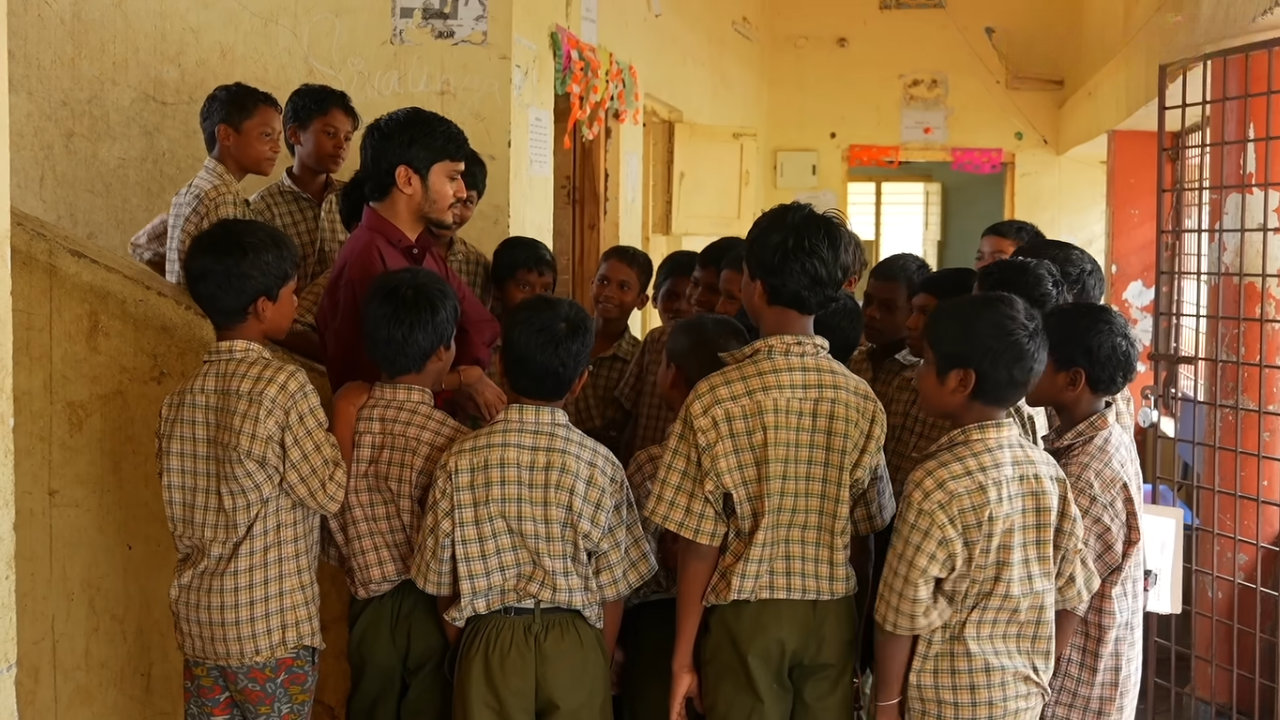
When Naidu joined the school, his students wondered how their teacher would write. (Photo: BBC News Hindi)
Kondababu says the school was happy to welcome a teacher who had cleared the DSC examination while writing with his feet. “He does not teach like any ordinary teacher. In many ways, he teaches even better. He is invaluable to our school.”For his students, too, Naidu’s first day in the classroom came with curiosity. One of them, Manikant, remembers wondering how his new teacher would write on the blackboard and teach them. “He sits on a table and writes with his feet,” the student says.
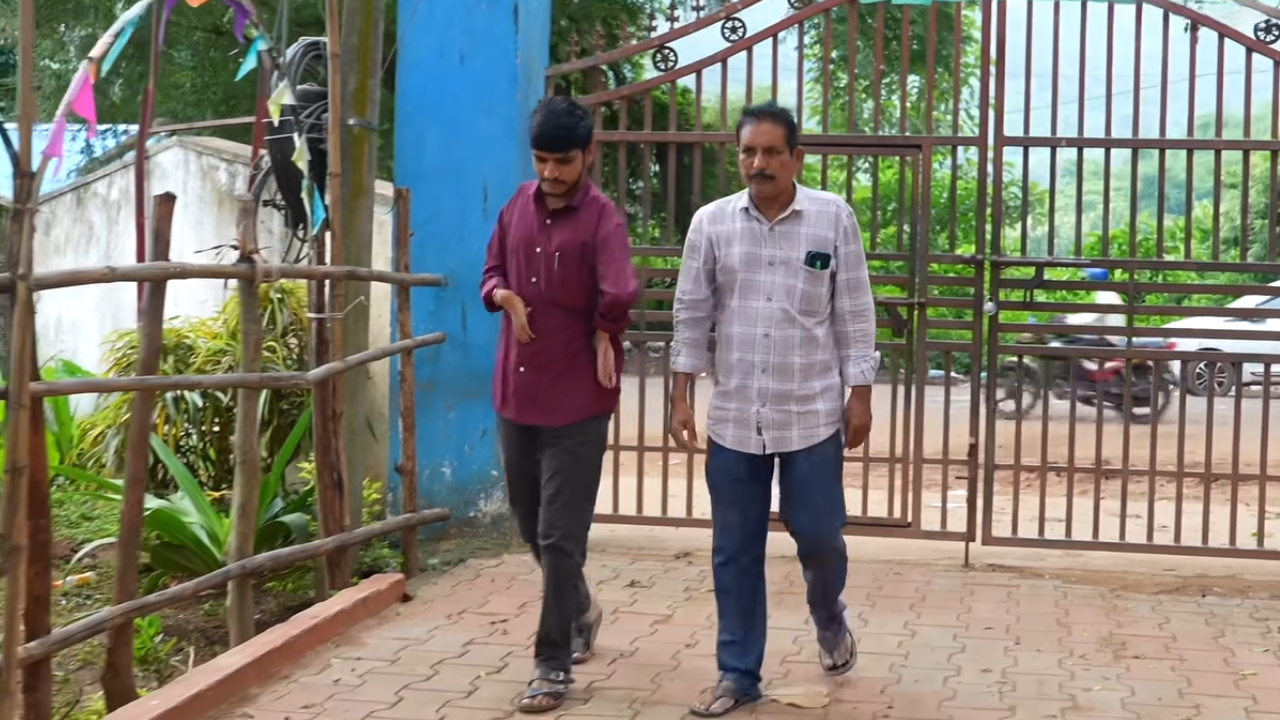
Naidu with his father, who was once told that his son would have a difficult life ahead. (Photo: BBC News Hindi)
Naidu’s father continues to support him in his daily routine, dropping him at school every morning and returning in the evening to take him home.But becoming a government teacher is not where Naidu wants his journey to end. “I am working as a teacher now, but I am also preparing for the UPSC examination,” he says. “My goal is to clear the UPSC exam within the next five years.”For Naidu, the lesson from his own life is a simple one. “We may have disabilities, but we are fully capable of achieving our goals, just like anyone else.” From a child who once sat on the floor because he could not write at a desk like the others, Naidu now stands before a classroom where his feet write the lessons on the blackboard.