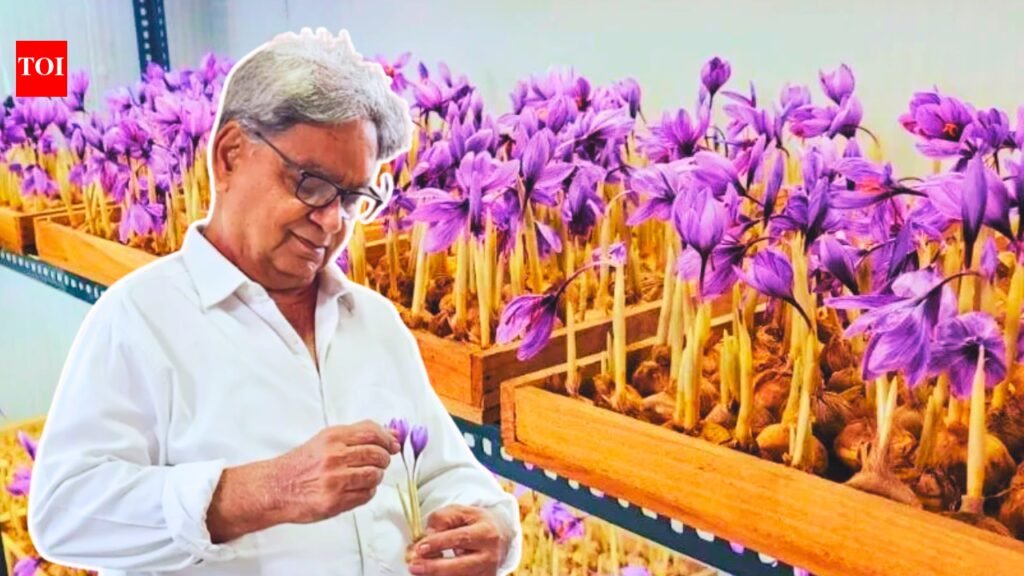
Saffron is not a crop most people would associate with a residential room in Noida. The city’s scorching summers, rising temperatures and urban pollution are a far cry from the cool conditions of Kashmir, where saffron has traditionally been cultivated in India.Yet, retired engineer Ramesh Gera managed to grow Kashmiri saffron without owning farmland. Instead, he experimented with creating a controlled environment inside a closed room, using technology to recreate the conditions required by the crop.His journey, which began with years of experimentation, has since evolved into an indoor saffron cultivation venture and a training initiative for people interested in modern farming.
Saffron corms are grown on racks inside a controlled indoor environment.
From engineering to farming
Gera spent around 35 years working as an engineer with multinational companies and had experience working in different countries. According to Kisan of India, his interest in modern farming developed after years in the engineering profession.The idea of growing crops without conventional farmland was not entirely new to him. During his professional travels, he had encountered soil-less cultivation methods and later began experimenting with similar techniques at home.Akarshak Farms, the organisation founded by Gera, says he developed his indoor saffron cultivation technique through self-experimentation between 2018 and 2020, using equipment that he designed himself. He subsequently sought technical inputs from experts at Sher-e-Kashmir Agricultural University in Srinagar and the Saffron Research & Development Centre at Pampore.The early phase was far from easy. The first two years involved repeated failures and significant expenditure, with experiments producing little or no result. Instead of abandoning the idea, Gera continued modifying the technique. By 2021, the experiments had begun producing successful results.
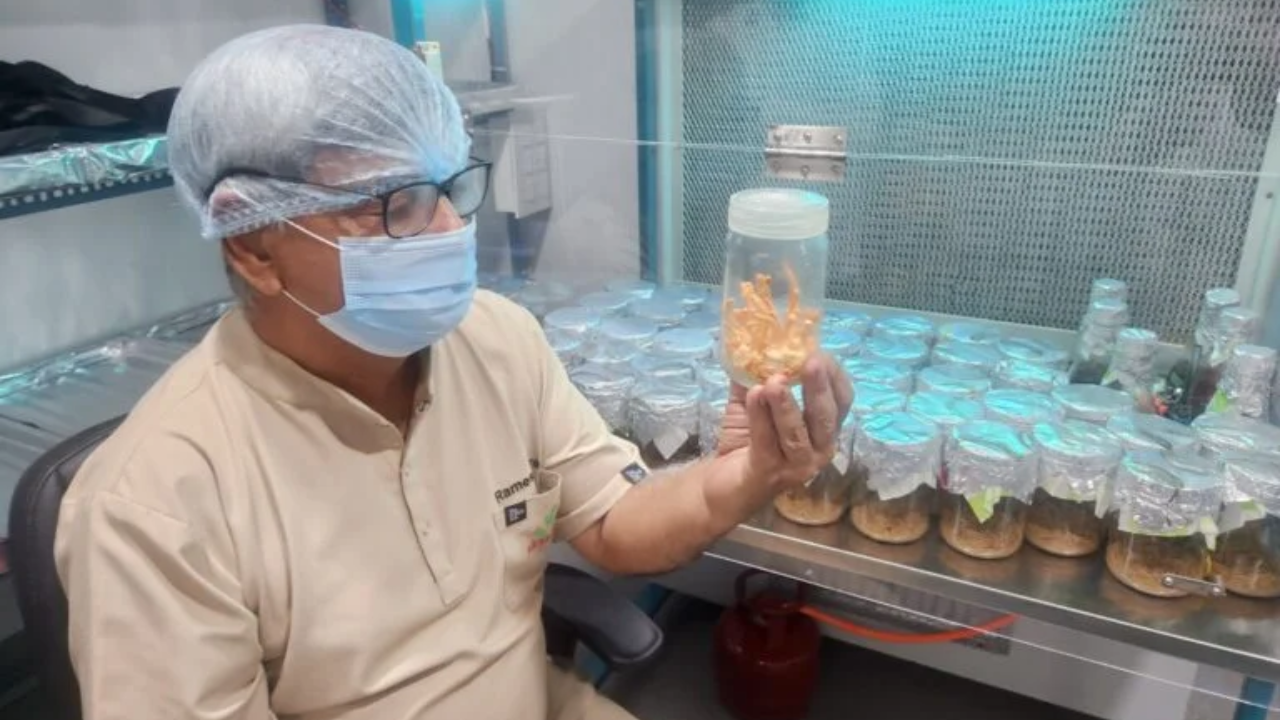
His saffron venture grew from an experiment into an indoor farming business.
How do you grow saffron in Noida?
The central idea behind Gera’s method is simple: instead of trying to make Noida suitable for saffron, create a controlled environment that resembles the conditions the crop needs.His setup does away with conventional agricultural land. Saffron corms are placed on racks inside a closed, controlled space, while temperature, humidity and light are carefully managed. According to Pulse of Noida, Gera used chilling equipment and humidifiers to recreate the cooler conditions required for saffron. The windows of the room can also be covered to regulate the amount of light entering the space.The method is soil-less, with the cultivation environment designed to protect the crop from outdoor weather fluctuations, pests and pollution. The entire growing cycle takes roughly three months, with harvesting generally taking place around November, according to the report.What makes the experiment particularly striking is the location. A crop associated with Kashmir’s cool climate is being cultivated inside an urban home in the National Capital Region, where summer temperatures can climb dramatically.
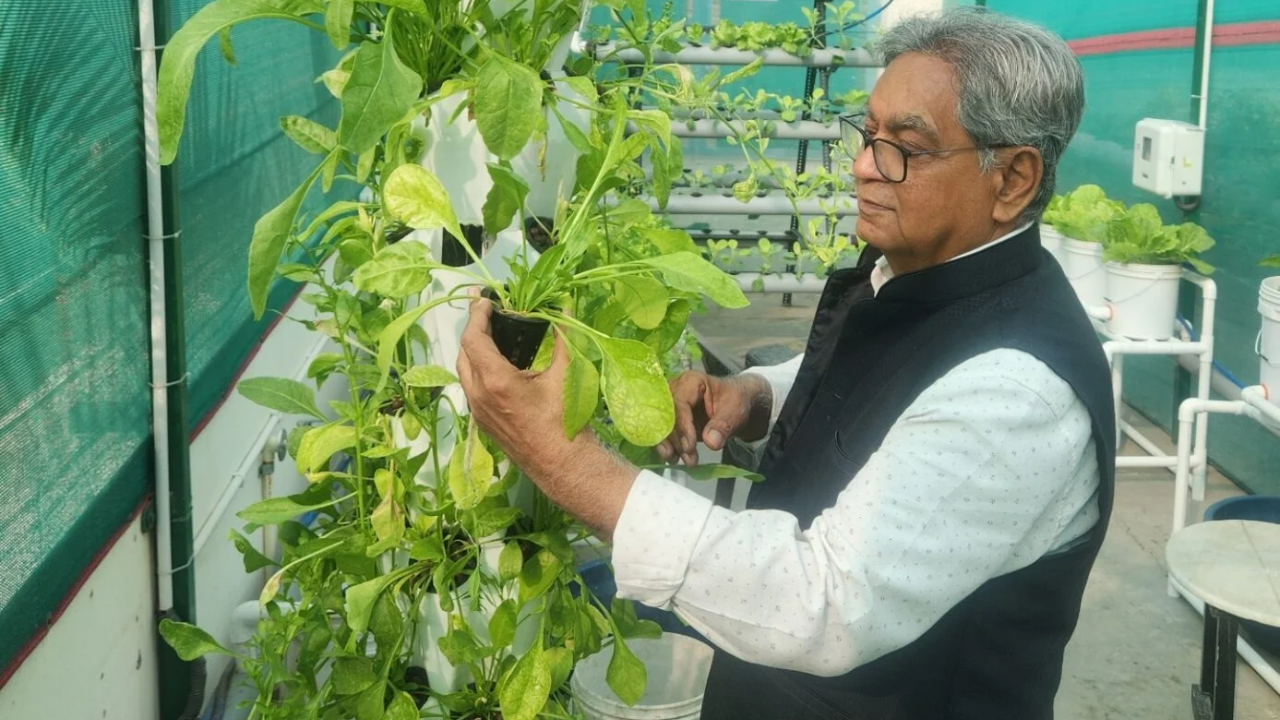
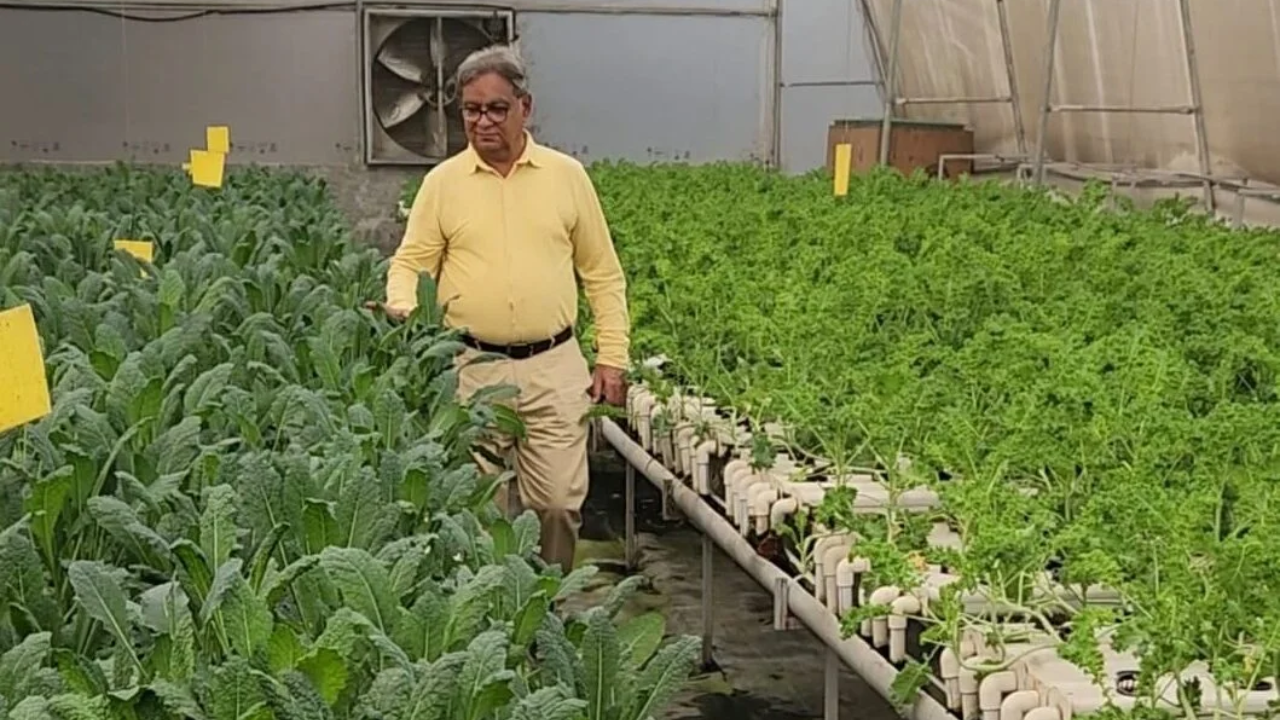
Gera later began training others in indoor saffron cultivation.
A small room, but a potentially lucrative crop
Gera’s experiment also turned into a business model. He initially invested around Rs 6 lakh in the indoor setup, including chilling equipment, humidifiers, racks and saffron corms, as per Pulse of Noida report. Now, the setup can generate revenue of up to Rs 3.5 lakh a month.Kisan of India, meanwhile, reported Gera’s annual income in the range of Rs 31 lakh to Rs 40 lakh. (Note- These figures represent Gera’s reported business earnings and should not be read as a standard return that every indoor saffron farmer can expect.)The economics can vary significantly depending on the scale of cultivation, quality of corms, equipment, electricity costs, yield and the selling price of saffron.Still, the model demonstrates why controlled-environment agriculture is attracting attention from people who do not have access to large tracts of farmland.
From growing saffron to teaching others
Gera’s experiment eventually moved beyond his own cultivation room. He founded Akarshak Saffron Institute, which was originally based in Noida and later shifted to Panchkula in Haryana. The institute now conducts online and offline programmes on indoor saffron cultivation.According to Akarshak Farms, the institute has trained hundreds of people and provides a two-day training programme followed by guided support. Its courses cover aspects such as setting up an indoor cultivation environment, temperature management, humidification, saffron corm selection and soil-less farming techniques. The institute currently lists its online course at Rs 12,000 and its offline programme at Rs 16,000.The bigger idea behind Gera’s journey, however, is not simply about growing an expensive spice in an unusual location. It is about using technology to rethink what farming can look like in a country where access to land is increasingly limited, particularly for people living in cities.From an engineer experimenting inside a room at home to an entrepreneur training aspiring indoor farmers, Gera’s story shows how an agricultural idea that initially appeared impractical can evolve when engineering, persistence and farming come together.