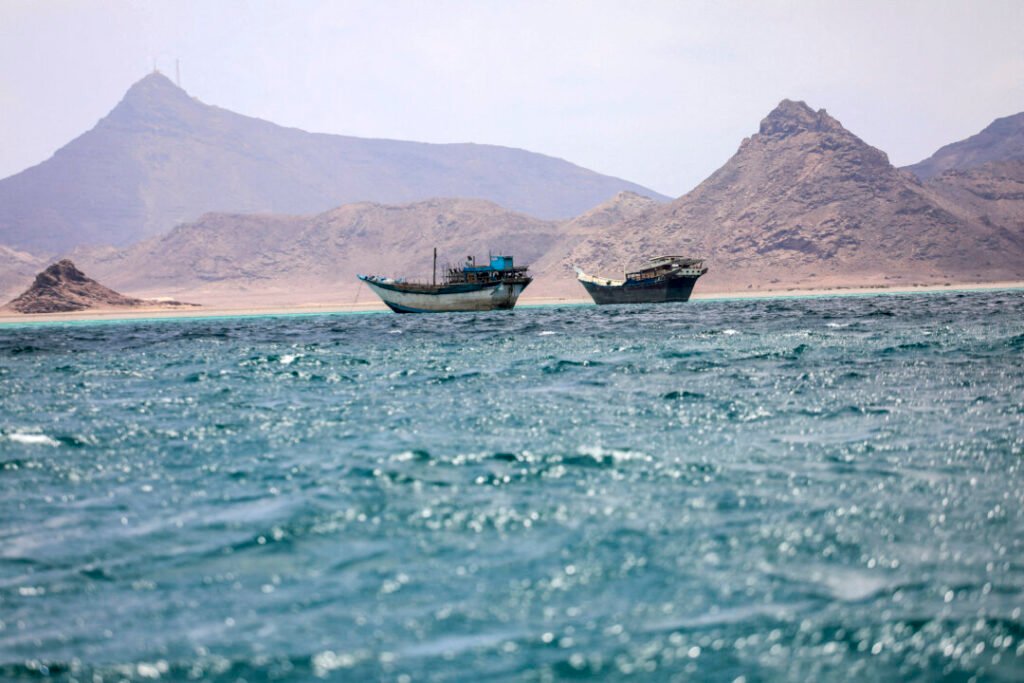
Yemen’s Houthis have captured Perim Island, a strategic island located in the Bab al-Mandeb Strait, building upon recent territorial gains in Yemen and repeated attacks against Saudi Arabia.
The Sept. 11 takeover of the island, also known as Mayyun Island, gives the Iran-backed terrorist group greater control over the strait, which is a key waterway that connects the Red Sea and the Gulf of Aden.
The capture was confirmed by both Houthi and Yemeni officials.
The Epoch Times reached out to the Yemen Embassy in Washington for comment and did not receive a response before publication.
Roughly 12 percent of the world’s goods pass through the Bab al-Mandeb Strait, and Saudi Arabia has used the strait to export oil after Iran disrupted oil tanker traffic in the Strait of Hormuz in the wake of U.S. military operations against Iran.
However, shipping in the Bab al-Mandeb Strait has dropped by approximately 60 percent since the Houthis began attacking ships transiting the waterway in 2023.
Related Stories


In addition to capturing Perim Island, the Houthis also took over the Red Sea port city of Mokha earlier this week. Mokha is located roughly 50 miles from the Bab al-Mandeb Strait.
Houthi advances near Yemen’s western city of Taiz and southern city of Hodeidah were also cited by Yemeni Foreign Minister Afrah Al-Zouba in a letter to the U.N. Security Council this week, according to the Yemeni state-run SABA News Agency.
The Washington-based Institute for the Study of War warned Friday that the Houthis’ new positions on the coast of the Red Sea, especially Perim Island, could allow the terrorist group to launch drone strikes on shipping in the strait.
The think tank suggested that the Houthis could use short-range drones capable of dropping armor-piercing explosive devices or carry out drone swarm attacks to attack and harass vessels.
The Houthis have been engaged in a conflict with the Yemeni government since seizing control of the capital city of Sanaa in 2014 and have maintained control of an area in northwest Yemen. Saudi Arabia joined the war against the Houthis in 2015.
The civil war in Yemen, which subsided following a 2022 ceasefire between the Yemeni government and the Iran-backed terrorist organization, has increased over the past several weeks.
The Trump administration designated the Houthis as a foreign terrorist organization in March 2025. The U.S. military carried out a bombing campaign dubbed Operation Rough Rider against the Houthis from March 2025 to May 2025, when President Donald Trump announced a ceasefire.
On July 20, the Houthis declared a naval blockade against Saudi Arabia in the Bab al-Mandab Strait. The group also claimed responsibility for attacks on two Saudi Arabian oil tankers in the Red Sea on July 23.
Trump warned in July that the United States would “take care of business” if the Houthis once again threatened international shipping by imposing a blockade of the strait.
During a visit to Dublin, Ireland, on Saturday, Trump said that the Houthis had called and informed him that they did not want to fight against the United States.
“They let us know they don’t want to fight with us,” he told reporters. “They don’t want us to go after them.”
Trump reiterated that the terrorist group would prefer the United States not become involved in the conflict with Saudi Arabia. He added that the Houthis were letting most ships pass through the strait despite imposing a blockade against Saudi Arabia.
“There’s just one country that they’re not too happy with, and we’ll get that straightened out,” he said.
On Friday, Saudi Arabia’s Ministry of Energy announced in a social media statement that it had shut down its East-West Pipeline as a precaution following multiple attacks targeting the pipeline on Thursday. The ministry did not confirm who was responsible for the attacks or whether the pipeline sustained significant damage.
The ministry noted that the attacks led to multiple injuries and that emergency teams responded immediately following the attacks.
The pipeline, which extends from eastern Saudi Arabia’s Abqaiq oil field to the Red Sea, was built in the 1980s during the Iran–Iraq War to bypass attacks on oil tankers in the Strait of Hormuz.
The attacks on the pipeline came after the Houthis launched ballistic missile and drone attacks on the cities of Abha, Khamis, Mushait, and Jazan in Saudi Arabia on Sept. 9.
The terrorist group also carried out strikes against the country’s oil infrastructure and an airbase in Khamis Mushait on Sept. 8.