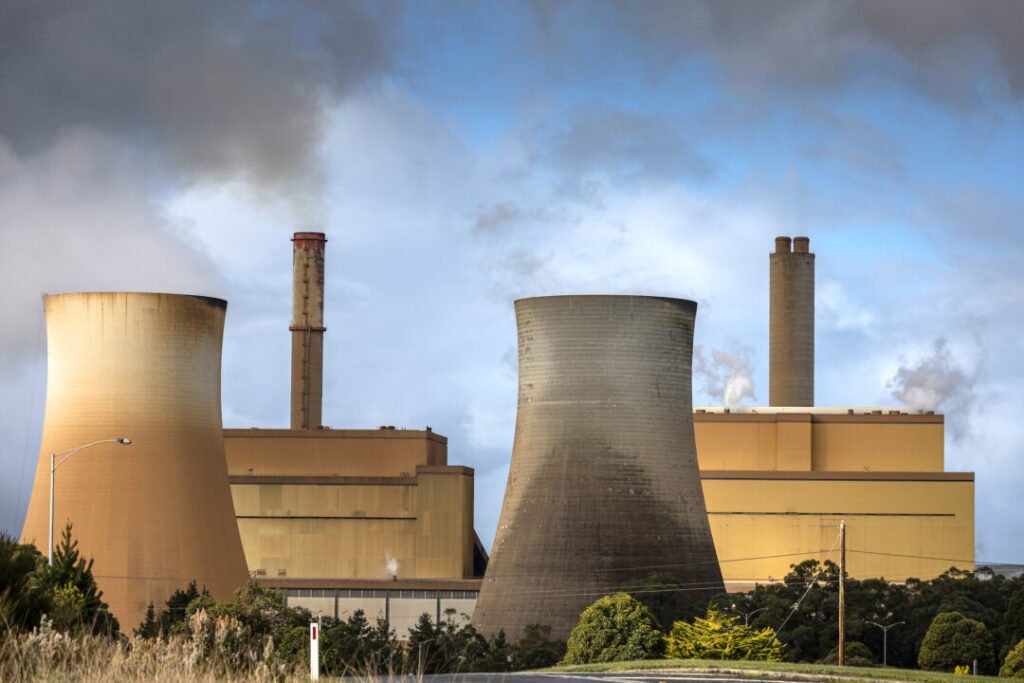

A general view of The Yallourn Power Station in Yallourn, Australia, on Aug. 16, 2022. Asanka Ratnayake/Getty Images
Victorian electricity consumers could face $33 billion (US$23.8 billion) in additional wholesale power costs by 2050 if delays to renewable generation and transmission projects continue, according to a report examining the state’s energy security as Yallourn Power Station approaches its scheduled closure in 2028.
The modelling compares an “orderly” transition, in which the state’s transmission and generation pipeline proceeds on schedule, against a “disorderly” scenario reflecting delays to two major transmission projects.
Under the disorderly scenario, Victoria’s total wholesale electricity costs would reach $161 billion between 2027 and 2050, $33 billion more than the $128 billion projected under an orderly transition, with an additional 8.6 million tonnes of CO₂-equivalent emissions.
Those wholesale costs would eventually flow through to consumer bills, the report said.
It estimated cumulative increases of up to $472 for a representative household, $4,719 for a small business and $11,797 for a large business over the five years to 2031.
Related Stories
The cost hikes were expected to be driven by an average wholesale price of $85.20 per megawatt-hour under the disorderly scenario, compared with $62.29 under an orderly transition—a difference of 37 percent.
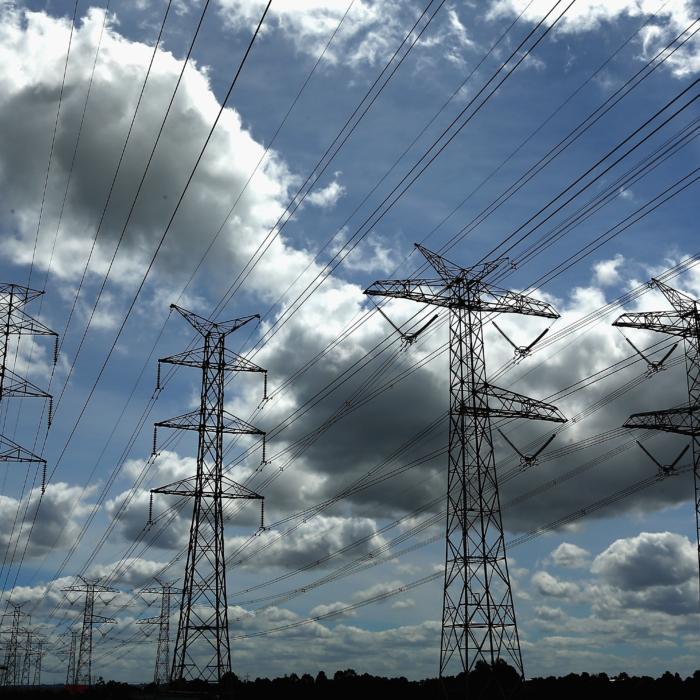
The report attributed the risk to delays affecting the Western Renewables Link and the Victoria-New South Wales Interconnector West (VNI West), both intended to connect new renewable generation and storage to the grid before Yallourn closes.
Victoria’s Auditor-General reported in December 2025 that the Western Renewables Link, originally scheduled for completion in 2025, is now expected to be completed by late 2029, while VNI West, once targeted for 2027-28, is not due for completion until late 2030.
Yallourn currently supplies around one-fifth of Victoria’s electricity.
However, Nexa Advisory’s report cautioned that the outlook still leaves little spare capacity to absorb further delays in the period immediately after Yallourn closes.
Nexa recommended that the Victorian Government confirm Yallourn’s 2028 closure date and accelerate delivery of the Western Renewables Link and VNI West with clearer accountability.
It also called for onshore wind, solar and battery projects to be unlocked inside and outside designated Renewable Energy Zones, along with a diversified firming portfolio and a limited backup role for gas.