The nation’s transportation chief told Ford Motor Co. on Tuesday to back away from Chinese partners and put U.S. plants first in a letter sent to Chief Executive Jim Farley, citing national security concerns and the need for American jobs.
But the automaker responded, calling the letter “a wrongheaded attempt to capture headlines.”
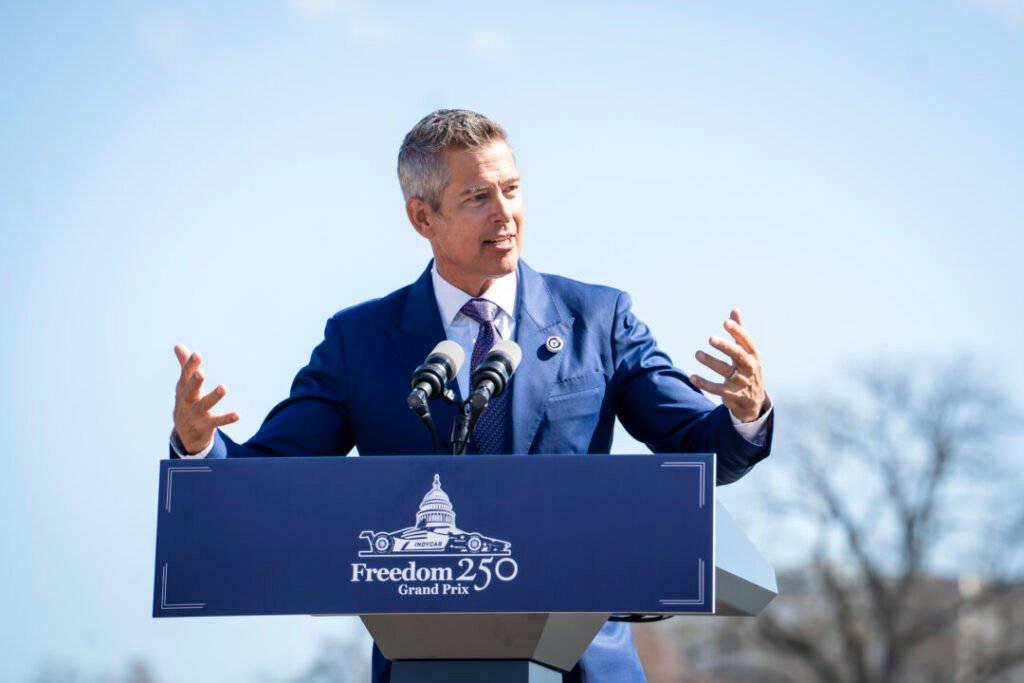
Transportation Secretary Sean P. Duffy said in a Sept. 8 news release that Ford has deepened its reliance on China as Washington treats Beijing as a “strategic competitor.”
Duffy wrote that skilled American workers lose when Ford manufactures with Chinese companies abroad instead of expanding at home.
The letter said Ford has delayed bringing Chinese production of some Lincoln models back to the United States until 2030. That delay, according to the department, leaves Ford dependent on China for years.
Related Stories


Duffy also said his department “remains deeply alarmed” that Ford uses licensed technology from Chinese battery maker Contemporary Amperex Technology Co. Ltd. (CATL) at the automaker’s BlueOval Battery Park facility in Marshall, Michigan. CATL is on the Department of War’s list of Chinese military companies.
“When a company intentionally chooses to deepen operational dependencies on strategic competitors, it fails to act as the reliable partner the American public and this DOT require,” Duffy wrote.
“Iconic American companies, like Ford, are also expected to out-innovate competitors,” the letter continued. “To that end, they need to chart clear paths to technological self-reliance.”
Ford released a statement defending its actions and declaring itself “the most American automaker.”
“We produce more vehicles in the U.S., employ more hourly manufacturing workers and export more vehicles from the U.S. than any other automaker. While our crosstown rivals and foreign-based competitors increasingly rely on importing foreign-made vehicles from Japan, Mexico and Korea, Ford is doubling down on America”
The statement also said Duffy’s letter was wrong about Lincoln production, saying: “Ford is working productively with officials across the administration on trade, emissions standards and bringing manufacturing home, including a commitment to increase Lincoln production for U.S. customers.”
The Pentagon added CATL to its Section 1260H list of Chinese military companies in January 2025. The listing blocks new Defense Department contracts with named firms, but does not forbid private commercial deals.
CATL rejected the designation. The company said it “is not engaged in any military-related activities.”
Ford has described the Marshall site as wholly owned and controlled by Ford, with CATL limited to technology, knowledge and services.
House Select Committee on the Chinese Communist Party Chairman Rep. John Moolenaar (R-Mich.) has questioned whether the licensing terms shifted as Ford steered some battery work toward energy storage and data centers.
In July, Ford agreed to sell Geely a 34 percent stake in its Spanish manufacturing business for 221 million euro, about $252 million, with Ford retaining 66 percent. The companies plan to run the Almussafes plant near Valencia as a contract manufacturer for both brands. Operations could start in the first half of 2027 if regulators approve. New vehicles would follow in 2028.
“Ford is actively helping the Chinese Communist Party advance its ambitions to dominate global automotive supply chains and increase the world’s dependence on China,” Moolenaar said at the time. “Ford should work with our nation’s allies, not our adversaries.”