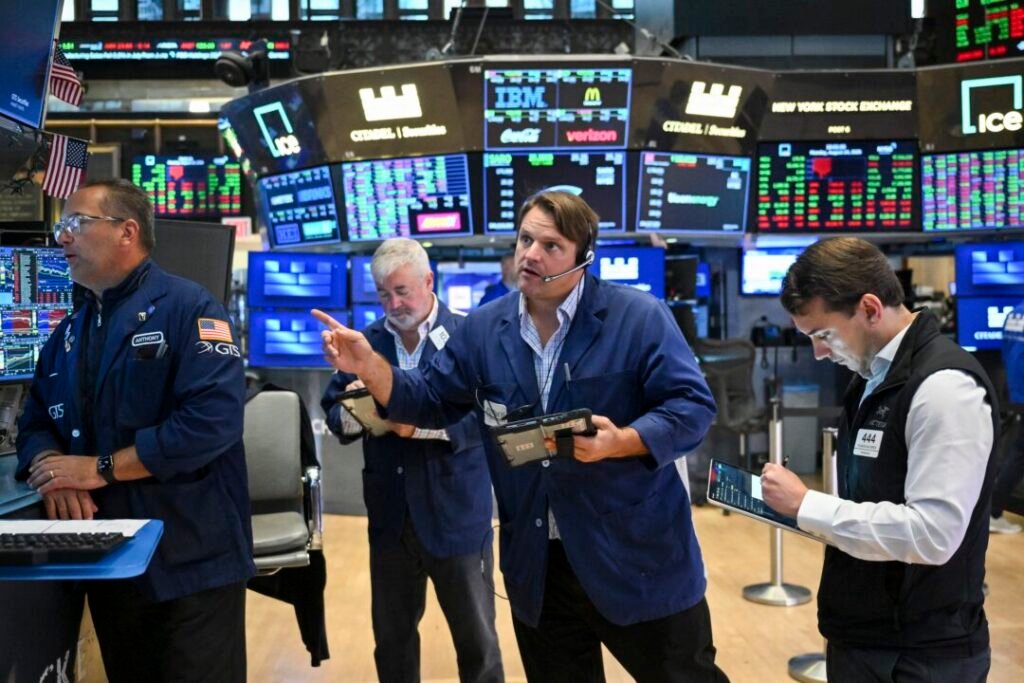
On Thursday, Sept. 3, 2026, Wall Street delivered a powerful rally. The Dow Jones Industrial Average surged more than 600 points, gaining about 1.2 percent, while the S&P 500 rose 1.1 percent and the Nasdaq Composite climbed 1.4 percent. Technology stocks led the advance, while Goldman Sachs, the investment-banking giant and a member of the 30-stock Dow, jumped about 3.3 percent.
Goldman Sachs is an interesting example because the Dow is price-weighted. In simple terms, stocks with higher share prices have a greater influence on the Dow than stocks with lower share prices. So when a high-priced stock such as Goldman Sachs makes a big move, it can have an outsized impact on the Dow’s headline number.
At first glance, this is exactly what investors want to see. The major U.S. indexes are hovering close to their highs, with technology, financial, and semiconductor stocks continuing to attract strong investor enthusiasm. After such a powerful run, it is easy to believe that the momentum will simply continue. But the market is near record highs, and that may be precisely why investors should be paying attention.
October Gets the Headlines. September Gets the Statistics
Investors have long associated October with stock-market disasters. The crashes of 1929 and 1987 occurred in October, while the global financial crisis reached its most terrifying stage in October 2008. The month therefore carries an almost mythical reputation as the “crash month.” But history tells a more nuanced story.
September has historically been the weakest month for the S&P 500 on average. Its long-term average return has been around negative 1 percent, making it statistically weaker than October. October, meanwhile, is better known for volatility than for consistently negative returns.
That distinction matters. I would not tell investors to sell everything simply because the calendar has turned to September. That is not a sensible investment strategy. Instead, September should serve as the time for a portfolio check-up.
After a powerful run in equities, investors should ask whether their portfolio has become too concentrated, too leveraged, or too dependent on one particular investment theme. Because when markets turn, they rarely give investors much warning.
The SanDisk Warning: From Market Darling to Blood Bath
Few stocks illustrate the psychology of a bull market better than SanDisk. When SanDisk began trading as an independent company after being spun off from Western Digital in February 2025, its shares were around $35–$36. By June 2026, the stock had become one of the most extraordinary performers in the entire market. It reached a record closing price of $2,335 on June 25—more than 60 times its original trading price. By June 20, the stock had already gained nearly 6,000 percent from its February 2025 debut.
Related Stories
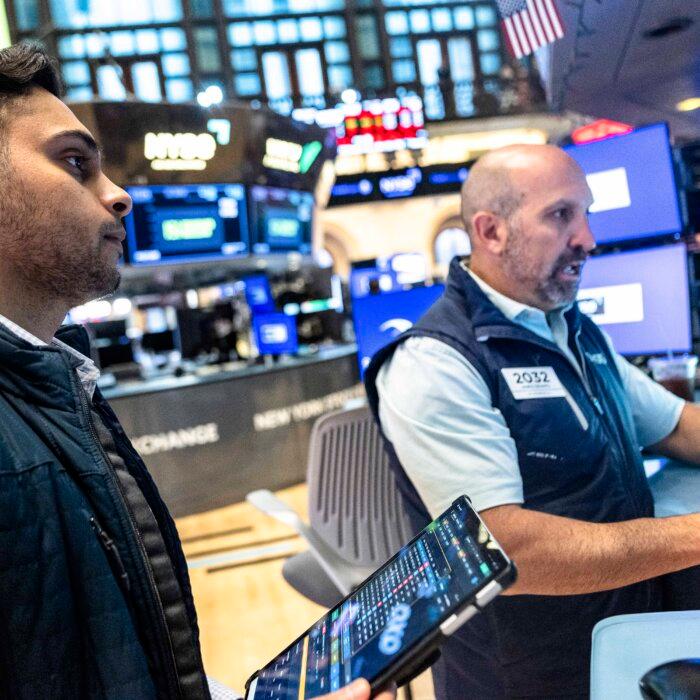
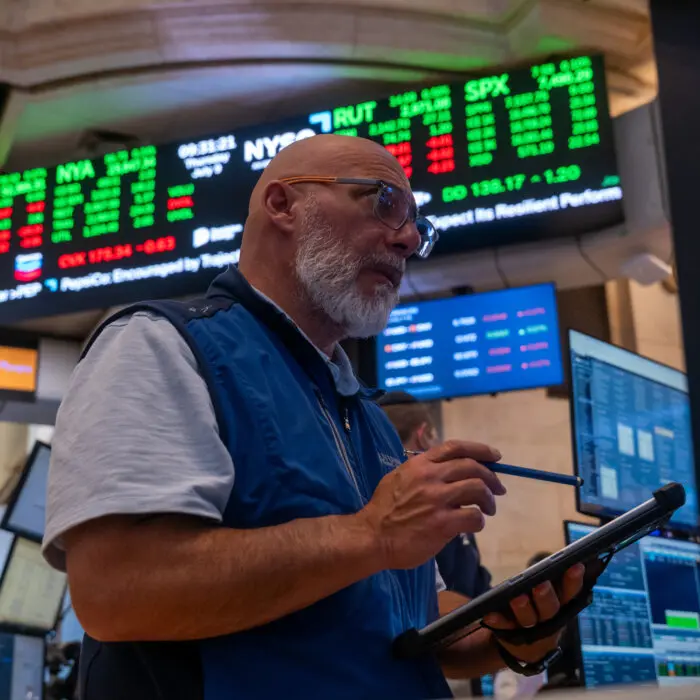
For investors who had bought early, the numbers were almost unbelievable. A $10,000 investment at roughly $36 a share would have grown to more than $650,000 at the June peak, before transaction costs and taxes. Few investments produce that kind of return in such a short period.
There were, of course, fundamental reasons behind the rally. SanDisk benefited from the explosive growth of artificial intelligence and the enormous amount of storage required by AI data centers. Tight supply in the NAND memory market, combined with strong demand for enterprise storage, helped drive both earnings expectations and investor enthusiasm. This was not simply a case of a stock rising without a business story behind it.
But that is precisely what makes the SanDisk story so important. A good company can become a dangerous investment when expectations and position sizes become too large.
After reaching $2,335 in late June, SanDisk entered a brutal reversal. By July 28, the stock had fallen to about $1,096, roughly 53 percent below its June peak. It subsequently traded as low as approximately $1,016 on July 29. Although the stock remained dramatically higher than where it had traded at the beginning of the year, investors who had bought near the peak experienced a drawdown of more than 50 percent in a matter of weeks.
This is where the mathematics of investing becomes more important than the excitement of investing. Imagine an investor who had become convinced that SanDisk was the next great AI winner and placed 50 percent of a portfolio into the stock. If SanDisk then fell 50 percent, the investor would lose 25 percent of the entire portfolio—even though the other half of the portfolio did not move at all.
If the portfolio were $1 million, that would mean a $250,000 loss. That is the danger of concentration. And concentration can become especially difficult to recognize when a position has already generated enormous profits. A stock that rises 500 percent, 1,000 percent, or even 5,000 percent can begin to feel as though it is somehow safer simply because the investor has made money from it. In reality, the opposite can be true: the larger the position becomes relative to the overall portfolio, the greater the potential damage when momentum reverses.
SanDisk also demonstrates another important phenomenon in financial markets: the feedback loop between rising prices, investor enthusiasm, and Wall Street expectations. And when the momentum finally breaks, the reversal can be equally powerful and brutal.
Why Diversification Matters—Whether With $100,000 or $1 Million
Some investors think diversification is mainly for small investors. It is not. Suppose you have $100,000 to invest and place $50,000 into one semiconductor stock.
If that stock falls 50 percent, you have lost $25,000—or 25 percent of your entire portfolio. Now imagine you have $1 million and make the same decision, allocating $500,000 to that one stock.
A 50 percent decline produces a $250,000 loss. The percentage mathematics is identical. But suppose the same stock represents only 5 percent of your portfolio. Even a 50 percent collapse would reduce the overall portfolio by approximately 2.5 percent. That is the power of position sizing.
September Is Not a Sell Signal—It Is a Warning
Markets do not follow calendars with perfect precision. September can be a positive month. October can be a positive month. And a market near record highs can continue making new records. Today’s rally is a reminder of that. Investors who sold simply because they were afraid of September could easily miss further gains.
But that does not mean investors should become complacent. The right response to a strong market is not necessarily to become bearish. It is to become more disciplined.
Ask yourself: How much of my portfolio is concentrated in one stock? How much is concentrated in one sector? Am I using leverage? What happens if my largest position falls by 30 percent? What happens if it falls by 50 percent? How much of my portfolio is exposed to the same underlying economic or market factor?
And perhaps most importantly: Can I remain rational when the market moves violently against me? These are much more useful questions than trying to predict the exact day of the next correction. Because nobody knows when it will come. But corrections will come.
Don’t Wait for the Correction to Teach You
The most dangerous time in investing is not necessarily when the market looks terrible. Sometimes it is when everything looks wonderful. When your stocks are going up every week, when analysts are raising price targets, when financial headlines are celebrating new records and when everyone around you seems to be making money, risk can become almost invisible. That is when discipline matters most.
The semiconductor correction from mid-June into early July should be remembered as a warning—not because semiconductors are finished, but because even the hottest investment themes can experience brutal reversals.
SanDisk demonstrated how quickly a market darling can fall more than 50 percent from its peak. And September provides an appropriate moment to reflect on both lessons. The objective of investing is not to identify the stock that goes up the most. It is to build a portfolio that can survive the stocks that don’t. So enjoy the market rally. Celebrate the new highs. But remain cautious.
Do not wait for the next 50 percent correction to teach you the importance of diversification. Do not confuse a great company with a safe position. Do not confuse a great investment theme with a diversified portfolio.
And above all, never allow one hot stock—or one hot sector—to determine your financial future. The market may continue higher from here. It may even surprise us with another powerful rally. But if the correction comes, the investors who prepared beforehand will have something the others may not: the ability to stay in the game.
The best time to protect your portfolio is not after the correction. It is before the correction begins.
The views and opinions expressed are those of the authors. They are meant for general informational purposes only and should not be construed or interpreted as a recommendation or solicitation. The Epoch Times does not provide investment, tax, legal, financial planning, estate planning, or any other personal finance advice. The Epoch Times holds no liability for the accuracy or timeliness of the information provided.
Views expressed in this article are opinions of the author and do not necessarily reflect the views of The Epoch Times.