[ad_1]
The U.S. Department of Transportation is working hard to give automated vehicles (AVs) the green light, the agency announced in a report on its approach to AVs into the next decade.
American automakers have “led the world in innovation for more than a century” with novelties including assembly lines, cruise control, and airbags, Transportation Secretary Sean Duffy wrote in a letter accompanying the report released Sept. 3.
He pitched AVs as the next great gear shift forward, with safety as AVs’ chief selling point.
“AVs don’t drive drunk, they don’t get tired, and they can’t get distracted by an incoming text message or notification—all significant contributors to crashes today,” Duffy wrote.
He pledged “robust oversight” of AVs by his department, including the development of minimum AV safety standards. He also told American riders they could “rest assured” that a more automated future fleet will “continue to include the option to drive yourself.”
Duffy spelled out several scenarios in which people might choose an AV. “A long day at work, a fun night out on the town, or an injury or disability” could mean that “driving isn’t an option.” In those cases and others, future AVs “will offer a new way to get home,” he said.
Related Story

The Trump administration has been pushing for more domestic manufacturing. The transportation secretary predicted AVs would be “developed, built, and operated by America’s best and brightest,” and said that the administration would work with bodies that set international standards to make sure that these American-made vehicles are exportable.
New Roadmap
Steps laid out by the report—“America Leads: DOT’s National Strategy for Automated Vehicles, Fiscal Years 2026–2030”—are consistent with where Duffy has been driving the department since he was confirmed as its boss in late January 2025.
The report reaffirms that AVs may be developed and deployed under existing federal law, and notes that AVs must still follow the same rules as other vehicles “unless granted an exemption.”
Applying many of the current federal automotive regulations to the construction of all AVs “creates unintended and unnecessary regulatory barriers” to adoption, it says.
Some existing regulations, such as the requirement that a car must have a steering wheel, “do not serve a safety purpose” when applied to AV vehicles such as automated robotaxis.
In those cases, the Department of Transportation and its subagencies will work to grant exemptions.
Zoox and Other AVs
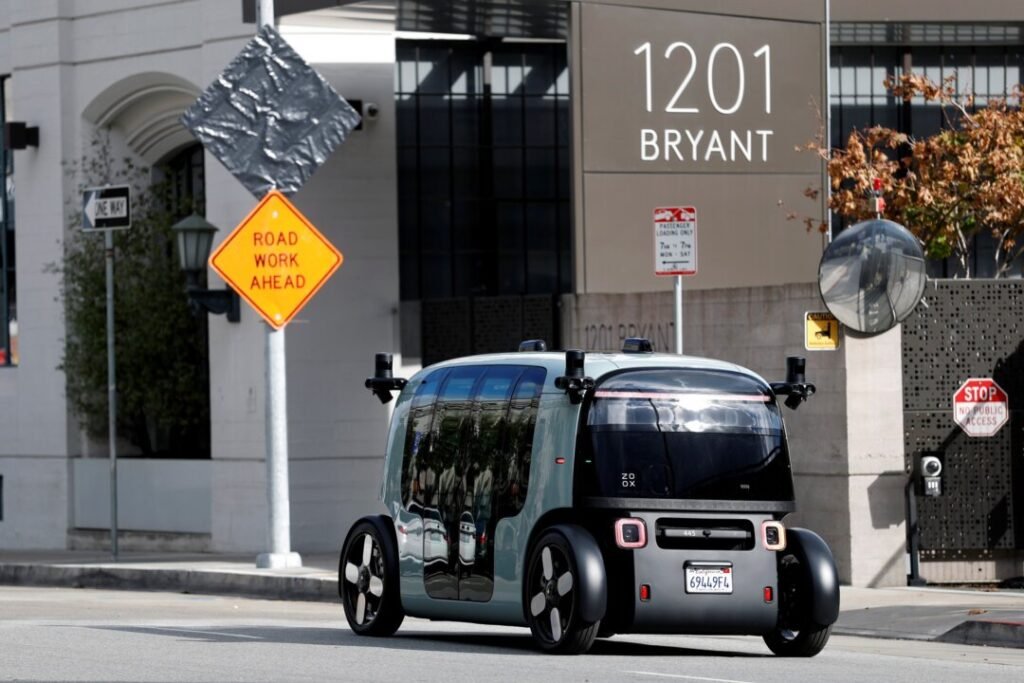
AV transportation firm Zoox, one of two company-specific examples offered by the report, asked the National Highway Traffic Safety Administration (NHTSA) for eight specific exemptions from safety standards so that it could “deploy its purpose-built robotaxis commercially.”
The agency granted the request at the end of July.
With previous permission, Zoox had already deployed some robotaxis as a free service in Las Vegas and San Francisco to build future demand. Because of the federal commercial exemption, it was able to start charging passengers in August.
“We are grateful to Secretary Duffy, the administration, [NHTSA] Administrator Morrison, and NHTSA for their engagement and their commitment to paving the way for Zoox and our fellow travelers to keep innovating and developing this critical technology here in the U.S.,” the company said in a statement at the time.
The report explains that the agency will go beyond spot exemptions and work to update standards so that future AV makers do not have to seek exemptions. It also says the Department of Transportation will use its authority to harmonize information standards between states, paving the way for some state-to-state AV travel.
It also acknowledges that there will be some displacement of transportation workers. The department pledges to “work with industry and public sector stakeholders to support the transportation workforce during the transitions that come with technological change.”
All of this is expected to take a long time. The law firm Holland & Knight informed clients that the Department of Transportation “anticipates a long transition period” and that AVs are expected to share the roads with “conventional, human-driven vehicles” rather than relegating them to the scrapyard.
[ad_2]
Source link