[ad_1]
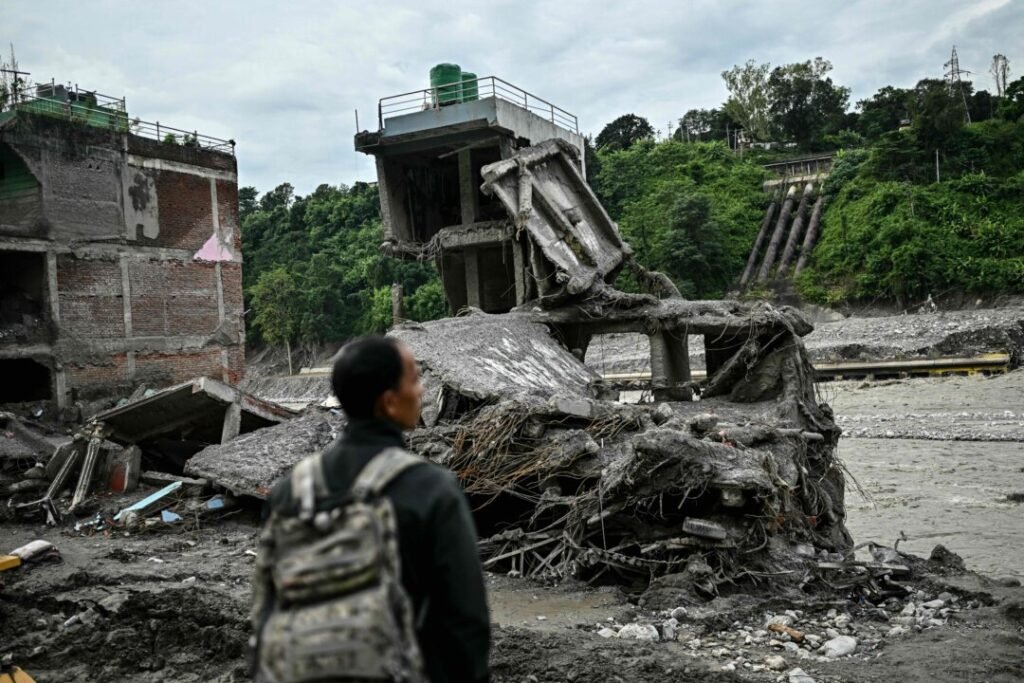
More than a week after a catastrophic flood ravaged the border between Nepal and China, about 70 Americans remained missing, according to the U.S. State Department.
Rescuers across the Himalayan region are keeping up relentless search efforts after two more people were pulled out alive from two separate locations in Nepal on Sept. 5, rekindling hopes for survivors.
“We can confirm that 17 American citizens have made their way to safety,” a State Department spokesperson told The Epoch Times in a statement.
As of 7 a.m. ET on Sept. 3, the Department is aware of “approximately 70 Americans unaccounted for” in the Nepal-China cross-border region, the spokesperson said.
The department continues to stay in close contact with the families of missing Americans and is committed to providing regular updates, the spokesperson added.
Related Stories


The State Department official expressed deep condolences to those affected by the flooding and reaffirmed the United States’ “enduring friendship with the Nepali people.”
The Department urged Americans in affected regions to monitor local news, follow local authorities’ emergency instructions, and enroll in the State Department’s Smart Traveler Enrollment Program to receive important emergency information.
“Americans outside of the affected area should not travel to the affected area for any reason as this area remains threatened by additional flash floods and landslides,” the official said.

A woman looks at photographs of missing flash flood victims outside a temporary relief camp in Trishuli, Nepal’s Nuwakot district, on Sept. 4, 2026. Pedro Pardo/AFP
Survivors
In Nepal, rescue teams pulled a woman alive from a house in the flood-ravaged town of Nuwakot on Sept. 5, according to the country’s armed forces.
Footage showed that only the upper part near the roof remained visible while the rest was buried under thick mud and debris. Local media Kathmandu Post reported that the 64-year-old woman was found on the upper floor of a four-story house.
The news came just hours after the Nepali army said a foreign national was rescued from a hydropower tunnel after being trapped in darkness for ten days.
An accompanying video released by the Nepali army on social media showed the man appearing exhausted as he received emergency medical attention aboard a helicopter. Chinese state media CCTV said the rescued worker is a Chinese citizen, saying the man has been taken to a hospital and is now in stable condition.
A day earlier, rescuers in Nepal pulled two workers from another underground tunnel at the Trishuli-3A hydropower plant, according to the Nepali Army.

Survivor Sanjay Sah is carried by members of a search and rescue team after they rescued two people who had been trapped inside a tunnel at the Upper Trishuli-3A Hydropower Project following devastating floods and mudslides that struck the Bhotekoshi River in Rasuwa, Nepal, on Sept. 4, 2026. Nepal Army/Handout via Reuters
More Than 5,300 Missing
As of Sept. 5, at least 1,331 bodies had been recovered in Nepal, according to a social media update from the country’s National Disaster Risk Reduction and Management Authority. Around 5,000 are still missing, including 589 foreign nationals.
In Tibet, at least 31 people were confirmed dead as of the evening of Sept. 4, up from 21 two days earlier, according to China’s state media Xinhua, citing a local emergency rescue agency.
The U.S. Embassy in China said it has asked Beijing to provide its plans for verifying the identities of foreign nationals affected by the disaster, as well as updates on its search and rescue work, according to a Sept. 3 update on its X account. It added that U.S. diplomats continued to “press for more information on entry and exit records at the Gyirong Port,” the flood-stricken border crossing between Tibet and Nepal.

An aerial view of houses surrounded by mud, rocks and debris following flash floods in Betravati village, Rasuwa, Nepal, on Sept. 3, 2026. Ritesh Shukla/Getty Images
At least 12 Chinese internet users have been subject to “education punishment” by local police for spreading what authorities called rumors related to the floods, according to an Aug. 31 notice from Tibetan authorities.
[ad_2]
Source link