[ad_1]
Beijing’s systematic consolidation of its military in the South China Sea threatens Southeast Asian sovereignty and could force Washington to commit more resources to counter the aggression, experts warn.
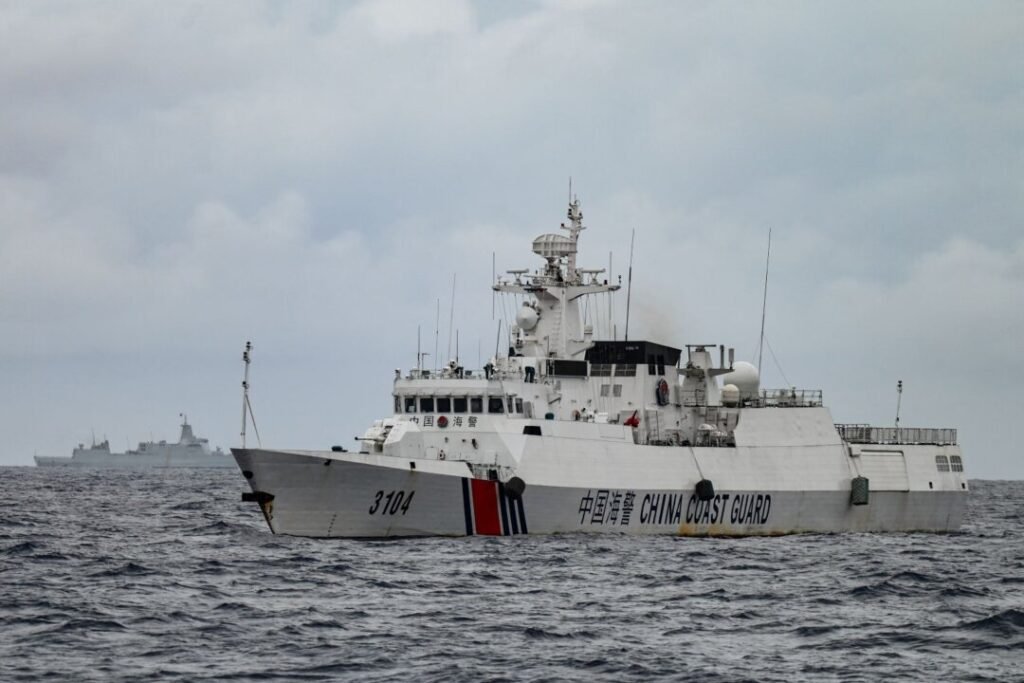
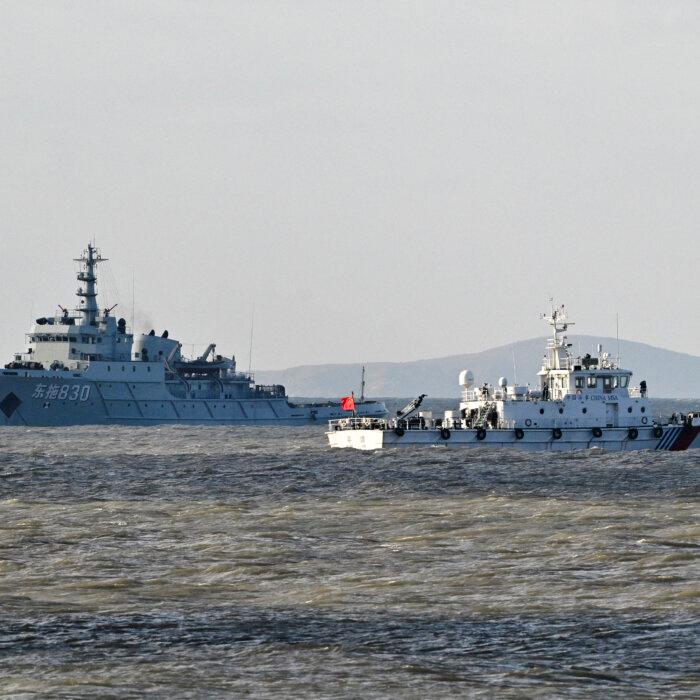
The People’s Liberation Army Southern Theater Command announced on its official WeChat account on Sept. 2 that its naval and air units conducted readiness patrols around Scarborough Shoal—which Beijing calls Huangyan Dao—in the South China Sea.
However, a 2016 ruling by the Permanent Court of Arbitration in The Hague has voided the Chinese regime’s claim to the area.
China Central Television (CCTV), China’s largest state-run television broadcaster, reported on Aug. 31 that the Chinese Coast Guard will “continue to carry out law enforcement patrols” in the shoal’s territorial waters and adjacent areas.
Separately, Vietnam on Aug. 28 protested the Chinese regime’s reclamation and construction activities at Antelope Reef and Yagong Island in the South China Sea, two outposts contested by both nations but currently controlled by Beijing.
Related Stories
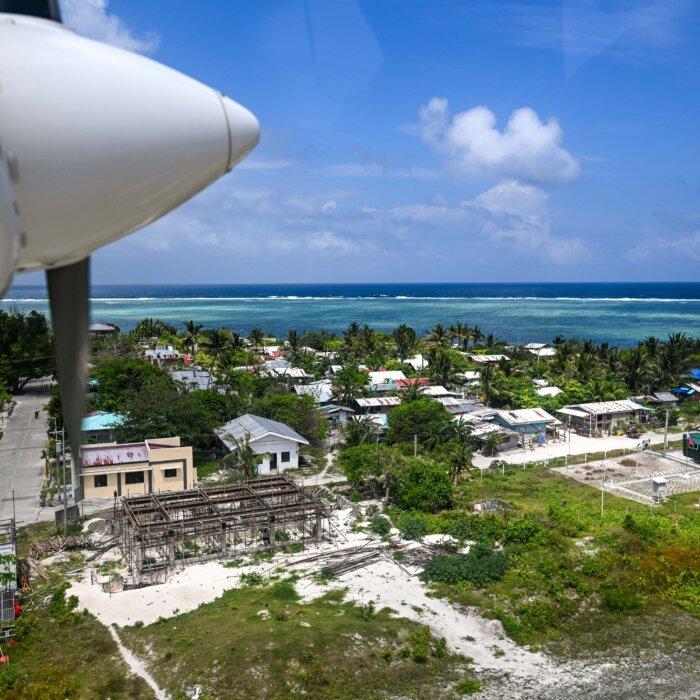
Hanoi firmly opposes the works and “demands that such activities cease immediately and not recur,” Vietnam’s Foreign Ministry said, according to Viet Nam News, a state-run English news outlet.
“China’s most likely next move is not dramatic expansion but deeper consolidation,” I Made Andi Arsana, a South China Sea expert at Indonesia’s Gadjah Mada University, told The Epoch Times.
Manila has repeatedly accused the regime of subjecting Philippine Coast Guard ships to harassment and water cannon attacks near Scarborough Shoal in recent months.

A Chinese Coast Guard ship uses water cannons on a Philippine Coast Guard ship near the Philippine-occupied Second Thomas Shoal, South China Sea, on Aug. 5, 2023. Philippine Coast Guard via AP
Arsana warned that the regular Chinese presence at the shoal could evolve into increasingly administrative forms of control, including more systematic regulation of fishing, installation of monitoring equipment, or other activities.
Such assertiveness could make Beijing’s grip “increasingly visible,” Arsana said.
“This could force the United States to expend greater effort and resources to counter Chinese aggression in defending the Indo-Pacific,” Wang told The Epoch Times.
“Beijing could also secretly construct bases in the South China Sea capable of handling aircraft takeoffs and landings, eroding the sovereignty of Southeast Asian nations.”
Opportunistic Aggression
“Beijing perhaps views the U.S.-Iran conflict as a timely opportunity to accelerate its expanding control over the South China Sea,” he said.
“The regime is seeking to build a defensive buffer in the South China Sea, so it can control Indo-Pacific energy and cargo channels in the event of a potential conflict with the United States,” he said.
Threatening Taiwan
Analysts said China’s construction at Antelope Reef, which will form part of its largest military base, could also prove critical to any future conflict over Taiwan, Reuters reported in August.

Helicopters on an amphibious assault ship take part in military drills in waters southeast of Taiwan, in this screenshot from a video released by the Eastern Theatre Command of China’s People’s Liberation Army, Dec. 29, 2025. Eastern Theatre Command/Handout via Reuters
Antelope Reef is located about 610 nautical miles southwest of Taiwan, but it lies just 162 nautical miles from Sanya Port, a highly strategic Chinese naval base in Hainan province.
Wang said that despite the reef’s distance from Taiwan, Beijing’s deployment of radar and electronic warfare systems there could still isolate the island during a war.
“Analysts have generally focused on whether the United States or its allies could reinforce Taiwan through its northern corridor in the event of a war,” he said.
“But if the CCP uses Antelope Reef as part of an anti-access/area-denial strategy in the South China Sea, it could help enable a broader encirclement of Taiwan.”
China’s anti-access/area-denial (A2/AD) strategy is a combination of missiles, submarines, sensors, and air defenses, designed specifically to block and disrupt the United States and its allies across air, sea, space, and cyber domains.
“In modern warfare where every second counts, a routing delay of two or three days could pose a significantly greater threat to Taiwan,” he said.
“This could allow Beijing to impose a far more comprehensive blockade.”
Arsana concurred, saying that the reef’s importance to Taiwan’s security is indirect but “potentially substantial.”
“A network of Chinese facilities extending from Hainan through the Paracels Islands and further south can improve China’s maritime domain awareness and complicate the movement of other forces,” he said.
“China is not simply building islands. It is building a network, and strategically the network matters more than any individual island.”
[ad_2]
Source link