The soothing sounds of trickling water and the reflections of sunlight and moonlight can transform an ordinary backyard into a relaxing oasis. The sound of moving water can be relaxing, and studies suggest that it can help reduce stress. Moving water also attracts local birds and butterflies, often providing a critical source of water during a drought. It can serve as an attractive centerpiece and help reduce noise pollution, particularly if you live near a busy road.
From inexpensive to lavish, solar, electric, or non-powered, with or without fish or water plants, there’s a water feature for every outdoor space. And most—with a bit of planning, patience, and elbow grease for the larger projects—are approachable for homeowners to do themselves.
Planning and Construction
What do you think of when you hear the words “water feature”? Many of us imagine a multilevel waterfall flowing into a spacious pond filled with aquatic lilies and koi. If you have limited space or find a full-size water garden a daunting first project, you might consider a fun and practical alternative: a mini pond.
It all starts with the right container, which can be a watertight decorative planter, a galvanized tub, a whiskey barrel, or a money-saving DIY concrete planter (many plans exist online!). If going the concrete route, be sure to spray the cured concrete with a pond-safe rubber coating to waterproof it and keep the lime in the concrete safely separated from the aquatic life.

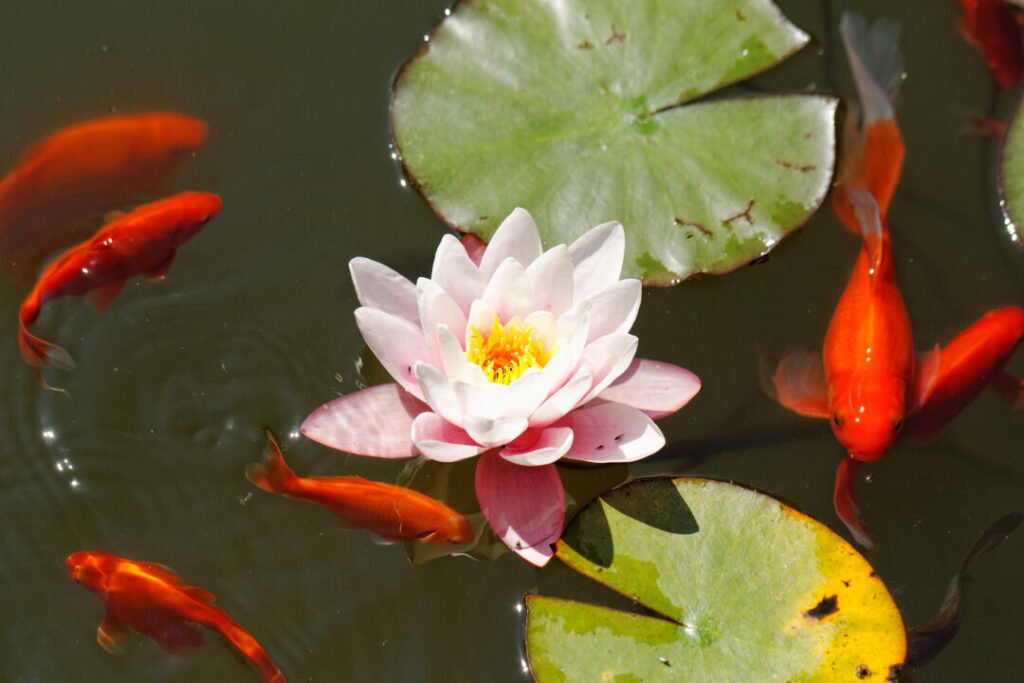
Compact water gardens make it possible to enjoy aquatic plants and reflective water even in small outdoor spaces. Animaflora PicsStock/Shutterstock
Pick the right location, as you’re not going to want to move it after it’s been filled with water. It should ideally be where it gets four to six hours of sun per day with a balance of morning sun and afternoon shade, as too much sun leads to algae and too little sun can stunt plant growth. Keep in mind that a location near trees with falling leaves and other debris will increase pond maintenance. Mini ponds can be placed in the yard or on a deck, patio, or balcony (being sure not to exceed the weight limit, which is typically rated for 40 pounds to 60 pounds per square foot for balconies).
Related Stories

If putting the pond in the ground, be sure to ask local utilities to mark their underground lines and pipes before digging. Mark out the spot with a garden hose or temporary spray paint, and check whether any permits are required.

An underlayment beneath a flexible pond liner helps protect it from punctures caused by roots and rocks. suravikin/Getty Images
It’s important to plan the pond design carefully. Make it at least three feet deep if the pond is going to host koi fish, although four to six feet deep offers better protection from predators and cold weather. Sloped sides are more natural than vertical edges, and ledges will give more room for plants.
While digging out an in-ground pond area, be sure to clear out any rocks and debris that might puncture the pond liner, and consider laying down an underlayment first. Smooth out the liner as much as possible and leave one foot hanging over the top edge for potential soil settling. Cover the edge with decorative rocks.

Natural stone and rocks can conceal pond liners while helping the water feature look more natural. miriam-doerr/Getty Images
Populate the Pond
Fill the bottom with a layer of gravel or river rocks to give the plants somewhere to root.
Fill the pool with dechlorinated water or let the water stand for 48 hours. If filling from municipal water, remove chlorine or chloramine before adding fish. Chlorine dissipates after standing for a day or two, but chloramine requires a commercial water conditioner to make it suitable for supporting fish.
Once the water is safe, add the plants. For a balanced ecosystem, the pond will need at least one plant from each of these three categories: submerged (such as hornwort, which oxygenates the water), emergent (such as pollinator-friendly pickerelweed, which roots in the substrate but flowers above the water), and floating (such as water lettuce, which floats on the surface while its roots dangle in the water). Let the pond’s ecosystem develop over at least two weeks before adding fish.
This process works for water features of all sizes. If done properly, it may not need additional aeration, although a fountain pump can be added for visual interest or to increase water circulation.

There are many options for waterfalls and fountains, and some allow homeowners to add flowing water without undertaking a large excavation project. Alexander Denisenko/Getty Images
Garden Cascade
Waterfalls can flow into a pond or be pondless. Self-contained models come in a wide variety of sizes and prices. They are well-suited where digging is not an option, such as at a rental home; just set them in place and plug them in.

Compact fountains can provide the relaxing sound of flowing water even in small yards and spaces. IZZ HAZEL/Shutterstock
Waterfall pump kits, on the other hand, range from small spillway styles that are simply set up on the edge of a pond, some even equipped with LED lights, to larger pump systems in which the homeowner builds the waterfall out of layered natural stone, garden wall blocks, or other materials.
_______________________________
Attainable Bliss
Discounts, clearances, and rollbacks abound on garden amenities from mid-summer into fall, particularly on fountains. Which is right for you?
For the Birds
To protect winged visitors, make sure the birdbath is situated to be safe from predators, where it gets morning sun and afternoon shade to keep the water from getting too hot. Jazz it up with an inexpensive, floating, solar-powered fountain pump.
Decorative Delights
A three-tiered European-style concrete fountain is an elegant classic. All-in-one floor fountains range from artistic masterpieces to simple plumbed ceramic planters. Wall and tabletop fountains work both in the backyard and on balconies. A pond fountain or a fish-spouting-water pool adds whimsy.
Fire and Water
A combination firepit (in the center) and spillway waterfall bowl (on the outer edge) adds the soothing tinkle of water and instant Zen when placed next to a pond. There are self-contained choices as well, some of which use candles to add romance and remove the need for a fuel source.