


The Competition and Consumer Protection Commission (CCPC) has just published guidance to help traders decide how best to collect tips with new technologies. They’ve also released research that shows that most of us now believe that tipping has become less voluntary.
While digital technologies make it easier to tip, they also make it harder to avoid tipping.
Simon Barry is director of research, advocacy and international at the CCPC said. He says that newer technologies like payment screens and tipping terminals are changing the way we tip for services. He believes that it’s important that businesses which use these technologies do so in a way that protects the consumer’s right to decide whether and how much to tip.
“Transparency is vital,” he says. “Any mandatory service charges must be flagged well in advance, optional charges must never be automatically added to bills, and tipping terminals should be placed away from payment terminals to avoid any confusion.” The research also shows that tipping is on the rise. 90% of consumers say they tip at least some of the time. A similar proportion agrees that their tip amount depends on the quality of service they receive.
Over half (58%) agreed that they would sometimes rather not tip but feel they have to.
Separately, two thirds (67%) believed that tipping in Ireland is becoming less voluntary, and three quarters (75%) would like to see businesses make it easier to opt out of tipping.
Cash is the dominant tipping method, even when bills are paid by card; more than half of us still tip in cash when paying by card. This is partially driven by a lack of trust in the distribution of card and eWallet tips. As little as 29% of us believe digital tips reach staff. Standard cafés/restaurant tips typically range from 10-14% of the bill.
From a consumer point of view, the main problem with tipping is that it’s often a source of what the CCPC called ‘consumer detriment’, which is defined as a problem which causes stress, costs money or takes up your time.
The research found that one fifth (21%) of consumers have experienced an unexpected charge on a bill in the past six months, with half of these stating that it was a mandatory service charge. Three quarters of these consumers paid the unexpected charge. Half (52%) found the experience at least moderately stressful.
It doesn’t stop there. Almost 1 in 10 (8%) consumers have tipped mistakenly on a tipping terminal. If you aggregate that figure up, this could mean that almost €500,000 has been mistakenly paid on these terminals.
A similar proportion of people (8%) say that when they last encountered a tipping screen on a card payment system, they tipped when they had not originally intended to.
This indicates that screen design and what the CCPC calls ‘the payment moment’ can influence consumer decisions at checkout, sometimes ‘nudging’ people into decisions they did not intend to make.
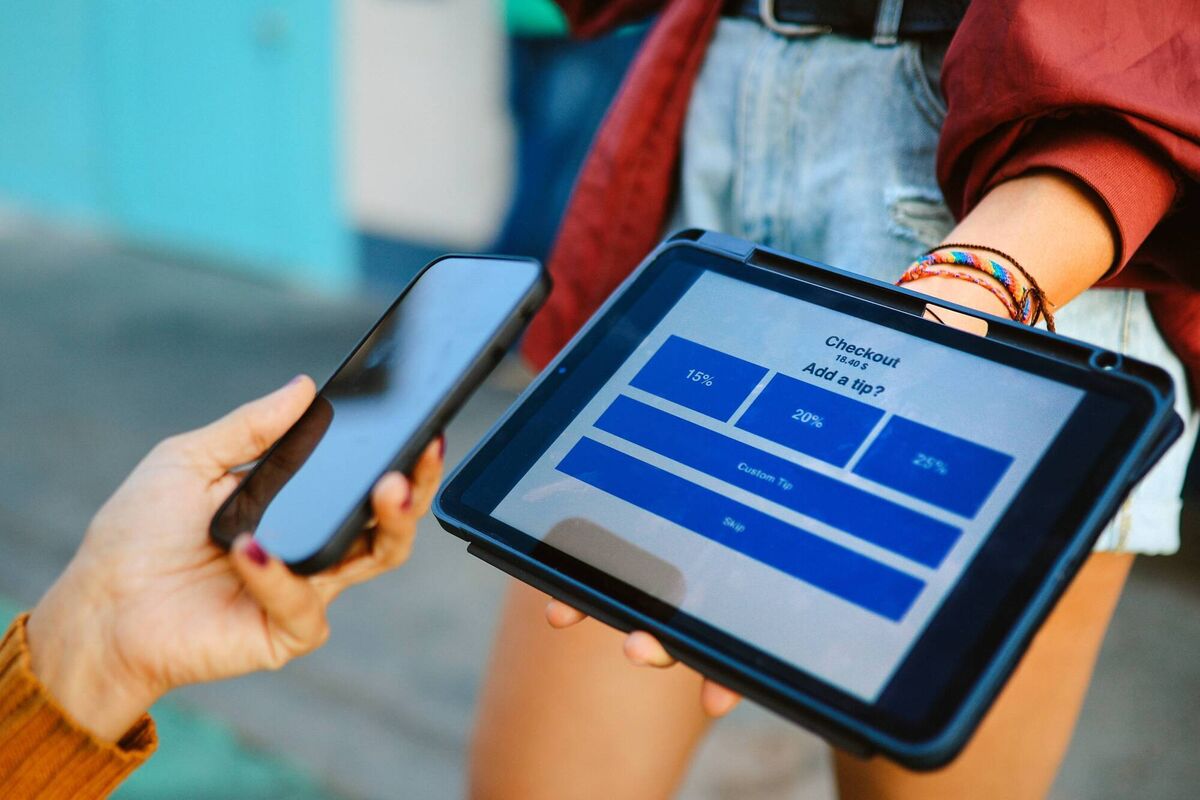
This digital revolution has also affected how consumers tip. Touchscreen and ePOS (electronic point of sale) systems now allow businesses to present tipping prompts directly at the checkout. These can often display default percentages which take up most of the screen, with skip/no options being presented as the last option seen.
Digital tipping screens are familiar to two-thirds of consumers, especially consumers under 35 and Dublin residents. The report finds that while it may not be the original intention, these screens can potentially have a ‘nudging’ effect on consumers, with one fifth (21%) of those who did not intend leaving a tip when they last encountered such a screen selecting a tipping amount. Of those who did leave a tip, one third left a higher amount than they intended to.
Opinion on these screens is split. While many consumers do find them easy to understand and even potentially helpful in leaving a tip, a sizeable minority disagree that it is easy to bypass the screens (25%). Another quarter do not feel confident using them, while a third disagree that they display the total clearly.
When presented with some examples of tipping screens with various amounts versus a simple ‘Would you like to leave a tip?’ screen, the simpler Yes/No option was chosen by 49% of respondents, compared to 28% for the tipping amount screens, with the remaining consumers not expressing a preference.
The CCPC has issued new guidance based on the research in order to help restaurant owners and other traders decide how best to collect tips with new technologies. Published on the CCPC website and sent to industry bodies, the guidance states that tipping on a payment terminal should be easy to avoid.

To prevent accidental tipping, the terminals themselves should be separate and clearly labeled. Any mandatory service charges should be very clearly communicated in advance of the transaction – not at the point of payment. In the same vein, optional service charges must never be automatically added to a bill.
To look for a moment on the other side of the equation, Shane McLave, MD of Excel Recruitment points out that for lower-paid workers, tips are hugely valuable.
He’s calling on the government to consider removing tips – or a certain amount of tips – from the tax net to encourage more workers back into hospitality and other low-paid sectors.
“While new legislation was introduced in late 2022 to ensure that staff get paid their share of tips left by customers, the government should have gone one step further and considered excluding income derived from tips, or a portion of it, from the tax net. All tips received by staff are currently taxable. However, given the often low-paid nature of the work – and the huge staff shortages which the hospitality sector is currently grappling with, more people could be encouraged to work in the sector if tips were not taxable – or if they could earn a certain portion of tips tax-free.” He notes too that a case could be made for the fact that PAYE employers are already allowed to gift employees up to €1500 in tax-free vouchers per year – this however is unlikely to impact the vast majority of bar staff, wait staff, hairdressers, beauticians and other professions who receive tips.
“A really progressive move could be to introduce a similar scheme for employers and employees in service industries, so that workers might be able to receive tips up to a certain threshold without incurring a tax bill. This would help boost the incomes of lower-paid earners in sectors such as beauty and hospitality.”


