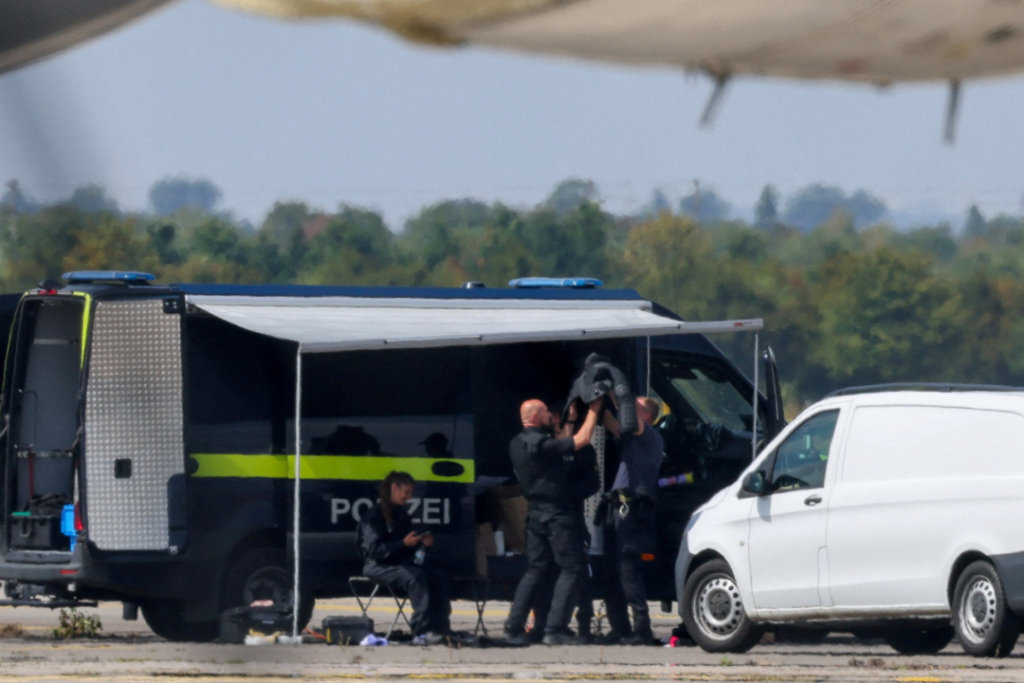
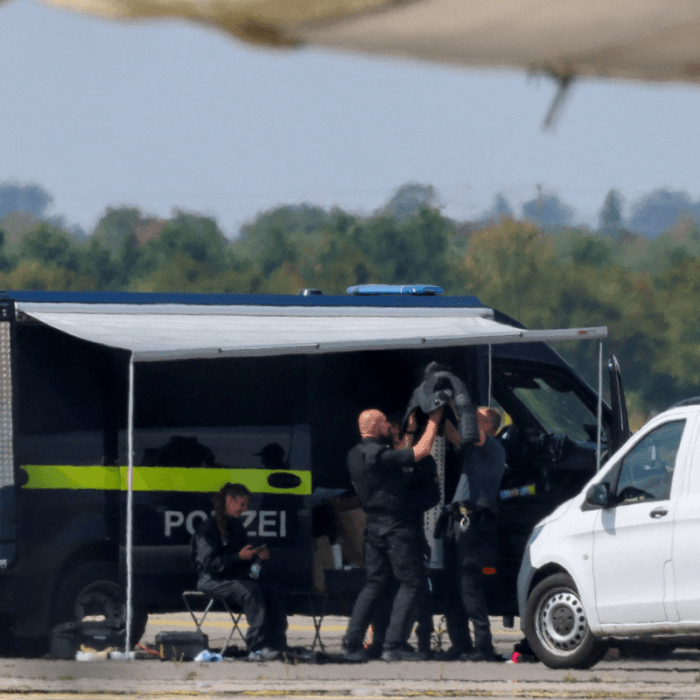
An explosive-laden drone was found near a Ukrainian cargo plane on Aug. 4, and the device was defused. Authorities said at the time that the incident posed a “serious attack” on Germany’s infrastructure and national security.
Interior Minister Alexander Dobrindt said at a joint press conference with Foreign Minister Johann Wadephul in Berlin on Sept. 1 that following an investigation, Berlin had concluded that Russia was responsible for the attack.
Dobrindt explained that a drone, explosives, and a detonator, similar to others recovered from previous Russian hybrid operations, had been seized at the scene of the incident, adding that though the planning was considered to be professional, the act itself had been attributed to “low-level agents” who “acted on behalf of Russian state authorities,” according to German outlet BR24.
Dobrint also stated that he did not view the Leipzig incident as “isolated” but rather as part of other hybrid actions.
At the same conference, Wadephul announced a series of measures Berlin would be taking in response to the incident, accusing Moscow of treating Germany with “blatant hostility.”
Related Stories
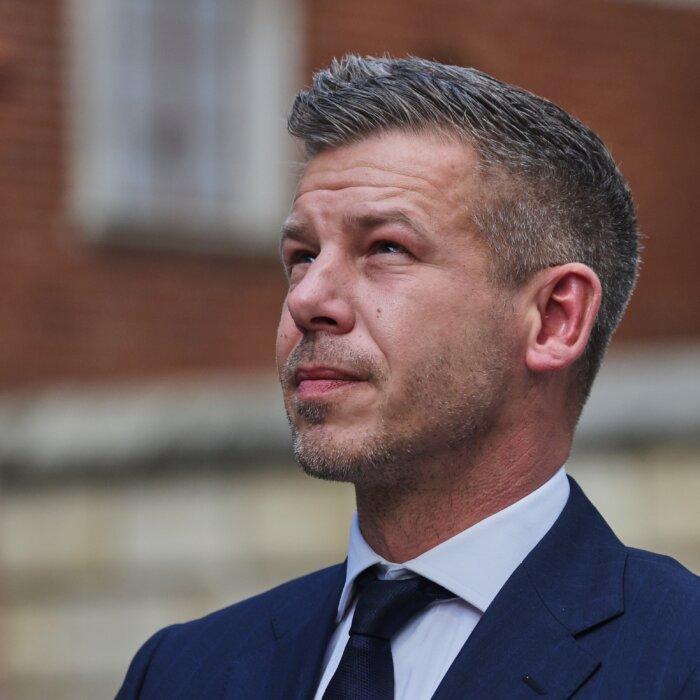
Germany’s chief diplomat said that, in addition to “bolstering” the country’s security, he had ordered the Russian Consulate General in Bonn to close as of Sept. 18 and the termination of the lease for the Russian House in Berlin.
He further said that Berlin and the European Union would push for further sanctions against Russia and that Germany would tighten immigration controls on Russian nationals.
“Pressure on Russia is being stepped up and support for Ukraine also remains at a high level. That is the unity we are demonstrating at this time,” he said.
It is the main base for NATO’s Strategic Airlift International Solution. Among other functions, it delivers equipment to strengthen the defense pact’s eastern flank, using a small fleet of Ukrainian-made Antonov cargo planes.
Allies Rally
European allies flocked to Germany’s side following the press conference with Russia’s ambassadors to the EU, the Netherlands, and Belgium, all of whom were summoned by their respective foreign ministers, while France summoned Moscow’s charge d’affaires in Paris.
European Commission President Ursula von der Leyen said that the EU “will not tolerate” such actions by Russia, at a press conference in Brussels alongside NATO Secretary-General Mark Rutte on Sept. 2.
“Europe and NATO won’t just maintain our pressure on Russia. We will increase it,” she said, adding that the attempted attack in Leipzig marked a “new escalation” by Moscow.
Rutte said that Russia has grown “increasingly reckless” but that NATO stands in “full solidarity” with Germany.
“If Russia thinks we will be divided by the threats or if they think we will be deterred from supporting Ukraine, they are mistaken,” he said.
EU foreign chief Kaja Kallas said that the Leipzig attacks “have all the hallmarks of state-sponsored terrorism.”
“We will respond with resolve. 1.600 listings for the military complex of Russia are already in the pipeline, and we stand ready to add more,” she added in a Sept. 2 post on X.
U.S. Ambassador to NATO Matthew Whitaker said in a Sept. 2 post on X that the United States “stands in solidarity with Germany and all Allies in the face of efforts to cause harm and chaos on NATO territory.”
Less than 24 hours after Germany blamed the Kremlin for the Leipzig airport drone incident, police in Brandenburg opened an investigation into a suspected terrorist attack on an electrical substation near Jänschwalde.
State Interior Minister Jan Redmann stated that authorities cannot rule out any perpetrators, including foreign powers, adding that the attack targeted a critical grid node to destabilize the nation’s power supply.
Russia Responds
The Russian Embassy in Berlin said in a Sept. 1 post on Telegram that the ambassador, who had been summoned by the German foreign ministry, “resolutely rejected Berlin’s accusations as unsubstantiated, absurd, and contrary to common sense.”
The post labeled the incident at the airport a “hastily concocted provocation” that “exclusively [supported] the goals of the Kyiv regime, the militaristic wing of the European political class, and the magnates of the military-industrial complex interested in fueling the Ukrainian conflict.”
Russian President Vladimir Putin called Germany’s move a serious error, in comments to journalists on Sept. 1.
“The reasons for this behavior must be explained. Given the decline in ratings and the upcoming election campaigns, including in Saxony, for example, the question of the political future of Germany’s ruling elite naturally arises,” he said, according to Russian state news agency TASS.
“I think this is primarily related to this. I think this is another mistake, a grave mistake. And it, in my view, clearly runs counter to the interests of the German people.”