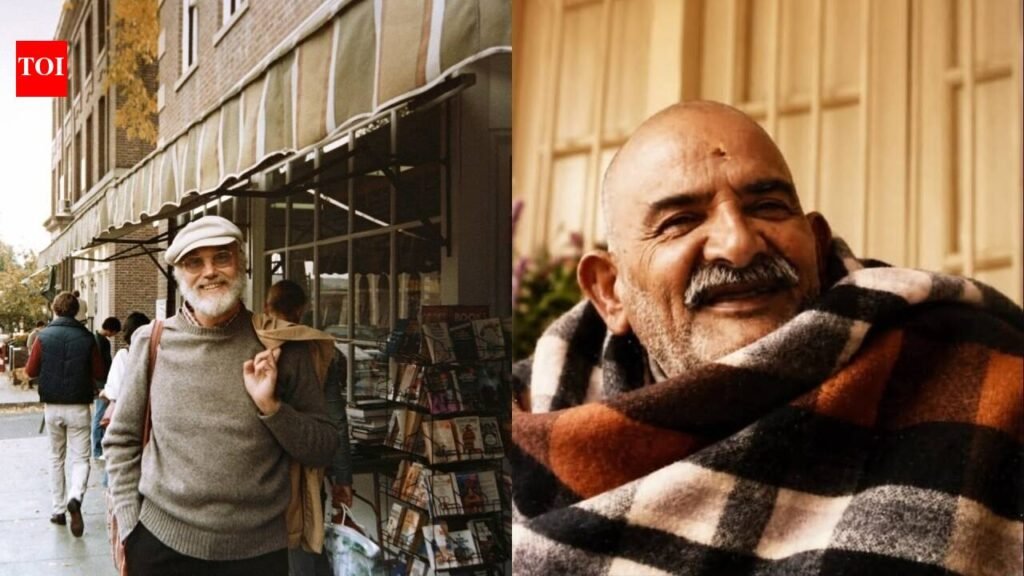
There are moments in a person’s life when everything they believe seems to stop making sense. For American psychologist Richard Alpert, one such moment came in India in 1967, when he met Neem Karoli Baba at Kainchi. A video shared on Instagram by Jay Shukla captures Alpert recounting the deeply personal encounter that changed the direction of his life. At the time, Alpert was a Harvard psychology professor who had spent years studying the human mind and exploring consciousness. Yet when he arrived in India, he was not looking for a guru in the way his later followers might imagine. In his own telling, he was skeptical of Indian spiritual teachers and even wanted to leave. What happened next, however, became one of the most famous stories associated with his transformation into Ram Dass.
The Harvard professor who didn’t believe in gurus
Richard Alpert had built his life around knowledge, research, and intellectual exploration. At Harvard, he worked alongside Timothy Leary on controversial research into psychedelic substances and consciousness. Eventually, Alpert’s search moved beyond the walls of the university and toward India. His journey there in 1967 brought him into contact with Neem Karoli Baba, whom he later called Maharaj-ji. But their first meeting was not the dramatic spiritual experience one might expect. Alpert later recalled that he did not want to be there and did not believe in Hindu gurus. He described his first impression of the setting as something almost artificial, like “calendar art.” He simply wanted to go home.Then Neem Karoli Baba called him over. According to Alpert’s account, the saint began talking about the previous night. He told Alpert that he had been outside under the stars and had been thinking about his mother. His mother had died the previous year. For Alpert, that was already difficult to explain. Then came the word that completely overwhelmed him: “Spleen.” His mother had died after suffering from an illness involving her spleen. Alpert later described how his mind struggled to understand how the man sitting in front of him could know something so personal. The experience broke through the certainty he had built around his intellect. He began crying, and, as he recalled it, continued crying for days. But he said the tears were not simply about sadness. He felt understood at a level he had never experienced before.
From Richard Alpert to Ram Dass
That encounter became a turning point. The official Ram Dass archive describes Alpert’s 1967 journey to India as the beginning of his transformation. Neem Karoli Baba became his guru and gave him the name Ram Dass, commonly translated as “servant of God.” The change was not simply about adopting a new name. Alpert’s priorities gradually shifted from intellectual exploration toward meditation, yoga, service and spiritual practice. He continued learning in India and later returned to the United States, where he became one of the most influential Western teachers associated with Indian spirituality.His story is especially striking because he did not begin as someone searching for a belief system to follow. He began as a highly educated psychologist who wanted answers about consciousness. His encounter with Neem Karoli Baba challenged the idea that everything meaningful could be understood through intellect alone.
The book that took his message around the world
In 1971, Ram Dass published Be Here Now, a book that combined autobiography, spiritual teachings, illustrations, and guidance on meditation and yoga. It became a landmark work of the Western spiritual movement and introduced generations of readers to ideas drawn from Indian spiritual traditions. The Ram Dass organisation describes the book as a work that helped bring meditation, yoga, and Eastern spirituality to millions. The title itself became closely associated with Ram Dass’s philosophy: instead of constantly living in memories of the past or anxiety about the future, learn to experience the present moment.His later life continued to revolve around spiritual practice and service. He explored traditions including bhakti yoga, Buddhist meditation, and karma yoga, while also creating organisations and projects focused on compassion, service, and spiritual growth.
The meeting that became more than a meeting
Whether someone sees Alpert’s encounter with Neem Karoli Baba as a spiritual experience, an unexplained coincidence, or simply a deeply emotional moment, its impact on his life is difficult to deny. The Harvard professor who arrived in India skeptical of gurus eventually became Ram Dass, a spiritual teacher whose words reached millions. Perhaps that is what makes the story endure. He travelled thousands of miles searching for something his education and intellect could not give him. At Kainchi, he found an encounter that forced him to question what he thought he knew. And from that moment emerged a new identity, a new purpose and a message that would stay with generations of seekers: be here now.