While the energy industry remains Alberta’s main economic growth driver, recent job gains that have given the province the strongest employment growth in Canada have largely come from industries outside oil and gas.
Job growth remained relatively unchanged in most provinces, but declined in Quebec and British Columbia. Ontario was the only other province with notable growth, adding 65,000 jobs, although the report noted its 0.8 percent increase “was a fraction of Alberta’s.”
So where were those new jobs added? According to report author and RBC economist Salim Zanzana, gains were concentrated in health care, social assistance, and public administration, reflecting increased demand for essential services following years “of exceptionally rapid population growth.”
Stronger activity and prices in the energy sector haven’t translated into employment growth, Zanzana wrote. Jobs in forestry, fishing, mining, quarrying and oil and gas extraction have changed little over the past year.
Instead, roughly 55,000 of the 79,000 jobs added were in health care and social assistance, marking one of the largest annual increases in the sector on record, the report said.
Related Stories
After health care and social assistance, Alberta’s job gains came in public administration, other services and goods-producing industries, while overall employment in the energy sector declined slightly.
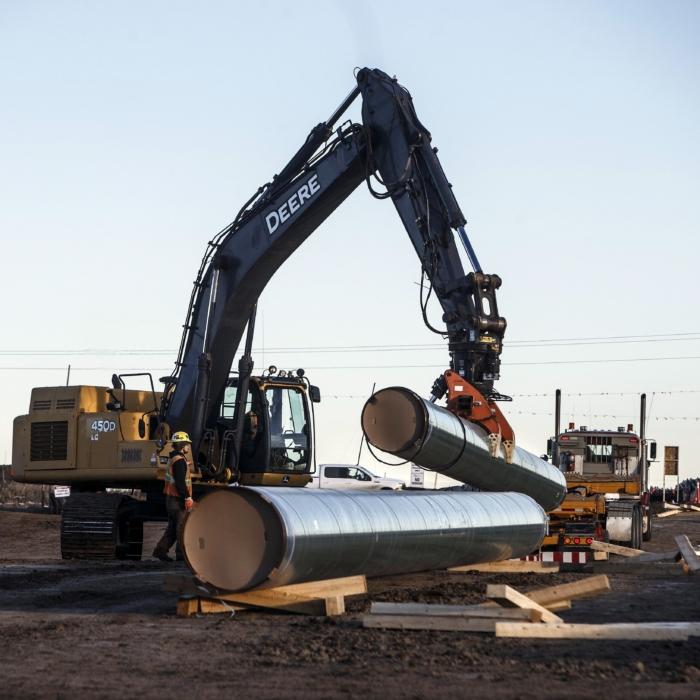
“Advances in technology, automation and operational efficiency have enabled energy producers to expand and improve output without having to add jobs as in the past,” the report noted.
Population Growth Fuels Demand
Alberta’s population grew by more than 570,000 people between the second quarter of 2022 and the second quarter of 2026—a more than 13 percent increase and the largest percentage gain among provinces.
Zanzana said the “significant demographic growth” increased demand for health care and public services, but the health-care workforce did not keep pace.
The number of health-care and social-assistance workers declined on a per-capita basis compared with early 2022, while most provinces saw “relatively stable or improving per-capita staffing levels” over the same period.
More recently, however, slower population growth and stronger hiring have helped reverse that decline, the report noted.
Labour Force Still Outpacing Jobs
Alberta’s strong job creation hasn’t fully absorbed the growth in its labour force, leaving the unemployment rate at between 6.5 and seven percent in recent months despite the province leading the country in employment growth, the report said.
“We’ve argued before that part of the higher unemployment rate in Alberta has likely more to do with an imbalance between labour force growth and job creation, rather than underlying economic weakness,” Zanzana wrote.
“Put simply, employment has not grown quickly enough to absorb rapid population growth.”
That imbalance has been easing as demographic growth slowed from more than four percent in 2024 to 0.9 percent in the first quarter of 2026, while unemployment fell from above eight percent in August 2025.
“Demographic pressures are expected to continue to moderate over the rest of this year and next as federal immigration targets reduce international migration,” Zanzana wrote.
Net international migration turned negative in Alberta in the first quarter of 2026 for the first time since the third quarter of 2020, while interprovincial migration also moderated compared with 2022-24.
With population growth normalizing, Alberta’s labour market is expected to “gradually return to a better balance,” easing pressure on unemployment and public services, Zanzana wrote.
RBC expects Alberta’s unemployment rate to fall to 6.5 percent by the end of this year and six percent by the end of next year.
“That said, an aging population is expected to keep demand for health care and public service workers high, suggesting employment growth in these sectors could remain resilient even as broader demographic pressures moderate,” Zanzana added.