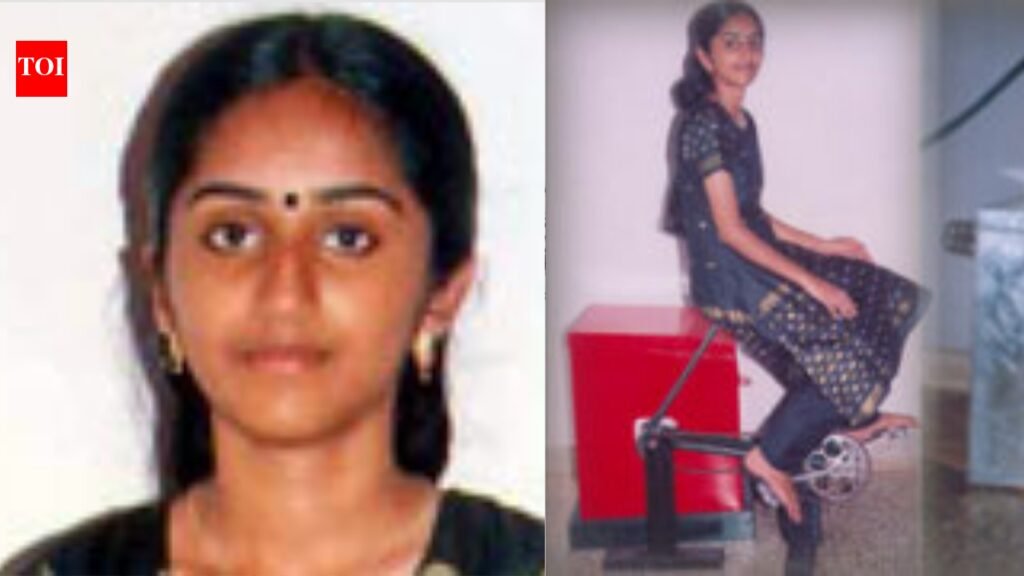
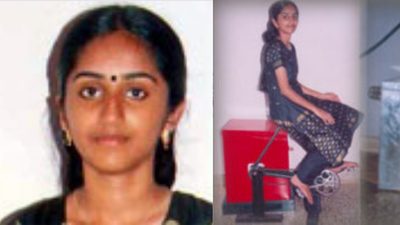
Some of the best inventions don’t come out of a lab. They come out of pure, everyday necessity. While most of us continue living with just ordinary problems, someone decides not to.That’s exactly what happened in a small village in Kerala’s Malappuram district, where a 14-year-old girl named Remya Jose looked at hours of hand-washed laundry piling up on her already exhausting school schedule and decided to ‘build’ a machine instead of accepting the chore!She had no electricity to depend on, no money for a store-bought washing machine, and no engineering background, but something that pushed her ahead was pure curiosity, driven by need.
Meet Reema Jose, the 14-year-old Kerala girl who built a non-electric washing machine using a bicycle
Remya Jose was 14 years old and in her 10th standard, the year of India’s board exams in 2005, when her situation took a hard turn. Her mother fell ill, and her father was undergoing cancer treatment. That left the household’s laundry to be done by hand by Remya and her twin sister, on top of a school commute that already consumed nearly four hours a day changing three buses, according to the National Innovation Foundation of India report.Tired and pressed for time, Remya didn’t just wish for a washing machine her family couldn’t afford. She decided to build one. “Necessity is the mother of invention,” she later said, describing how she studied the way an electric washing machine works and set out to recreate its function without electricity.
How did she build the non-electric washing machine?
After studying how a washing machine works, she realised that after stripping away the motor, a washing machine is really just a perforated drum spinning in soapy water. The motor’s only job is to make it spin, and a bicycle already turns pedaling into rotation. So she sketched a design, with an aluminium cabin, a wire-mesh cylinder to hold the clothes, and a bicycle’s chain, sprockets and pedals rigged up to turn the drum.Her father carried the sketch to a nearby automobile workshop, where mechanics agreed to build it in their spare time, using materials bought to Remya’s specifications for around 2,000 rupees. The finished machine worked in three simple stages: soak the clothes in soapy water for about ten minutes, pedal for three to four minutes to scrub them clean, then drain, refill, and pedal again to rinse. A final round of pedaling with the water drained turns the drum into a centrifuge, wringing the clothes out to around 80 percent dryness.
Her design was later taken as a patent and earned recognition from the president
Her father initially doubted the project, thinking that a girl would eventually need to know how to wash clothes by hand regardless of any machine. Her mother, too, worried the project was distracting Remya from her studies, until the invention proved itself.The National Innovation Foundation, which scouts grassroots inventors through the Honey Bee Network, filed a patent on the design in 2003 and formally registered it as the “Washing Cum Exercise Machine.”The invention got Remya a National Award, presented by then-President A.P.J. Abdul Kalam. She didn’t stop there, either. She went on to work with the NIF as an innovator, developing further devices for rural households.