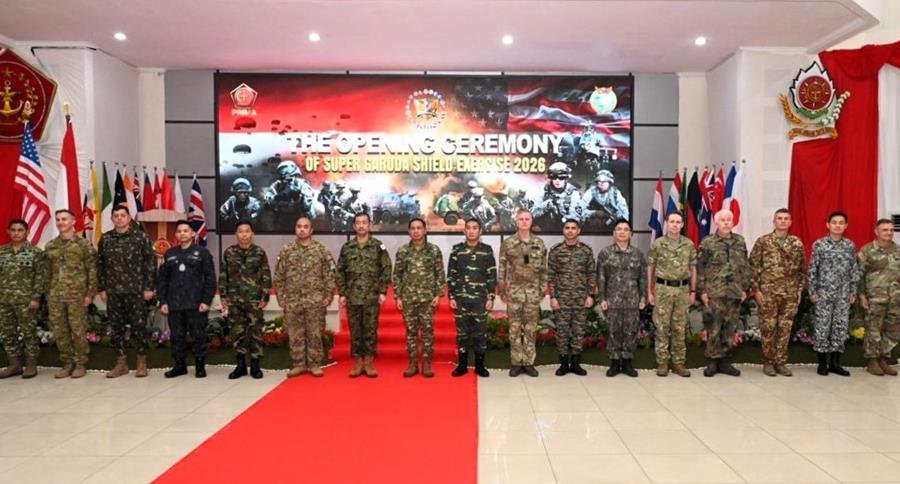
The United States and Indonesia launched a major multinational military exercise on Aug. 31 involving nearly 4,800 personnel, with the U.S. Army preparing to test an emerging battlefield network designed to help American and partner forces operate together across the Indo-Pacific.
Super Garuda Shield 2026 runs through Sept. 11 at multiple locations in Indonesia. The U.S. Embassy said Indonesia, the United States, and 13 other countries are contributing personnel, while the Indonesian military counts 21 countries involved overall.
At the center of the U.S. technology effort is the Army’s Next Generation Command and Control system, or NGC2. U.S. military planners said in May that the 4th Infantry Division planned to integrate the system with U.S. and coalition tactical networks during the exercise.
U.S. planners said the aim is to determine whether forces using different systems can rapidly exchange information via communications networks, sensors, and intelligence feeds over long distances and with limited bandwidth.
Maj. Gen. Patrick Ellis, commander of the 4th Infantry Division, said shortly before deploying that the division would take NGC2 to Indonesia aboard C-17 transport aircraft along with Stryker armored vehicles.
“We fly out on Sunday with NGC2 aboard a couple of C-17s and some Strykers as we fly into theater to start working on Garuda Shield there in Indonesia,” Ellis said at the TechNet Augusta conference on Aug. 18.
Related Stories

Ellis was in Bandung for the exercise’s Aug. 31 opening, according to the U.S. Embassy.
Linking Forces Across the Pacific
Super Garuda Shield follows Balikatan 2026 in the Philippines, where U.S. Indo-Pacific Command said eight nations operated with access to a common battlefield picture.
Both exercises are supported by the command’s Pacific Multi-Domain Training and Experimentation Capability, or PMTEC.
During Balikatan 2026, U.S. Indo-Pacific Command said Philippine, U.S., and allied forces used a “Common Operating Picture” accessible to eight nations—a shared view of battlefield information.
The command said PMTEC has also supported maritime-strike rehearsals and air and missile defense training and would enhance joint command and control during Super Garuda Shield.
For the Indonesia exercise, planners said NGC2 would be assessed under the challenging conditions likely to be faced in real-world application.
“We’re learning how these systems behave in heat, humidity, distance, and limited bandwidth—and we’re doing it with our partners right beside us,” Kerri Wood, a joint interface control officer with PMTEC, said in the May planning account.
Expanded Exercise
The Indonesian military said Super Garuda Shield involves 4,743 personnel and 12 training components.
Gen. Agus Subiyanto, Indonesia’s military commander, said U.S. forces brought HIMARS rocket systems and C-17 transport aircraft. He also said Indonesia wanted to learn from other countries’ cyber capabilities as its military develops its relatively new cyber unit.
About 230 Marines and sailors from U.S. Marine Rotational Force–Darwin are participating in Lampung alongside Indonesian and other partner forces. Planned training includes combined-arms live fire, jungle operations, force-on-force training, construction projects, and other small-unit activities.
Super Garuda Shield 2026 is the first edition held under the Major Defense Cooperation Partnership that Washington and Jakarta established in April.
The partnership has three pillars: military modernization and capacity building, training and professional military education, and exercises and operational cooperation.
The Pentagon said at an April meeting that the two countries had committed to expanding the “scope and complexity” of exercises including Super Garuda Shield.
Indonesia Also Expands Defense Ties With Beijing
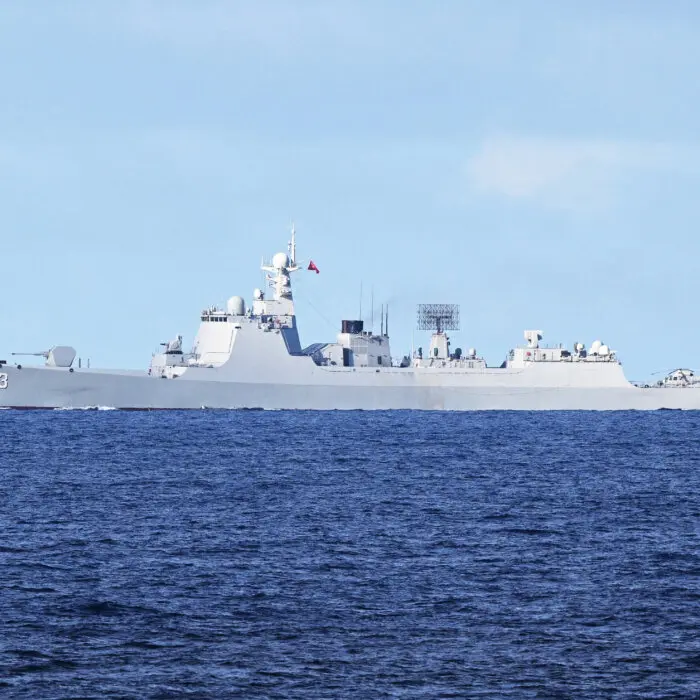
Indonesia’s growing military cooperation with the United States has proceeded alongside separate defense engagement with Beijing.
The Chinese Defense Ministry said the ships practiced maritime communications, formation maneuvers, and replenishment at sea, and completed all planned activities.
An Indonesian Navy spokesman said it was a routine passing exercise conducted while the frigate was returning from training with Russia in Vladivostok.
The Taiwanese Foreign Ministry objected after Beijing announced the exercise and said it immediately sought clarification from Jakarta.
Nine days later, Indonesian Defense Minister Sjafrie Sjamsoeddin met Chinese Defense Minister Dong Jun in Jakarta.
The Indonesian Defense Ministry said on Aug. 21 the two sides agreed to increase joint exercises, military education, and personnel exchanges and deepen cooperation in defense technology and industry.
On the same day, Sjafrie said Indonesia and China were planning a joint ammunition and rocket factory in Indonesia, involving Chinese technology transfer, with operations targeted for 2027.
A subsequent ministry account said the two militaries would continue using a joint staff mechanism to plan and evaluate military cooperation, including their Heping Garuda exercise series.
Super Garuda Shield runs through Sept. 11.