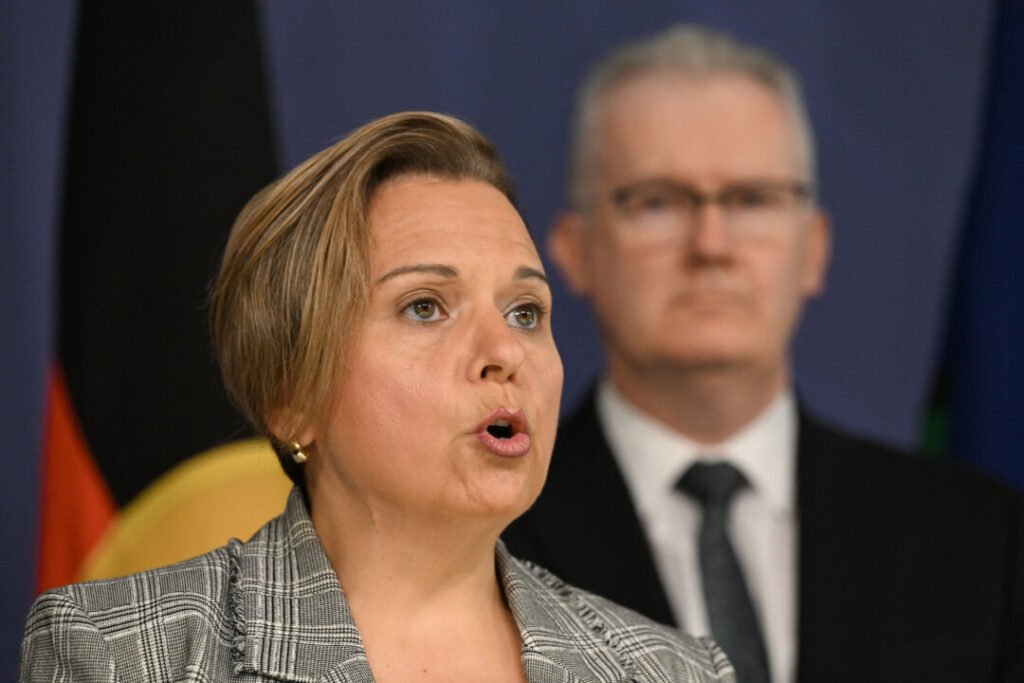

Attorney-General Michelle Rowland speaks during a press conference in Sydney, Australia, on April 30, 2026. Saeed Khan/AFP via Getty Images
Australians will be able to demand that digital platforms “erase” their personal information under far-reaching changes to online privacy laws announced by Attorney-General Michelle Rowland.
The changes are part of the Labor government’s second tranche of reforms to the Privacy Act 1988, which aims to bring Australia’s privacy framework up to date with the digital economy and rapid technological developments.
Speaking at a press conference in Canberra on Aug. 31, Rowland said Australians were increasingly concerned about how their data is being collected, used, and shared, particularly as AI and other emerging technologies such as smart glasses become more accessible.
“People should not have to choose between protecting their privacy and participating in the digital economy,” she said.
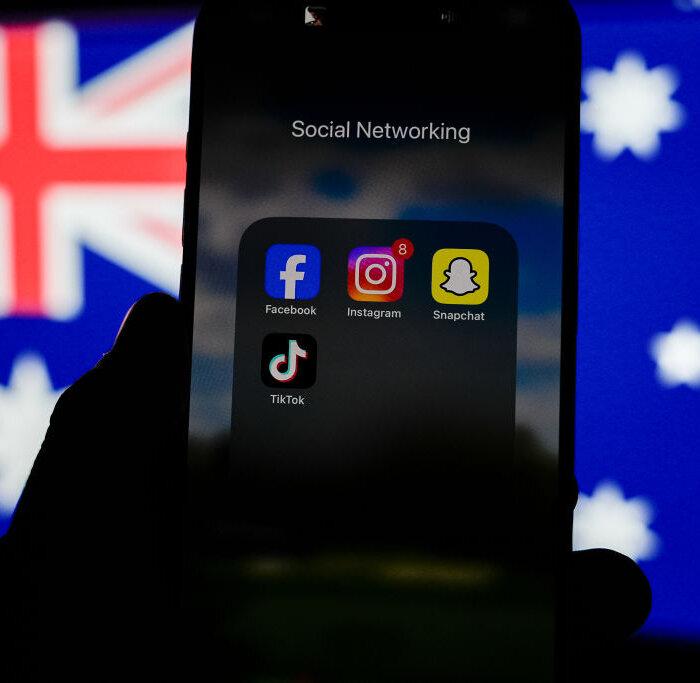
The attorney-general confirmed that the erasure right would extend to social media platforms and search engines.
The laws will also strengthen consent requirements for the use of personal information and limit businesses from buying and selling such data without clear permission, “so shopping habits, online interests, or location data cannot be bought and sold behind Australians’ backs.”
Related Stories
In addition, Rowland said the government was also planning to introduce a “fair and reasonable” test, constraining companies from collecting more information than they need or using it for purposes that people would not expect.
Rowland pointed out that the Privacy Act was 38 years old and had applied to the private sector for only 25 years, saying it needed to be updated for the digital age.
“Twenty-five years ago, everyone … including myself, handed over our personal information to a large digital platform to obtain a free email address. And everyone has been making money off our personal information except for us,” she said.
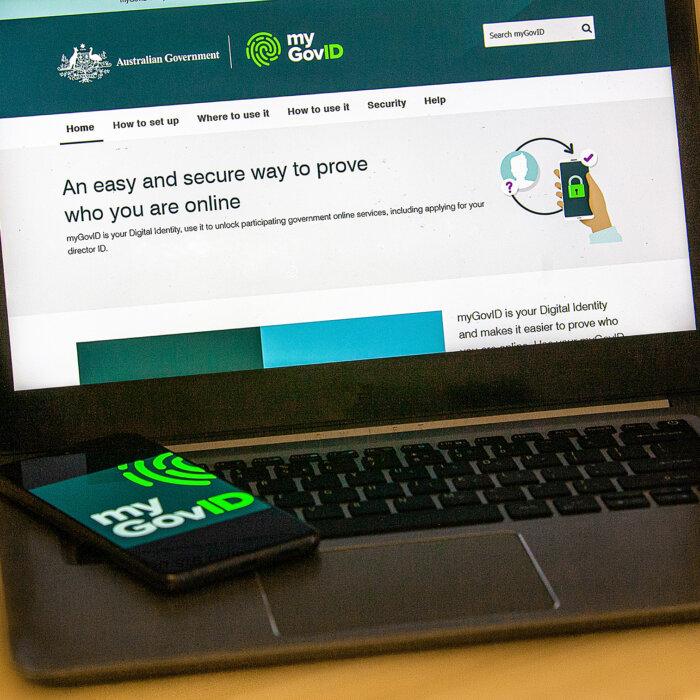
Rowland also announced the introduction of “ID Lock,” which will enable people to block, unblock and monitor the use of their identity documents through the Document Verification Service.
The register has blocked over 830,000 fraudulent identity verification attempts—averaging around 18,000 a month—since late 2022.
ID Lock will initially be offered to a small group of myGov users for testing later this year before being rolled out nationwide in 2027.
The government’s consultation paper on these measures will be open for public comment for three weeks.