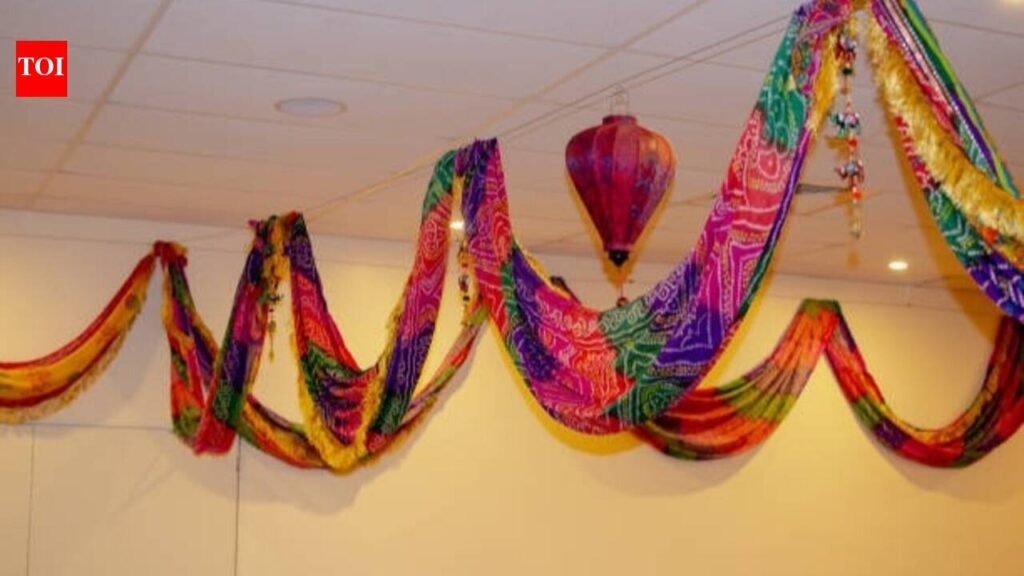
That embroidered or block-printed dupatta sitting unused at the back of the wardrobe, too special to wear casually anymore but far too beautiful to throw away, is actually one of the easiest fabrics to turn into genuinely elegant home décor. Unlike plain cotton or worn-out clothing, a dupatta already comes with rich colour, intricate borders, and often real craftsmanship built in, which means most of these ideas need barely any modification to look intentional and expensive. Here are five ways to give one a genuinely beautiful second life around the house.
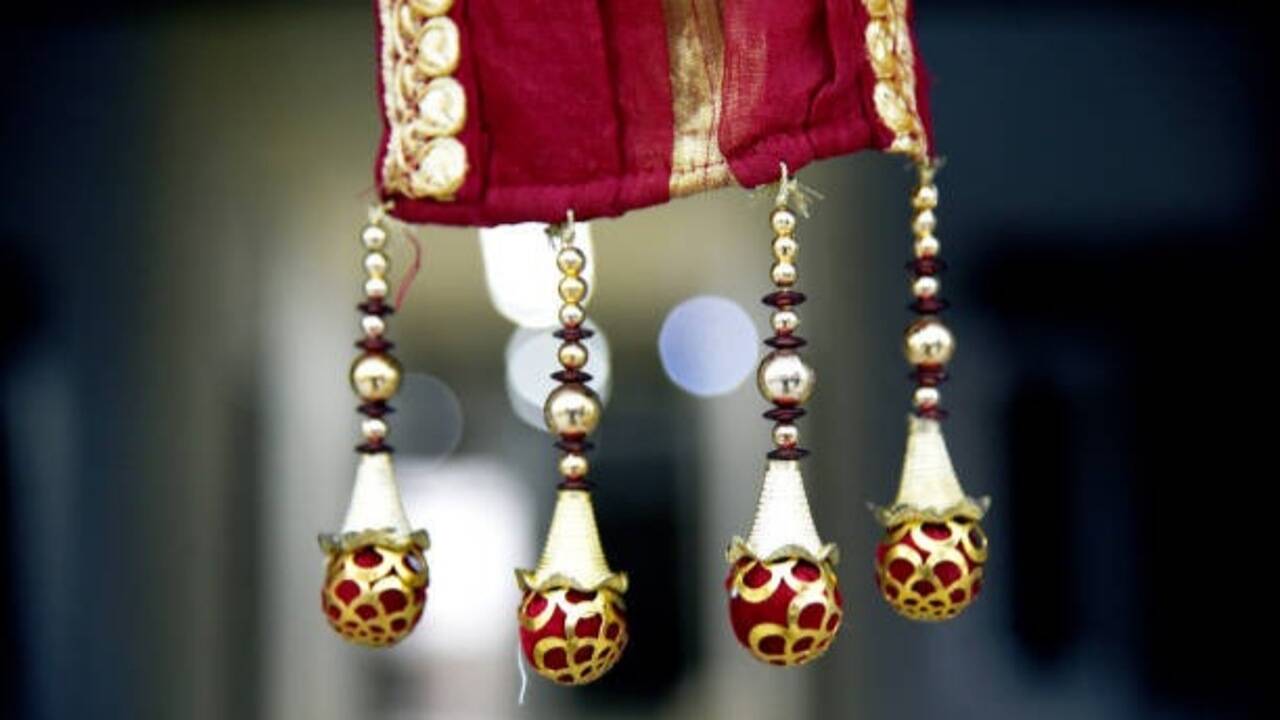
Frame it as wall art
This is the single most elevated use for a dupatta with real embroidery, mirror work, or fine silk detailing. Rather than folding it away, stretch it gently over a wooden or metal frame, or for something even more refined, have it mounted inside a large shadow box that protects the fabric while letting the pattern take centre stage. Hung on an accent wall, it reads less like recycled clothing and more like a genuine piece of textile art, and layering two or three dupattas of different textures together can turn an ordinary wall into a real conversation piece.
Turn it into a table runner
Few upcycling projects require as little effort as this one, since a dupatta’s long, narrow shape is already close to a table runner’s exact proportions. Simply lay it lengthwise down the centre of a dining or console table, no cutting or stitching required unless you want to hem the raw edges for a cleaner finish. A richly embroidered or zari-bordered dupatta instantly dresses up even the simplest table setting, though it’s worth being mindful of spills on delicate fabrics like silk or chiffon during an actual meal.
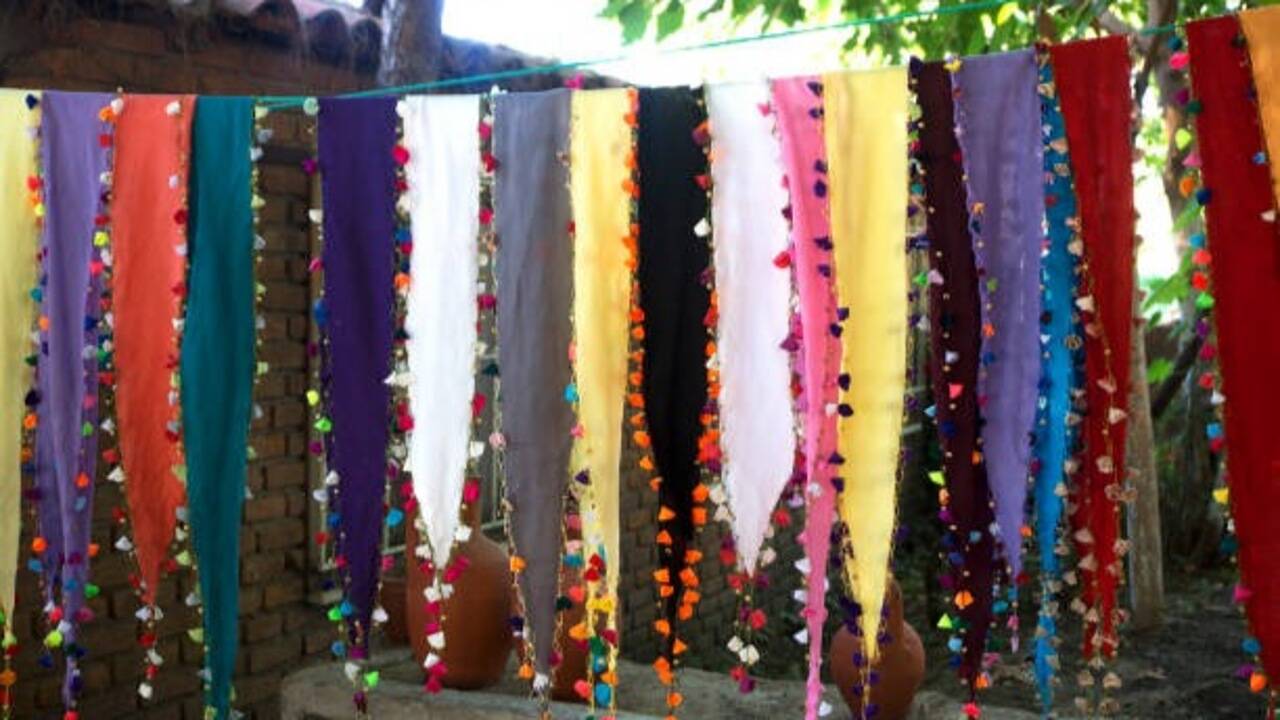
Sew simple cushion covers
For dupattas with beautiful borders or embellished panels, cutting and stitching them into cushion covers is one of the most popular ways to give them a permanent, everyday place in a room. A local tailor can usually put together a basic cushion cover from a dupatta in a single sitting, and the rich colours and detailing that made the fabric special to begin with translate directly into a cushion that looks genuinely designer rather than homemade. Mixing a few different dupattas across a set of cushions on the same sofa creates an eclectic, layered look that ties a room together.
Use it as a sheer curtain or bed canopy
Lighter dupattas in chiffon, georgette, or net fabric are particularly well suited to this idea, since their sheerness lets in soft, filtered light rather than blocking a window entirely. Hung from a curtain rod, they bring a romantic, airy quality to a room without the cost of proper curtain fabric. For bedrooms specifically, draping a sheer dupatta over a thin rod fixed above the bed creates a dreamy canopy effect that adds a sense of luxury without taking up any actual floor space, just make sure it’s fixed securely enough not to come loose overnight.
Drape it over a mirror or bedpost
For the absolute quickest option here, sometimes all a dupatta needs is a simple drape. Wrapping one around the top corner of a wall mirror, or tying it loosely around a bedpost with a single knot, adds an instant, effortless pop of colour and pattern to a room without any cutting, sewing, or planning at all. It’s the kind of styling trick that can be changed on a whim, swapping in a different dupatta whenever the mood or the season changes, without ever committing to anything permanent.
A second life that actually looks intentional
What makes these five ideas work so well is that a dupatta rarely needs much done to it to look beautiful, the embroidery, prints, and colour are usually already doing most of the work. Whether it ends up framed on a wall or simply knotted around a mirror, giving an old dupatta a new role in your home is a genuinely easy way to add a personal, richly patterned touch that a store-bought decor piece rarely manages to match.
Disclaimer:
This article is intended for general informational purposes only. Delicate fabrics like silk, chiffon, and georgette should be handled and cleaned with care, and hand washing is generally recommended over machine washing to preserve embellishments and shape.