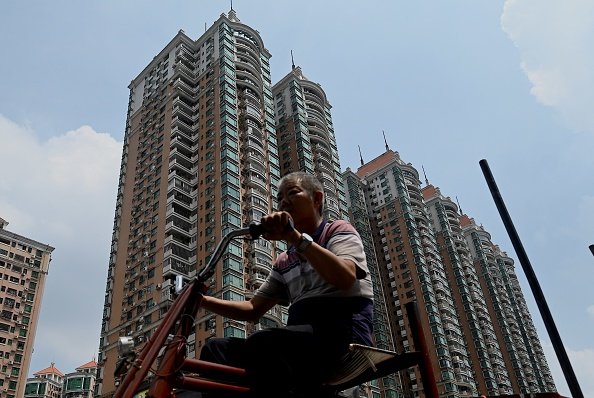
A growing campaign to register rental properties in Guangzhou, one of the largest cities in China, is raising concerns among landlords that authorities could use newly collected housing data to demand back taxes on rental income after years of relaxed enforcement or nonenforcement.
Officials in several districts of the southern Chinese city have recently sent community workers to residents’ homes to collect information on rental properties and tenants, according to a Guangzhou real estate blogger account on Chinese news portal NetEase.
The Aug. 19 blog post said when officials discover an unregistered rental property during home visits, they will urge the landlord to complete the registration.
The Guangzhou authorities have said the inspections are part of routine management for safety inspections and fire prevention. However, the simultaneous inspections across multiple districts, coupled with reports of penalties, have drawn attention to a more consequential question—whether rental registration could eventually lead to greater tax enforcement.
Several Guangzhou-based individuals spoke to The Epoch Times on condition of anonymity, fearing reprisal.
A Guangzhou legal professional said rental registration requirements have existed for years but were not enforced.
Related Stories


He said the difference now is the authorities’ willingness to enforce rules that had previously been overlooked and widely accepted as unenforceable.
“What landlords are worried about is having to pay taxes on their rental income,” he said. “That could be a considerable amount of money.”
China has recently expanded its national housing-rental registration system.
Under the Housing Rental Regulations, which took effect Sept. 15, 2025, rental contracts are required to be registered through rental management service platforms or other designated channels with the relevant local housing authorities. The regulations also require housing authorities to establish information-sharing mechanisms with public security, taxation, and market-regulation agencies.
A Guangzhou-based lawyer, surnamed Liu, told The Epoch Times that rental registration effectively gives authorities a clearer picture of individuals’ property holdings and rental income.
“In fact, what they call registration is actually an examination of your assets,” Liu said. “They want to know how many properties you have for rent and whether your income can match up,” he said. “If it doesn’t match your income, then they want you to explain where the money came from.”
He added that similar inspections were reportedly taking place in other cities in southern China, including Shenzhen and Dongguan.
For landlords, the increased enforcement is occurring amid prolonged economic slowdown and mounting pressure on local governments’ finances across China.
Liu said he believed the inspections were part of a broader effort by the regime to find additional sources of revenue.
“The government sees that people have money but are unwilling to spend it, so they investigate you,” he said. “China’s economy has been a complete mess these past few years, so they are trying to find money from various places. Taxes that were not collected in the past can now be investigated, and people are being asked to pay them back. It has been the same with businesses in recent years—back taxes plus administrative fines.”
Digital Governance
The expansion of rental registration has also raised broader concerns about how much information authorities can collect about individuals’ economic activities.
Liu said the regime’s increasingly digitalized system allows information once held separately by housing, public security, and tax authorities to be connected.
“Through big data, they know where you have eaten, how much you have spent and how much you consume throughout the year. They calculate it more accurately than you do yourself,” he said.
A Guangzhou real estate expert told The Epoch Times that the regime’s characterization of the inspections as routine management should not obscure the campaign’s potential significance.
The expert said similar inspections could spread to other parts of China as authorities increasingly enforce regulations that had previously been loosely enforced.
For landlords, the issue is therefore no longer simply whether a rental property must be registered. The larger concern is what authorities may do with the information once rental, property, and tax data become increasingly interconnected.
Jiang Fei contributed to this report.