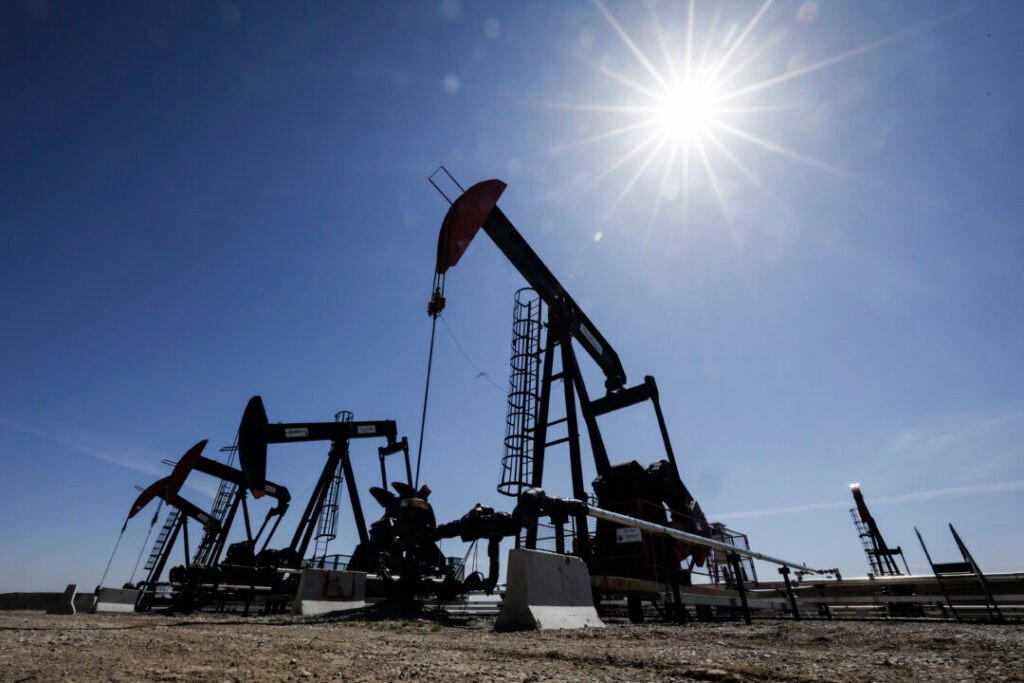

Pumpjacks draw oil and gas from a wellhead near Calgary on May 6, 2025. The Canadian Press/Jeff McIntosh
Commentary
Pierre Trudeau’s Liberal government announced the NEP on Oct. 28, 1980. Its stated aims were energy security, greater Canadian ownership of the oil industry, and a way to help unify the nation as an economic unit.
Related Stories


Aside from threatening national unity, meddling with the oil and gas industry could also cause serious economic hardship within Canada. North American refining is tightly integrated. Most of Alberta’s crude goes to U.S. Midwest plants built to run heavy oil. The oil that is refined in Sarnia, Ont., travels from Alberta through the United States and back up into Canada. In B.C., much of the oil shipped through the Trans Mountain Pipeline goes into Washington where it is refined, then sold back into B.C. as diesel, gasoline, and aviation fuel.
That integration is exactly why Canada’s energy leverage is weaker than it looks. Imagine if Canada were to tariff or curtail oil products exported to the United States. Washington could quickly respond by adding export tariffs on refined products coming into Canada. The result would be people in Ontario, Quebec, and B.C. paying much higher prices for home heating fuel and gasoline, while pressure within the USA would be limited. The United States keeps a strategic oil reserve it could tap into during such a trade battle. It also has domestic oil production, and steady oil supplies coming into multiple ports around the country. The USA is much better placed to withstand an energy battle.
If it came to curtailment of products, it would be disastrous. The Vancouver International Airport relies on aviation fuel from Washington state refineries and only has about a week or two of fuel supply on hand. Tanker barges from Washington refineries are integral for delivering fuel to B.C.’s island communities. If supplies were cut, it would be a catastrophe for Canada’s West Coast.
Alberta Premier Danielle Smith has called an oil export tax “disastrous” for the same reason. Even analysts who want a tougher federal posture concede that Canada lacks the market power to weaponize barrels without cutting its own throat. Saskatchewan Premier Scott Moe echoed Smith’s position and added that Saskatchewan’s potash is not on the table either. Resource ownership is a provincial power under the Constitution, and current premiers will not let that authority be eroded without a fight.
There is a legitimate national-interest case for a coordinated energy strategy, export diversification, pipelines to tidewater, and a federal government that does not treat Alberta’s production as a problem to be managed. Due to a decade of obstructionism from the Trudeau government against Alberta pipelines, the USA remains virtually the only customer for Canadian oil and gas. Prime Minister Carney has indicated support for pipeline approvals, but there are still no shovels in the ground.
Canada is in a tough position, with a U.S. president determined to get the best deal for his country. The instinct for Canada to push for its own interests in negotiations is only natural, but using oil and gas as leverage would only harm the Canadian economy and could fracture the nation.
Whatever tactics may be considered in trying to settle the trade war, it is hoped that the federal government understands that Western Canadian oil and gas should not be on the table. The cost for such an incursion would be much higher than many realize.
Views expressed in this article are opinions of the author and do not necessarily reflect the views of The Epoch Times.