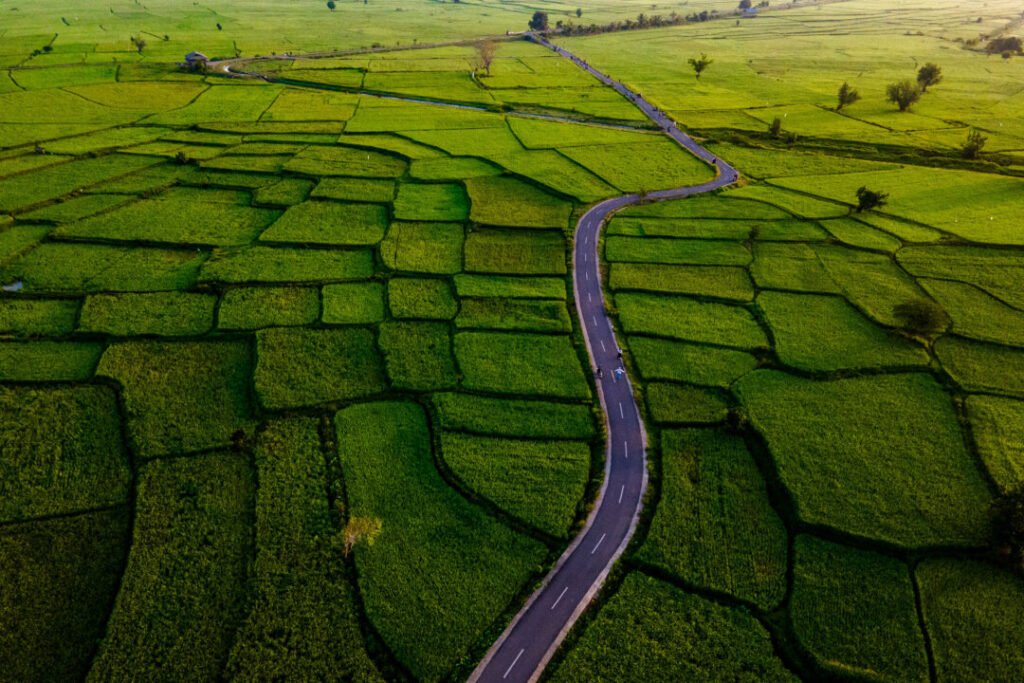
Australian rice company SunRice says it has welcomed constructive talks with the federal government regarding challenges facing the rice industry in the New South Wales Riverina region.
The company has been forced to scale back production hours, with reports of around 78 redundancies across its Riverina operations.
Widespread reports indicate the government could contribute $15 million to bolster operations at SunRice’s Leeton mill, a processing site for rice cakes, following the lower than usual output partly driven by a shortage of rice available for processing.
SunRice would match the funding with a $15 million contribution of its own.
The rice company’s predicament has reignited debate around Australia’s water allocation policy and the impact it has on growers.
Under the government’s plan for managing the Murray-Darling Basin, it buys water entitlements from willing sellers to recover water for environmental purposes.
Related Stories

Opponents say it deprives the farming industry and threatens vital crops.
“To truly ensure a viable Australian rice industry, we need a multi-faceted plan that supports more balanced water allocations and value-added manufacturing to help promote skilled regional jobs,” a SunRice spokesperson told The Epoch Times.
“We have been highlighting the need for water policy reform that balances socio-economic and environmental outcomes, and greater regional manufacturing support in the Riverina, for several years.
“We welcome the short-term assistance and are encouraged to see the government considering action on part of the solution.”
The Epoch Times understands Water Minister Murray Watt has invited SunRice to submit a formal proposal for upgrading ts Leeton processing facility, which is under consideration. While government funding would assist with future value-adding capabilities, it is considered unlikely to reverse exisiting redundancies.
High and Dry
“Too often we just think about whether we can access fresh food, but we know that we must also think about whether we can produce our own fresh food,” RGA executive director Perin Davey said.
“When it comes to rice, in a good year we can produce enough domestically to feed 50 million people worldwide. But if we get the policy settings wrong, that Australian rice disappears from the supermarket shelves very quickly.
“You can’t ask Australian farmers to maintain high productivity while simultaneously making long-term decisions that reduce their access to the water they need to produce it.”
“Our industry has survived for more than 75 years. It has endured severe droughts and devastating floods, but the cumulative impact of decades of water reform and ongoing buybacks is now being felt right across our communities,” RGA president Peter Herrmann said.
Politicians have weighed heavily into the debate, including One Nation’s Barnaby Joyce and MP David Farley, whose electorate of Farrer sits in the Murray Darling Basin region of New South Wales.
“There’d never been a proper order on exactly (what) the biggest water licence in Australia, which is the Commonwealth Government, does with that water.”
Farley, who took his concerns to the federal government and helped secure support, argues that current constraints ignore seasonal realities.
“There’s plenty of water available at the moment as the rivers have been flooding,” he told ABC News Breakfast.
“It’s just the rules of the Murray Darling Basin program restricting it, which seems to be nonsense.”
“We made an announcement of working with SunRice in Leeton. I’ve been to that factory,” he said.
“I was water shadow 20 odd years ago. So, I’m conscious of the work that farmers do and we want to work with them.”
Pros and Cons of Government Bail-Outs
Executive director of the Australian Institute of Progress (AIP) Graham Young told The Epoch Times that bail-outs of private companies do happen, but should not happen constantly if businesses are to be resilient.
“This bail-out is of a different sort in some respects,” he said.
“The money is not, as far as I can tell, an ‘investment.’ It is actually a grant, and is meant as compensation for the government taking water in the Murray Darling Basin from industry and giving it to the environment.
“Murray Watt, the Environment Minister, is responsible as a result.”
Young likened it to the government’s bailing out of metal smelters across Australia, such as a recent $2.5 billion package for Tomago Aluminium in NSW.
“Government has deliberately made a resource scarce—electricity in the case of the smelters, and water here—and created problems for local industries,” he said.
“Instead of expecting the industries to adjust, which is what would happen in a normal market economy, they effectively bribe them to keep going rather than admit that they have made the business uneconomic.”
Young also questioned why a bail-out was necessary in the case of SunRice.
“SunRice has equity of $657.8 million earning about $73 million after tax, with substantial borrowing capacity,” he said.
“It increased its dividend to 70 cents this year—a record. If investing the $30 million made sense, they could do it without government assistance.
“But it sounds like they could get a better return for their money somewhere else.”
Young also said the extra funding could detrimentally impact other Australian rice cake companies, like PureHarvest and Table of Plenty.
“And it doesn’t really solve the underlying problem because eventually the government’s money will run out and the water still won’t be there,” he said.
Young said one of the biggest struggles facing rice growers was their position in receiving water allocations, meaning no rice is grown at all in some years.
“If they turn a smaller amount of rice into cakes, and maybe import top-up amounts from elsewhere, then they can maintain some of the jobs,” he said.
Minister Watt’s office was contacted for comment.