Commentary
In light of the U.S. actions in Venezuela, Panama, and Iran over the past year, it’s clear that the world has entered a new era. But it’s not just U.S. intentions and actions that have changed.
China’s offensive capabilities have also evolved with a variety of cutting-edge technological advances that put it on a collision course with the United States both economically and militarily.
‘Intelligentized Warfare’
For more than two decades, Washington largely assumed that America’s technological superiority would remain unchallenged.
That assumption is no longer wise or valid.
Related Stories


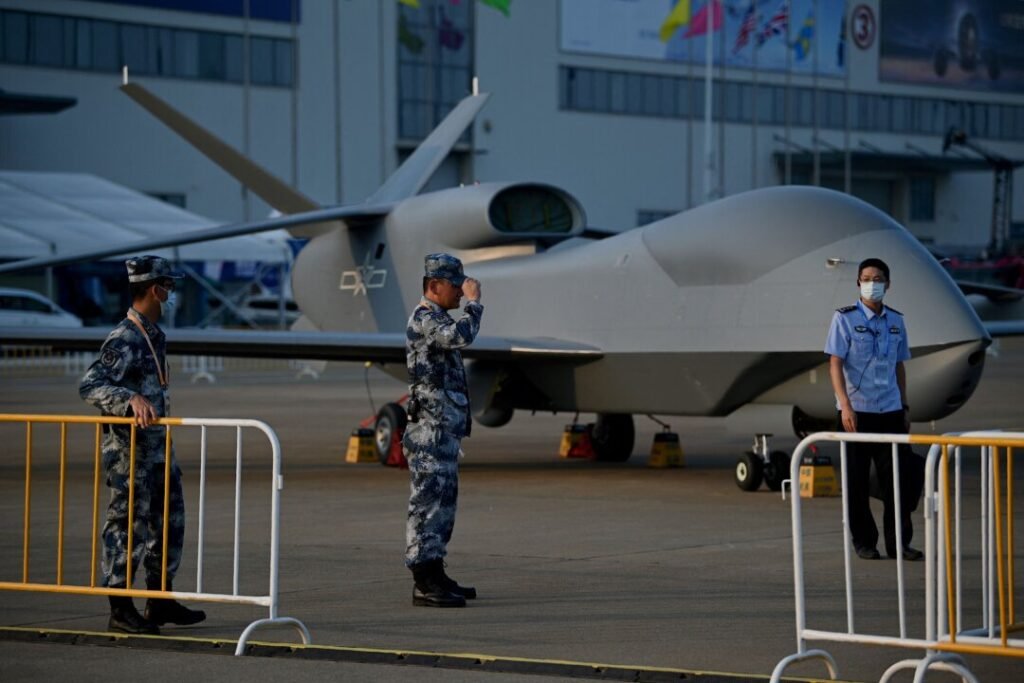
Today, the People’s Republic of China is investing enormous national resources into military technologies specifically designed to neutralize America’s traditional strengths rather than mirror them: hypersonic weapons, quantum communications, artificial intelligence (AI), autonomous drones, space-based surveillance and long-range precision strike capabilities.
Taken individually, each technology is significant. Together, they reveal something far more consequential.
Shrink America’s Decision Time
China is widely regarded as one of the world’s leaders in operational hypersonic missile development.
The military objective is not necessarily to make aircraft carriers obsolete. Beijing, after all, is building its own fleet of carriers.
Protect Command Networks
Another less-publicized area receiving years of sustained investment is quantum communications.
Quantum key distribution is critical. It can make interception attempts detectable, potentially strengthening command-and-control systems, intelligence sharing, and strategic communications.
Combat Multiplier
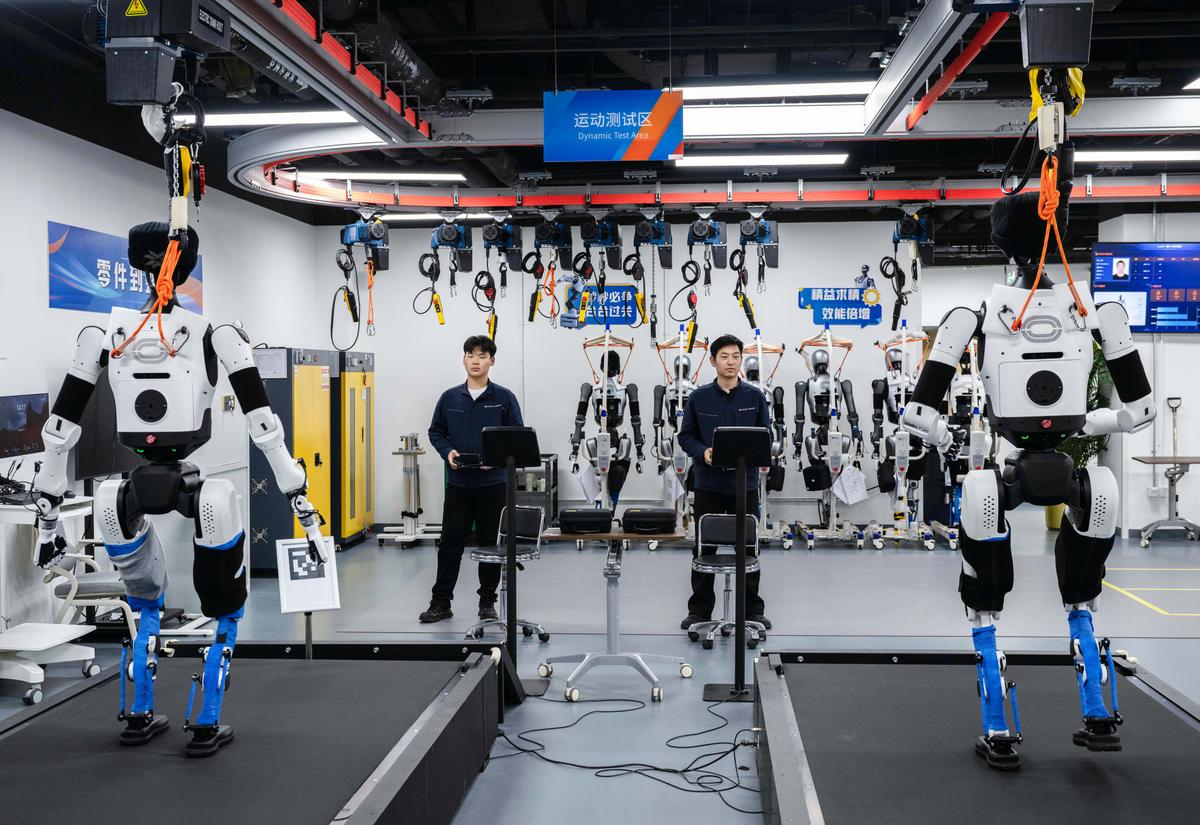
Engineers carry out testing on humanoid robots in the production facility of X-Humanoid at the Beijing Innovation Center of Humanoid Robotics in Beijing, China, on March 20, 2026. Kevin Frayer /Getty Images
AI can rapidly process enormous quantities of satellite imagery, electronic intercepts, drone feeds, and battlefield intelligence that would overwhelm human analysts. AI will recommend targets, prioritize threats, coordinate logistics, optimize missile employment, and accelerate operational planning.
Integration
Perhaps the most important point is that these technologies reinforce one another. Hypersonic missiles require accurate targeting. Targeting depends upon satellites, drones, sensors, and intelligence. Artificial intelligence helps fuse this information quickly. Quantum communications could help protect command networks transmitting that information.
China Is Preparing
No one outside China’s senior leadership can state with certainty what Beijing intends to do. However, the capabilities it is building provide important clues about the kinds of conflicts for which it seeks to prepare.
This assessment remains an interpretation based on publicly available evidence, not a confirmed statement of Chinese intent.
Could Economic Pressure Increase Military Risk?
These measures have intensified strategic competition, but they do not necessarily make military conflict more likely by themselves.
If Beijing believed that its advanced missile forces, AI-enabled command systems, or secure communications provided meaningful regional advantages, those capabilities could strengthen deterrence, support coercive diplomacy, or influence crisis decision-making.
Whether leaders would choose to employ them in a direct conflict would depend on many variables—including political objectives, alliance responses, escalation risks, and assessments of U.S. capabilities.
New Military Paradigm
The strategic competition between the United States and China is no longer defined solely by economic output or the size of their militaries.
It increasingly revolves around who can collect information fastest, secure communications most effectively, process intelligence most intelligently, and deliver precision effects before an adversary can react.
China’s investments in hypersonic weapons, quantum communications, artificial intelligence, autonomous systems, and integrated military networks suggest an emphasis on speed, resilience, and information advantage in future conflict.
These capabilities do not guarantee military success and many remain untested in combat. Nevertheless, together they represent one of the most significant shifts in the global military balance in decades.
One hopes that U.S. defense planners are taking these threats seriously.
Views expressed in this article are opinions of the author and do not necessarily reflect the views of The Epoch Times.