OpenAI banned a cluster of accounts on its popular chatbot ChatGPT with ties to a suspected Russian propaganda campaign, the company announced on Aug. 25.
The accounts were associated with the International Burke Institute, a fake think tank that acts as a front for a Russian covert influence campaign, according to OpenAI.
What started as an investigation into social media posts led the artificial intelligence company to uncover a “much broader influence operation, but around a website containing copied and misattributed academic work,” OpenAI stated in a report.
The fabricated work included a “sovereignty” index that cast Russia in a favorable light. It also disguised the network’s Russian origins.
“Although the campaign appears to have reached relatively small audiences, its elaborate construction distinguishes it from other Russia-linked influence operations we have disrupted since the start of the war in Ukraine,” OpenAI said.
The operator of the accounts prompted them to generate comments posted mostly in English on Substack, Telegram, X, Facebook, and LinkedIn. It also instructed ChatGPT to hide any linguistic clues that the operators were Russian.
Related Stories


“As we do not allow access to our models from Russia, they used [virtual private networks] to access our platform,” OpenAI said.
A majority of the generated comments promoted articles from a self-described “expert community” at the “Israel-based” International Burke Institute, OpenAI said.
The institute lists numerous experts on its website, including a few American professors.
Articles were attributed incorrectly to the experts and appeared to be copied from online sources, OpenAI found.
The Epoch Times reached out to international affairs professor and AI governance expert Susan Aaronson, from George Washington University, who is listed on the institute’s website as an expert. Aaronson confirmed she had not heard of the organization.
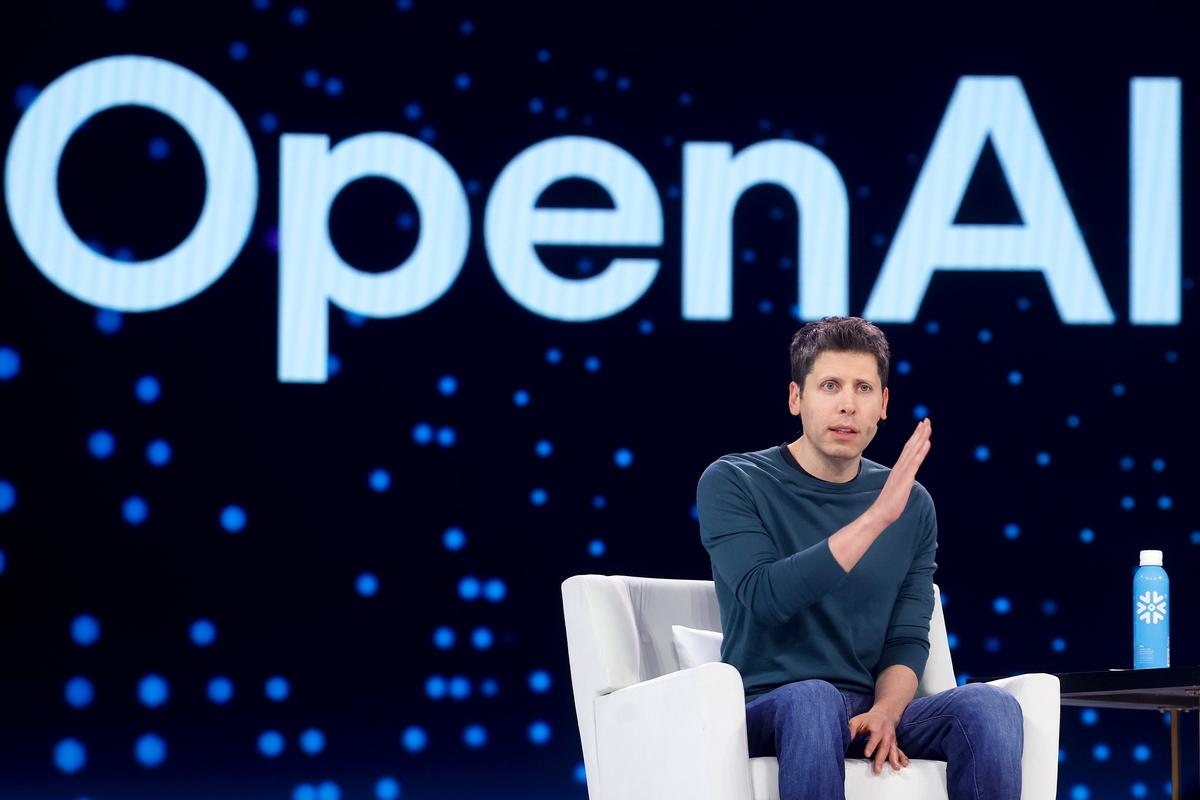
OpenAI CEO Sam Altman speaks at an event in San Francisco on June 2, 2025. Justin Sullivan/Getty Images
“I know nothing of this and I am not affiliated,” Aaronson told The Epoch Times.
The institute rejected claims that it was a fake Russian operation, stating on Aug. 26 that it was an independent research entity.
The institute’s articles were copied from real academic writings and appeared to have been drafted by a Slavic speaker, according to OpenAI.
“This is, to the best of our knowledge, a new and previously unreported covert influence campaign,” OpenAI stated. “Its most notable feature is its creation of the ‘sovereignty index’ promoted by the ostensible ‘think tank’ to praise Russia and denigrate Western countries.
“This is the first time we have disrupted an influence operation tied to Russia that went to such elaborate lengths,” OpenAI added.
The alleged operation was aimed mainly at generating social media posts to promote articles on the institute’s website, according to the investigation.

The ChatGPT app is displayed on an iPhone in New York City on May 18, 2023. AP Photo/Richard Drew
Some of the posts were written by the institute, and some came from fake social media account users whose primary activity was to post fabricated articles, OpenAI found.
The operators also posted replies to real Substack users, which usually linked to the institute, the investigation found.
In one case, operators left comments on German-language posts on a Telegram channel called “Lahme Ente” (meaning “lame duck”) advocating for better relations with Russia. The posts were criticized by Ukraine, the EU, and the German government, OpenAI said.
The operation showed how bad actors can misuse AI to influence the public, according to the company.
“This illustrates how influence actors can use AI as a supporting tool within a broader effort to manufacture authority, obscure the source of favored narratives, and establish assets that could be scaled over time,” OpenAI stated. “It also illustrates how their supporting use of AI can lead to the broader operation being exposed.”