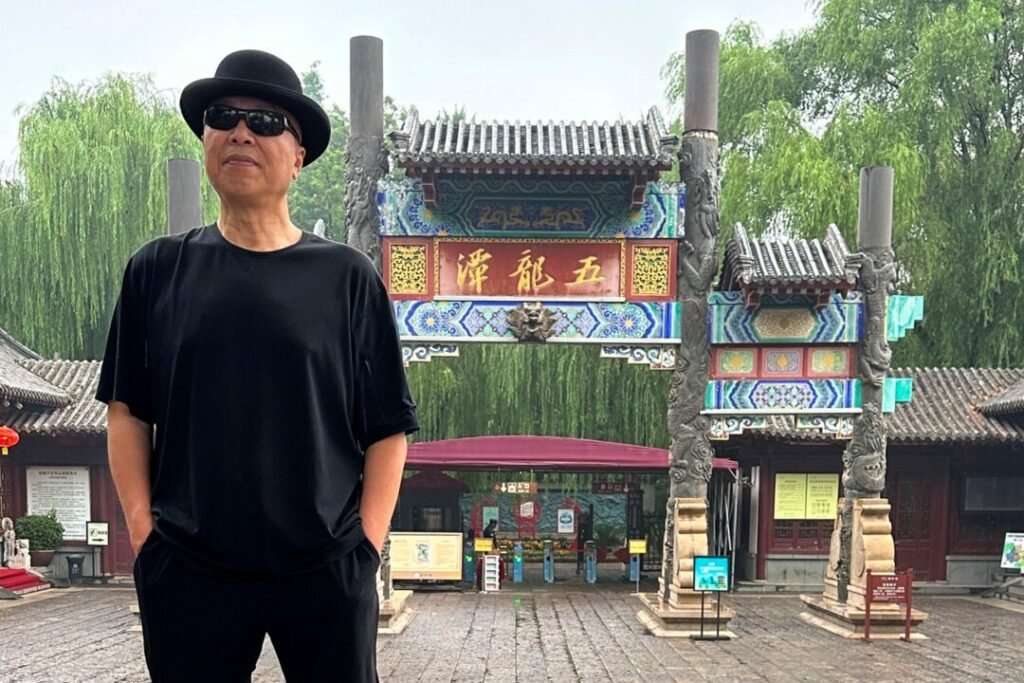
The U.S. State Department has raised “significant concerns” over the case of Gao Zhen, a prominent artist and U.S. permanent resident, who was sentenced to three years in prison by a Chinese court on Aug. 25.
The Sanhe City People’s Court in Hebei Province in northern China sentenced Gao for insulting “heroes and martyrs” over the artwork he crafted in the early 2000s.
U.S. diplomats and representatives from several other diplomatic missions were denied access to Gao’s verdict and sentencing hearing in Hebei, according to the State Department.
“We have significant concerns regarding the case, against Gao Zhen which we note was in connection with alleged actions taken years prior to the enactment of the law under which he was convicted,” a State Department spokesperson told The Epoch Times in a statement on Aug. 26.
“The United States continues to support the right to freedom of expression, including as exercised through art.”
Related Stories

Gao, along with his younger brother, Gao Qiang, created sculptures, paintings, and photographs inspired by memories of their father, who died in custody after being arrested as a “counter-revolutionary” during the Cultural Revolution. The decade-long campaign, unleashed by then-communist leader Mao Zedong in 1966, targeted China’s historical legacy and its scholar-bureaucrat traditions, resulting in millions of deaths until Mao’s death in 1976.
One of their most acclaimed is “Mao’s Guilt,” a bronze statue portraying Mao kneeling, head bowed, with his right hand on his chest, expressing sorrow and remorse.
“Gao Zhen did nothing more than use art to reflect critically on Mao’s rule and to confront that dark well of history. Yet because he dared to look into it, he himself has now fallen into that same well,” the younger Gao wrote in a Facebook post on Aug. 26.
He said his brother’s health has “seriously deteriorated” after two years of detention in a Chinese jail cell, and his access to medical treatment was restricted by authorities.
International human rights organizations have called for the artist’s immediate release.
“No artist should face criminal punishment for creating work that challenges official narratives or encourages critical reflection on history,” Sarah Brooks, Amnesty International’s China director, said in a statement on Aug. 25.
“This trial demonstrates how broadly worded and politically motivated laws are used—and worse, in this case, used retroactively—to silence artists, activists and other individuals who dare to express views that differ from those of the Chinese government.”
According to Amnesty International, Gao has decided to appeal the conviction and the prison terms.
The case has sparked fresh concerns about Beijing’s use of exit bans as the artist’s wife, also a U.S. permanent resident, and their son, a U.S. citizen, have been barred from leaving China since mid-2024.
The U.S. Congressional-Executive Commission on China said their 7-year-old son has been effectively “held hostage” in China.
“The guilty verdict against artist Gao Zhen should be condemned globally as an unacceptable restriction of the freedom of expression,” the commission said on X. “Gao Zhen should be released unconditionally, and he and his family must be allowed to return to the United States.”