U.S. Customs and Border Protection (CBP) officers in Indianapolis have seized what they described as a “smorgasbord” of counterfeit jewelry from Hong Kong, which would have been worth more than $3.7 million if the items had been genuine.
The agency shared exclusive details on Aug. 25 with The Epoch Times about one of its latest interceptions of faux goods from China, which consistently leads the world in shipments to the United States of alleged counterfeit items seized for intellectual property rights (IPR) violations.
“CBP has an exceptional team of officers and import specialists who are experts in identifying counterfeit goods and work closely with private industry to thwart intellectual property infringement,” Indianapolis Port Director Brett Mueller said.
While CBP is mainly tasked with securing U.S. borders, part of the agency’s wide scope of responsibilities also involves enforcing and recognizing IPR violations.
Border officials have warned of counterfeit goods—such as medications, cosmetics, children’s toys, and automotive parts—that could potentially be harmful to American consumers.
Mueller said CBP’s focus on seizing these items protects U.S. citizens while “taking profits from organized crime.”
Related Stories

This latest seizure from Aug. 18 was discovered at Indianapolis’s express consignment facility.
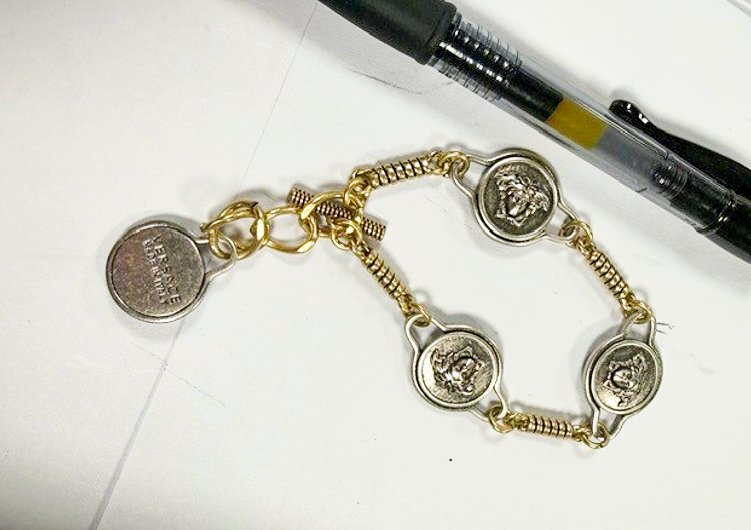
Agents pulled a shipment from Hong Kong bound for a residence in Georgia for closer inspection and discovered 875 pieces of counterfeit jewelry, including earrings, necklaces, and bracelets, as well as five designer handbags. CBP and trade experts deemed the items inauthentic.
They bore several popular designer trademarks, including Louis Vuitton, Chanel, Versace, Gucci, Tiffany & Co., Cartier, and Van Cleef & Arpels, CBP said.

Border agents seized 875 pieces of counterfeit jewelry from Hong Kong. The fake items, bearing popular designer brands such as Cartier, were seized in Indianapolis on Aug. 18, 2026. U.S. Customs and Border Protection
Photos of the counterfeit jewelry provided to The Epoch Times appeared to show a Versace bracelet, a gold Cartier bracelet, and silver Cartier earrings.
CBP data show that handbags, wallets, apparel, footwear, watches, jewelry, and electronics are the most commonly counterfeited items by criminal organizations. These fake versions are often sold to American consumers in online marketplaces and flea markets, according to the agency.
“Not only are counterfeit goods produced in unregulated and potentially exploitative environments in foreign countries, but the profits from their sales provide a funding stream to organized crime,” the agency noted.
It added that the items “can pose serious health and safety risks to American consumers as they are often made with substandard or harmful materials.”

Border agents seized a large shipment of counterfeit items from Hong Kong, including these inauthentic Cartier earrings, in Indianapolis on Aug. 18, 2026. U.S. Customs and Border Protection
Profits from counterfeit items are among the most lucrative revenue streams for transnational criminal groups, CBP said, which regularly track online trends while sidestepping legitimate U.S. businesses.
In fiscal year 2025, border agents seized nearly 79 million counterfeit items, according to the latest data available.
Those 2025 numbers represent a sharp increase in the number of items seized for IPR violations in recent years. In fiscal year 2022, the total number of counterfeit goods seized was less than half, at 24.8 million.
The total manufacturer’s suggested retail price, or the true price of a genuine item, has also more than doubled.
The amount in fiscal year 2021 was $3.3 billion; in fiscal year 2022, it was $3 billion; in 2023, it was $2.8 billion; in 2024, it rose to $5.4 billion; and in 2025, it increased again to $7.4 billion.
China was the most consistent source of goods involved in IPR violations in fiscal year 2025, according to CBP data, with more than 52 million items that would have been worth $6.4 billion if they were real.
In fiscal years 2024 and 2023, China also led all other nations in the number of items seized for IPR violations.