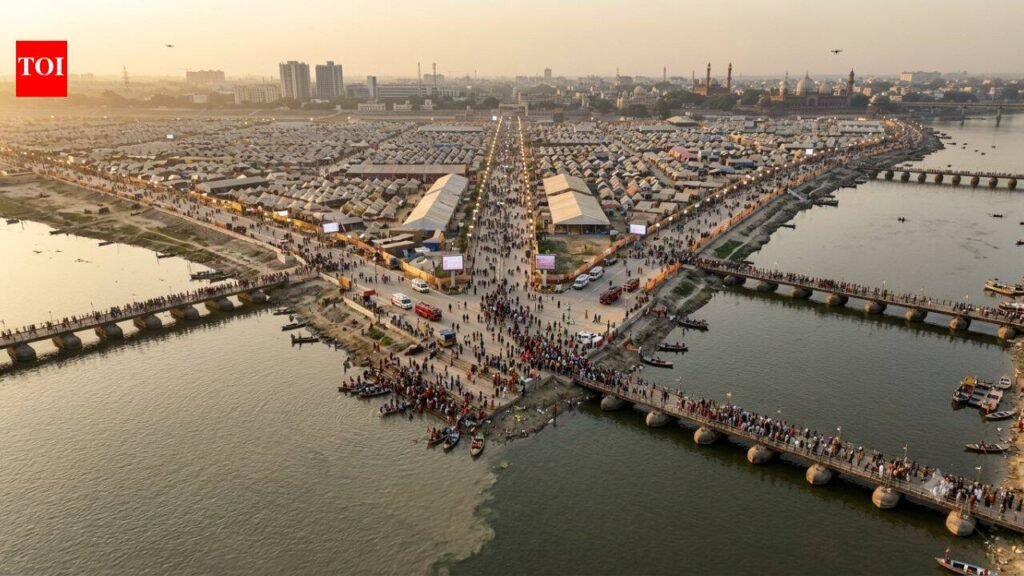
Mahakumbh 2025 was not merely a religious congregation. It became a defining moment in the transformation of Prayagraj district and a remarkable demonstration of India’s ability to organise, manage and support one of the largest human gatherings in the world. The event brought together faith, tradition, technology, infrastructure and administrative innovation on an unprecedented scale. For Uttar Pradesh, it was also an opportunity to showcase how long-term planning and rapid execution could convert a historic city into a modern, efficient and globally visible destination.The scale of Mahakumbh 2025 demanded an equally extraordinary infrastructure response. Prayagraj had to prepare for hundreds of millions of visits over the course of the festival, including massive surges on important bathing days. The challenge was not limited to managing crowds. Authorities had to ensure roads, bridges, sanitation, drinking water, electricity, healthcare, accommodation, security, communication and emergency services for a temporary population larger than that of many countries.The result was an unprecedented infrastructural overhaul that changed the physical and administrative landscape of Prayagraj.Strengthening the lifelines: Roads, bridges and seamless connectivityOne of the most visible aspects of Mahakumbh preparation was the massive strengthening of connectivity. Roads leading to Prayagraj, important arterial routes, approach roads and internal city corridors received major upgrades. Road widening, resurfacing, beautification and improved traffic management helped create smoother movement both for pilgrims and local residents.The development was designed around a simple principle: the success of Mahakumbh depended on keeping people continuously moving. Traditional crowd management based only on barricading was replaced by a more integrated system of route planning, traffic diversion, pedestrian corridors and real-time monitoring. Temporary pontoon bridges across the rivers played a crucial role in connecting different parts of the Mahakumbh area. These bridges helped distribute crowds across a vast geographical space and reduced pressure on permanent bridges and urban roads.The city also witnessed major improvements in railway stations, bus facilities and last-mile connectivity. Pilgrims arriving from different parts of India could be directed towards designated routes and holding areas, helping authorities prevent dangerous congestion at transport hubs.Managing millions: A new global standard in crowd controlPerhaps the greatest achievement of Mahakumbh 2025 was its attempt to establish new standards in crowd management. Managing millions of people in a single city requires much more than deploying police personnel. It requires advance planning based on the study of crowd behaviour, movement patterns and possible pressure points. For Mahakumbh, authorities created a multi-layered system involving police, paramilitary forces, disaster response teams, volunteers and civil administration.Technology became an important force multiplier. CCTV surveillance, integrated command-and-control centres, artificial intelligence-based monitoring and other digital systems helped authorities observe crowd density and movement across important locations. The objective was to identify congestion before it developed into a crisis. When crowd density increased in a particular zone, movement could be regulated, routes could be diverted and additional personnel could be deployed.Large-scale digital monitoring also strengthened coordination between different agencies. Police, fire services, health departments, municipal authorities and emergency response teams could share information more rapidly. The experience demonstrated how technology could complement traditional policing and administrative planning in managing extremely large public gatherings.Cleanliness on a mega scale: Building a temporary city with modern standardsMaintaining cleanliness for millions of visitors was another enormous challenge. Mahakumbh 2025 witnessed one of the largest sanitation operations ever undertaken for a public event in India.Thousands of sanitation workers were deployed to maintain toilets, roads, public spaces and the temporary settlement created along the riverbanks. A large network of toilets and bathing facilities was developed, while solid waste management systems were strengthened to ensure regular collection and disposal. The objective was not simply to keep the festival area clean but to create a behavioural change among visitors. Public awareness campaigns encouraged pilgrims to use designated facilities and avoid littering.Mechanised cleaning equipment, waste collection vehicles and dedicated sanitation teams worked continuously. The enormous scale of the operation reflected the importance given to public health and hygiene. The transformation was particularly significant because the Kumbh area is a temporary city. Within a limited period, authorities had to create an urban ecosystem complete with roads, lighting, water supply, drainage and sanitation facilities.Mahakumbh 2025 was a prime example of how even a temporary settlement can be planned with the standards expected of a modern city.Reimagining Prayagraj: Beautification, culture and a renewed urban identityThe Mahakumbh preparations also transformed the visual identity of Prayagraj. Major roads, flyovers, public buildings, riverfront areas and important intersections underwent beautification. Wall paintings, murals and artistic installations celebrated India’s cultural heritage, spiritual traditions and the historical significance of Prayagraj. The city became a vast cultural canvas, presenting its identity to visitors from across India and the world.Public spaces received renewed attention. Street lighting, landscaping, signage and façade improvements contributed to a cleaner and more organised urban environment. These improvements were not intended only for the duration of the Mahakumbh. A significant part of the infrastructure created for the event had the potential to strengthen Prayagraj’s long-term urban capacity.Better roads, improved public facilities, enhanced digital infrastructure and upgraded civic amenities continued to benefit residents after the departure of the pilgrims.Where ancient faith meets digital innovationThe fusion of tradition and innovation became one of the defining characteristics of Mahakumbh 2025 which represented a new model in which ancient faith was supported by modern technology. Digital platforms helped visitors access information about routes, facilities and important locations. Online systems and digital communication made it easier for pilgrims to plan their journeys.Surveillance technology strengthened security, while drones and cameras provided authorities with a wider view of the vast festival area. Integrated control rooms acted as the nerve centres of the entire operation. Lost-and-found systems, emergency response mechanisms and public announcements were strengthened through the use of technology.A protective shield: Security, healthcare and emergency preparednessSecurity was another crucial pillar of the Mahakumbh. The administration had to protect an enormous population spread across a vast area while ensuring that the spiritual atmosphere of the festival remained undisturbed. Police personnel, specialised security teams, women police personnel, disaster management units and emergency responders were deployed in large numbers.Healthcare infrastructure was also expanded through temporary hospitals, medical camps, ambulances and emergency response facilities. Special arrangements were made to respond quickly to medical emergencies. Fire safety, disaster preparedness and water rescue systems were strengthened, reflecting the lessons learned from managing large public gatherings in the past.Beyond the festival: The enduring legacy of a transformed PrayagrajThe real significance of Mahakumbh 2025 lied beyond the number of pilgrims who visited Prayagraj. Its larger legacy is the transformation of administrative capacity and urban infrastructure.The event demonstrated that the management of a mega gathering requires integrated planning involving infrastructure, technology, sanitation, security and public participation.Prayagraj emerged from Mahakumbh 2025 with upgraded roads, improved civic infrastructure, enhanced public spaces and a stronger global identity. For Uttar Pradesh, Mahakumbh became a showcase of governance on a monumental scale. It highlighted the capacity of the state to execute complex projects within demanding timelines while coordinating multiple agencies and serving an extraordinarily large population.Mahakumbh 2025 will therefore be remembered not only as an event of immense religious significance but also as a landmark in infrastructure development, crowd management and urban transformation. Prayagraj became a living example of how faith can bring millions together—and how modern planning, technology and determined administration can make such an unprecedented gathering safer, cleaner, more organised and globally admired.