Introduction
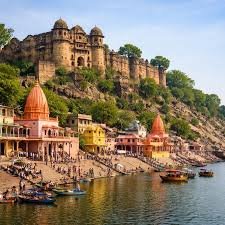
Banda history represents one of the most fascinating and turbulent chapters in Indian historical narrative. This region, located in the southern part of Uttar Pradesh, has witnessed the rise and fall of empires, the valor of legendary warriors, and the spirit of India’s freedom struggle. From the ancient stone sculptures of the Paleolithic era to the revolutionary movements against British rule, the history of Banda is a remarkable story of resilience and cultural richness.
The name “Banda” itself carries deep historical significance, derived from the great sage Bamdeo who once graced this land with his presence . This complete guide explores the depths of Banda’s historical journey, uncovering the stories that have shaped this extraordinary region of Bundelkhand.
Ancient Origins: The Prehistoric Foundation of Banda
Paleolithic and Neolithic Settlements
The history of Banda goes back to the remote antiquity, with evidence of human civilization dating to the Paleolithic and Neolithic periods . Stone sculptures and archaeological remains discovered throughout the district prove that human habitation flourished here in those earliest times, much like the rest of the Indian subcontinent .
The Adivasi and Aryan Connection
In prehistoric times, the Adivasis (primitive people) inhabited this region. The earliest known Aryan people associated with this area were the Chedis, mentioned in the Rigveda . According to traditional accounts, the famous ruler Yayati’s eldest son, Yadu, inherited this region. His descendants later named it Chedi-Desha, establishing one of the earliest documented kingdoms in the area.
Kalinjar: The Sacred Mountain
A prominent hill known as Kalinjar holds immense religious significance. Mentioned in the Vedas as one of the tapasya-sthanas (spots for austere devotion), this sacred place derived its name from Lord Shiva himself, who remains the main deity of Kalinjar, worshipped as Nilakantha even today . The hill finds mention in Hindu holy books including the Ramayana, the Mahabharata, and the Puranas.
The Epic Connection: Lord Rama and Banda
One of the most significant aspects of Banda history is its connection to the Ramayana. It is believed that Lord Rama spent 12 of his 14 years of exile at Chitrakoot, which was historically part of Banda district until recent times. This spiritual connection has made Banda a significant pilgrimage destination for Hindus across the country .
Dynastic Rule: From Mauryans to Guptas
The Mauryan Empire
By the fourth century B.C., the region was annexed to the Nanda empire of Magadha. Subsequently, it formed territory under the Mauryan Empire until Emperor Ashoka’s death around 236 B.C. . This period marked the beginning of Banda’s integration into larger Indian empires.
The Sunga and Kanva Dynasties
After the decline of the Mauryan Empire, Pushyamitra Sunga captured this region. Under the Sungas, the area remained for nearly 100 years. The Kanvas followed for a short period, maintaining the cultural and administrative continuity in the region .
The Kushana and Gupta Periods
The Kushanas also ruled over this tract of land, followed by the Nagas during the third and fourth centuries. The Gupta Empire established its control in the middle of the fourth century A.D., bringing the region under one of India’s most prosperous dynasties .
Jejakbhukti and Harsha-Vardhana
The region was later named Jejakbhukti (or Jajhoti). After a brief rule by the Huns and then Panduvamsi King Udayan, the famous King Harsha-Vardhana (606-647 AD) established his supremacy over North India, making this region a part of his dominion .
The renowned Chinese traveler Hiuen Tsang (641-642 AD) mentioned this region as Chih-Chi-to, with its capital at Khajuraho. This Chinese account provides valuable insights into the prosperity and cultural development of the region during Harsha’s reign.
The Glory of the Chandelas
Chandela Ascendancy
After the rule of Harsha-Vardhan, the Kalchuris and Pratiharas controlled the tract. Then came the famous Chandelas, who established a long and glorious kingship over the region. The second important Chandela king extended his territory to cover entire Bundelkhand and surrounding areas, earning the honor of being the first Chandela Kalanjaridhipati (Lord of Kalinjar) .
Chandela Architecture and Culture
The Chandela period represents the golden age of architecture in this region. The Khajuraho temple complex, now a UNESCO World Heritage Site, stands as testimony to their architectural brilliance. These temples, famous for their elaborate carvings and intricate sculptures, continue to attract tourists and scholars from around the world.
Mahmud of Gazni’s Failed Attempts
In the first half of the 11th century, Mahmud of Gazni reportedly marched several times to Kalinjar. However, he was resisted by the Chandelas and forced to retreat, demonstrating the military strength and strategic importance of this fortress .
The Muslim Invasions
Prithviraj Chauhan and Chandela Conflict
Around 1182 AD, the Chauhan king Prithviraja of Delhi and Ajmer is said to have defeated the famous Chandela-king Paramardideo. However, he could not retain control of the tract for long, and Paramardideo recovered his position soon after .
Kutub-ud-din Aibak’s Capture
In 1202 AD, Kutub-ud-din Aibak, a general of Muhammed Ghuri, captured the Kalinjar fort. Though the Chandelas recovered their territory and ruled through the 13th century AD, this event marked the beginning of Muslim incursions into Bundelkhand .
The Lodi and Mughal Periods
The Lodi sultans occupied Kalinjar for a short while, but it reverted to Hindu control. The Mughal prince Humayun Mirza attempted to regain it, but his father Babur’s death in 1530 AD forced him to abandon the move .
Sher Shah Suri’s Fateful Siege
After fifteen years, Sher Shah Suri besieged the fort of Kalinjar in 1545 AD. Tragically, he was killed during operations just before its capture. His son Jalal Khan ascended to the Royal throne at Kalinjar fort under the assumed title of Islam Shah .
The Chandela-king and his seventy soldiers were executed soon after, ending the long Chandela rule over Kalinjar.
Kalinjar Under the Mughals
Later, Baghela-king Ram Chandra purchased the fort of Kalinjar. However, it was captured by Akbar’s lieutenant, Majnun Khan Quaksal, making Kalinjar an integral part of the Mughal dominion. During his later life, Raja Birbal seems to have held Kalinjar as his Jagir .
During Mughal rule, most of the area under Banda district fell under Kalinjar-Sirkar. There were ten mahals, out of which Kalinjar-Sirkar possessed six: Augasi, Sihond, Simauni, Shadipur, Rasin, and Kalinjar, which form part of the present district of Banda.
The Rise of the Bundelas
Champion of Hindu Independence
After Akbar’s death, the region again became independent under local rulers. During Jahangir’s time, the Bundelas consolidated their position, shifting the stronghold of this region to Orchha .
Under the valiant leadership of Champat Raj, the Bundelas occupied the southern portion of Hamirpur, including Mahoba. Ratan Shah, son of Champat Raj, also fought against the Imperial forces.
Chhatrasal: The Bundela Hero
Chhatrasal, another son of Champat Raj, took up the Bundela cause, uniting under his banner all the less powerful Bundela chiefs. He posed a significant threat to the already declining Mughal power. Chhatrasal made his capital at Panna in 1691 AD and conquered almost the entire tract south of Yamuna, carving out the region known as Bundelkhand today .
Muhammad Khan Bangash’s Attempts
Muhammad Khan Bangash, as Governor of Allahabad, tried on imperial orders to recapture Bundelkhand. He made another attempt in 1728 AD but had to withdraw and was forced to drive away because of the Maratha-Bundela alliance against him. Bangash was so disgraced that he was ousted from the Governor’s position .
The Maratha-Bundela Alliance
Peshwa Baji Rao, the Maratha chief, regarded Chhatrasal as his father. In turn, Chhatrasal, in his last days, divided his dominion into three parts, giving one part to Peshwa Baji Rao as his third son. This Maratha presence in Bundelkhand later owed its origin to this event .
The second son of Chhatrasal, Jagatraj, received the forts and dominion around Banda. The fort of Bhuragarh on the western bank of the Ken River was built sometime during 1746 AD.
The Nawabi Period
Ali Bahadur and the Nawabate
In 1791 AD, the Bundela-king of Banda under the care of Noni Arjun Singh fought the invader Bahadur, related to Peshwa Baji Rao and his Muslim wife Mastani. After Noni Arjun Singh lost his life, Banda came under Ali Bahadur, who declared himself Nawab of Banda .
While trying to capture Kalinjar fort in 1802 AD, Ali Bahadur lost his life. During the nawabi of Shamsher Bahadur, son of the deceased Ali Bahadur, Banda was made the chief town of his residence .
Shamsher Bahadur’s Rule
Shamsher Bahadur I (Krishna Rao), a Maratha ruler of the dominion of Banda, was the son of Bajirao I and Mastani. He was bestowed upon a portion of his father’s dominion of Banda and Kalpi .
In 1761, he and his army contingent fought alongside the Peshwa in the Third Battle of Panipat between the Marathas and Afghans. He was wounded in that battle and died a few days later at Deeg .
Nawab Zulfikar Bahadur and the Golden Period
Banda became a gun salute state under Nawab Zulfikar Bahadur. He established a modern education system and helped renew Banda’s administrations. During this golden period of Banda, culture and language were promoted .
The Nawab Tank was built in memory of Mirza Ghalib, who happened to be a blood relative of the Nawab. He also started the Shazar stone masonry works, and his rule was one of the milestones in peace and Maratha hegemony.
The British Era
The Treaty of Bassein and British Overrule
The treaty of Bassein in 1803 brought Banda legally under British rule, although the Nawabs of Banda resisted their entry throughout. Himmat Bahadur, the one-time friend of Nawabs, betrayed them and sided with the British. Nawab Shamsher Bahadur was defeated and had to accept British sovereignty in 1804 AD .
In 1812 AD, Kalinjar came under British occupation. In March 1819, Banda town was made the headquarters of the newly created southern Bundelkhand district.
The Rebellion of 1857
Nawab Ali Bahadur II’s Leadership
The Indian Rebellion of 1857 started on 14 June in Banda, led by Nawab Ali Bahadur II. The inhabitants of Banda district, inspired by incoming freedom fighters from eastern districts, took up arms in large numbers against British rule .
On 14 June, British officers left Banda, and Nawab declared himself independent. Nawab Ali Bahadur II not only organized his own governance in Banda but also assisted revolutionary efforts elsewhere in Bundelkhand .
The Battle of Banda
On 16 April 1858, General Whitlock arrived in Banda and fought against the Maratha army of Banda, supported by Tatya Tope from the south and Kalinjar Bhatts from the east. About 3000 revolutionaries were killed in the fort during this war .
The Nawab was dismissed from his possessions in Banda, imprisoned, and sent to Indore jail. All his Banda dominions were passed to Rai Bahadur Manvendrasingh Awasthi, an important minister of Kalinjar Bhattshahi .
The Tragic End
Eight hundred freedom fighters were killed, and Fort Bhuragarh was destroyed. Nawab Ali Bahadur II was asked to leave Banda for Indore and given a pension of Rs. 36,000 per annum .
The Freedom Struggle in the 20th Century
Swadeshi Movement and Nationalist Awakening
There was a very strong repression of people during later years up to the beginning of the twentieth century. The anti-partition agitation of 1905 highlighted the growing awareness against foreign rule. The Swadeshi movement started, and people took oaths to boycott foreign articles and deal only in swadeshi goods .
The Dayanand Vedic Anathalaya was inaugurated by Lala Lajpat Rai in 1908 at Banda, marking the beginning of organized nationalist activity in the district.
Non-Cooperation Movement
The Non-Cooperation Movement of 1920 spread through the district like wildfire. People were exhorted to leave government services and boycott the courts, while children were advised not to attend government schools. A nationalist school was set up in 1920, and the newspaper “Satyagrahi” started being published, stirring the masses toward revolution .
Mahatma Gandhi’s Visit
In November 1929, Mahatma Gandhi visited Banda, inspiring the people with his message of non-violent resistance and civil disobedience.
Civil Disobedience Movement
In 1930, the civil disobedience movement was started in Banda along with the rest of the country. The salt Satyagraha was initiated here, followed by the civil disobedience movement in which people from all walks of life participated very actively. This led to widespread awakening, and many people, including women, joined the movement. Over 100 persons were arrested for breaking the law and order during this time .
Chandra Shekhar Azad’s Connection
The well-known revolutionary Chandra Shekhar Azad also visited Banda during the same time. The people assisted him in his activities through finance, arms, and ammunition.
Quit India Movement
On August 8, 1942, the Quit India movement was launched with extremist activities, resulting in at least 84 persons being convicted for their conduct. The resistance continued till the eve of independence in 1947 .
Independence and Aftermath
On August 15, 1947, independence was welcomed and rejoiced. However, the tragedy and wounds of partition brought in their wake many displaced persons from Pakistan, which was also felt with great uneasiness. Mahatma Gandhi’s assassination on January 30, 1948, was a painful event mourned by all .
The declaration of the sovereign Indian Republic along with the adoption of its constitution on January 26, 1950, was celebrated here with enthusiasm and happiness.
Banda’s Heritage and Cultural Significance
Kalinjar Fort: The Crown Jewel
Kalinjar Fort remains the most significant historical monument in Banda’s heritage. Famed for its war history and glorious rock sculptures, this fortress has witnessed centuries of conflict and cultural exchange. The fort is strategically located on a hill and offers magnificent views of the surrounding landscape .
Khajuraho: The World Heritage Site
Although currently in a neighboring district, Khajuraho was historically part of this region. This UNESCO World Heritage Site is famous for its elaborately carved temples, representing the pinnacle of Chandela architecture. The temple complex continues to attract scholars and tourists from across the world.
Bhuragarh Fort: Witness to History
Across the river Ken, there are ruins of Bhuragarh Fort, said to be built with brown stones by Raja Guman Singh in the 17th century. This place was important during the freedom struggle and now hosts a mela called ‘Natbali Ka Mela’. The fort is situated on the bank of the Ken River and represents an important part of Banda’s military history .
Shajar Stone: Banda’s Unique Treasure
Banda is famous for its Shajar stone (also known as Dendrite Agate), used for making jewelry and decorative items. This unique stone was discovered about 400 years ago by an Arab who was mesmerized by its colorful patterns resembling leaves and trees .
The stone is called Haqiq (Akeek/Hageek/Akik) in Urdu and Sphatic in Hindi. Due to its uniqueness and religious linkages, the stone is exported to foreign countries even today. Haji pilgrims from all over the world take Shajar stone souvenirs with Quran verses to Saudi Arabia, ironically exported from Banda through agents .
In English, Shajar is known as Dendrite Agate, which is a homogenous stone found in different colors and patterns. The main types of augites include:
-
Plane Augite
-
Ring Augite
-
Lenin Augite
-
Dendrite Augite
Kalinjar Mahotsava: Celebrating Heritage
Every year, Banda District celebrates a week-long Kalinjar Mahotsava to promote Kalinjar Fort’s heritage and tourism. This festival includes many cultural and social activities, drawing visitors from across the region and showcasing Banda’s rich cultural traditions
The Poet Valmiki’s Connection
The district is said to be the birthplace of the great ancient poet Valmiki, who wrote the immortal epic Ramayana in Sanskrit language. His ashram at Lalapur Bagrehi hills was one of the ancient centers of Vedic Learning .
Modern Banda: A District in Transition
Administrative Changes
In 1998, a new district, Chitrakoot, was constituted with two tehsils, Karwi and Mau. Banda District remained with five tehsils: Baberu, Banda, Atarra, Pailani, and Naraini. A new commissionary, Chitrakootdham, with headquarters at Banda, comprising four districts—Banda, Hamirpur, Mahoba, and Chitrakoot—was also constituted .
Socio-Economic Profile
Banda has faced significant challenges in recent years. The 2011 census recorded a population of 1,799,410. In 2006, the Ministry of Panchayati Raj named Banda one of the country’s 250 most backward districts out of a total of 640. It is one of the 34 districts in Uttar Pradesh currently receiving funds from the Backward Regions Grant Fund Programme .
Economic Challenges
The city’s trade has declined, and the road leading southward is no longer maintained. However, Banda remains an agricultural marketplace and is located at a road junction on a major rail line . The Shajar stone industry, once a booming enterprise, has been declining due to lack of government support.
Religious and Cultural Diversity
Banda contains 66 mosques, 161 Hindu temples, and 5 Jain temples, some of which possess fair architectural merit. The Nawab’s palace has been demolished or converted into dwelling houses, but historical edifices like the ruined palace built by the Ajaigarh Rajas and the tomb of Khuman Sink remain important landmarks .
The Historical Significance of Banda in Modern India
A Crossroads of Cultures
Banda’s history reflects the complex interplay of various cultures, dynasties, and religious traditions that have shaped India’s identity. From ancient Vedic traditions to Islamic influences and British colonialism, each period has left its mark on the region.
Lessons for Contemporary India
The history of Banda offers valuable lessons for contemporary India. It demonstrates the importance of cultural synthesis and the dangers of communal conflict. The region’s role in the freedom struggle reminds us of the sacrifices made by ordinary people in the fight for independence.
Tourism and Heritage Conservation
Banda’s historical significance and natural beauty offer significant tourism potential. The Kalinjar Fort, Khajuraho temples, and Chitrakoot pilgrimage sites attract visitors from across the world. However, the conservation of these heritage sites and the promotion of responsible tourism remain important challenges.
Conclusion: The Enduring Legacy of Banda’s History
Banda’s history is a microcosm of Indian history itself—a tapestry woven with threads of ancient civilizations, dynastic struggles, cultural synthesis, and heroic resistance against colonial rule. From the Paleolithic era to the present day, this region of Bundelkhand has been a witness to the grand narrative of Indian civilization.
The history of Banda reminds us that the region is not just a geographical entity but a living museum of India’s cultural and political evolution. The forts, temples, and traditions of Banda continue to inspire generations, connecting us to our past while pointing toward the future.
As we look back at Banda’s remarkable journey through the ages, we are reminded of the resilience of its people, the richness of its culture, and the enduring spirit of Bundelkhand. The history of Banda is not just a story of the past but a living heritage that continues to shape the identity and aspirations of its people.
The legacy of Banda history lies in its ability to teach us about the complex interplay of cultures, the importance of preserving our heritage, and the eternal human quest for freedom and dignity. In understanding Banda’s past, we gain insights into the forces that have shaped modern India and the values that continue to guide our nation’s journey.