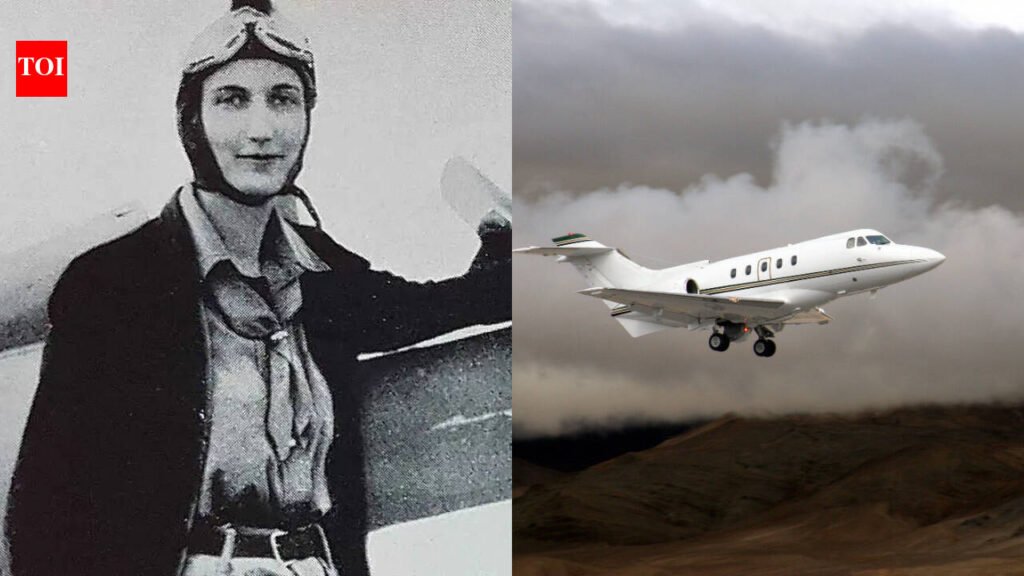
On the evening of 4 September 1936 a turquoise-and-silver monoplane left an airfield in Oxfordshire and set out for the Atlantic. Darkness lay ahead. So did thousands of miles of open water, brutal headwinds and the chance that the aircraft would never return. Beryl Markham, 33, was at the controls alone in the cockpit, trying for a trip no woman had yet achieved. She was going to New York. Her course was westward across an ocean with prevailing winds that made the crossing particularly unforgiving. Markham fought the elements for about 20 hours. Then, off the coast of Canada, ice clogged the airplane’s fuel-tank vents, starving the engine, a plane crashed in a peat bog on Cape Breton Island, states Afterburner magazine report. Markham lived, though she was cut across the forehead. She, too, had made history in aviation.
Wild raised in Kenya
Beryl Markham was born Beryl Clutterbuck in England in 1902, but her landscape was Africa. At four she moved with her father to colonial Kenya, where he set up a horse-racing farm near the Great Rift Valley. Markham was raised far from the conventions of Edwardian England. She learned to navigate the African wilderness, fell in love with horses at an early age, and hunted with local kids. By age 17 she was training thoroughbreds for a living. But eventually horses would have to share her attention with something even more thrilling: flying.
Flying in the sky freedom
Markham had learned to fly under British pilot Tom Campbell Black. She eventually became a bush pilot flying over the vast and often unforgiving expanses of East Africa. Practical as well as adventurous was her work. She flew over the bush looking for elephants and other game, spotting animals from the air and relaying their location on to safaris below. Those flights were an unusual schooling for her. The African wilderness taught Markham to operate without roads, landmarks or immediate help. She learned to trust her own judgment, to keep her cool in the air, all by herself. That experience would prove invaluable as she looked out over the Atlantic Ocean.
West in to the nite
The east-west crossing of the Atlantic was particularly daunting. Westbound pilots had to fight the prevailing westerlies for most of the way. Markham chose a Percival Vega Gull, which she named The Messenger, and was to fly from England to Floyd Bennett Field in New York. She left on September 4 into the nite and disappeared. She flew for hours over the ocean. The aircraft fought against fatigue, cold and the relentless Atlantic wind as she carried on through darkness and into the next day.They finally made it to the North American coast after about 20 hours. And then the disaster came, where ice had formed around the vents to the aircraft’s fuel tanks, blocking the engine from getting the fuel it needed. The engine started to die. The destination was so close that Markham had no choice but to put the plane down.
A cape breton crash
There was a Vega Gull found in a peat bog in Baleine Cove, Cape Breton Island, Nova Scotia. The landing was rough but Markham emerged from the wreckage with a cut on her forehead, and alive. Her intended destination was New York, but she had instead landed in Canada. But the last leg was a failure, and that could not wipe out what she had done. Markham was the first woman to fly solo across the Atlantic from east to west and the first person to fly nonstop from England to North America.
The Book Hemingway could not escape
Several years later came Markham’s greatest literary venture. In 1942 West with the Nite was published, a memoir that blended memories of Africa, horses, aviation and the landscapes that had defined her life. Its prose was strikingly elegant, vivid, controlled, and atmospheric. But the book attracted little commercial attention at first. It soon went out of print and for decades Markham’s literary achievement was forgotten. And then, in 1982, the book found an unlikely champion. A California restaurateur looking through a collection of Ernest Hemingway’s letters found a passage where the famous novelist praised Markham’s writing. Intrigued, he tracked down a copy of West With The Nite and was eager for it to be republished and the gamble paid off. The book was reprinted and became a bestseller and Markham was awarded the recognition she had not received in the decades after her historic flight.
An above the record life
Much of her life still took up with horses, and she remained in Kenya. She trained racehorses well into her 80s and stayed connected to the world she had known since childhood. But by the time West with the Nite was rediscovered, Markham was an old woman living in reduced circumstances near the Nairobi racetrack. The royalties from the book’s renewed success gave her financial security at last and allowed her to enjoy her final years in comfort. She died in 1986 in Nairobi.