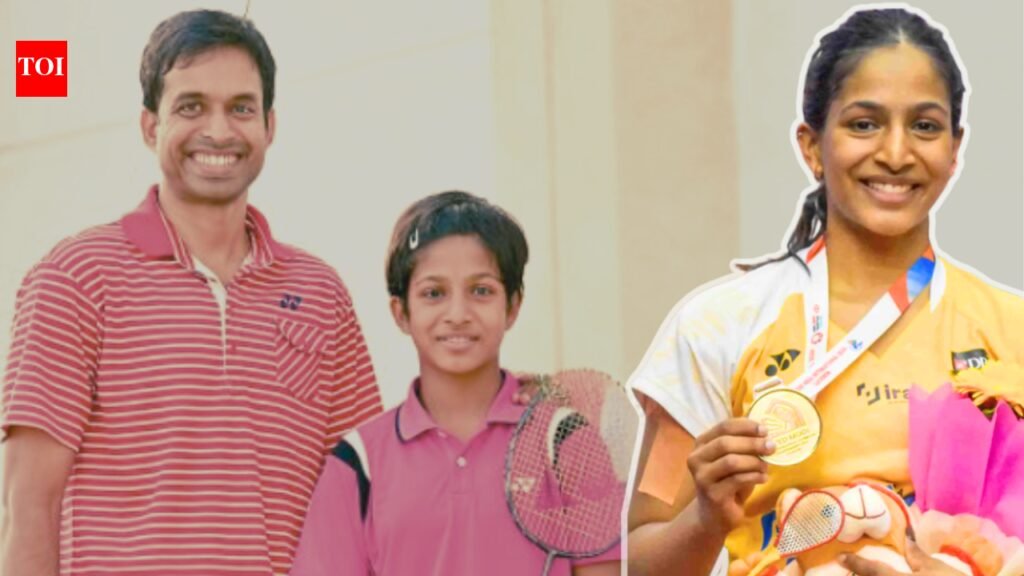
Indian badminton player Gayatri Gopichand has added another major milestone to her career. On August 18, 2026, Gayatri was named a recipient of the prestigious Arjuna Award, alongside her women’s doubles partner Treesa Jolly. While she is currently playing at the BWF World Championships 2026 and in contention for a medal, the achievement can further become more special. For a player who grew up with one of Indian badminton’s biggest names as her father, the achievement comes with an interesting story. It is not just about success, but about how she was raised.Being Pullela Gopichand‘s daughter could easily have meant living under constant expectations. After all, her father is a former All England champion and one of India’s most respected badminton coaches. But according to Gayatri, he never made his achievements her burden.
28 Jul 2026 | 16:22
How do you teach children about money and financial responsibility?
In an interview with RevSportz, Gayatri was asked what it was like growing up with the Gopichand surname and whether she felt the pressure that came with it. “He’s never put any sort of pressure on me. Like you said, he always tells me, ‘If you retire today, I’m really happy with what you’ve achieved,’” she said.She recalled a moment after her winning the title at the Syed Modi International tournament that perhaps explains her father’s approach better than any advice could. “Even today when I met him, he hugged me and he said, ‘I’m hugging you because I’ve missed you, it’s not because you won.’ So yeah, there’s no pressure as such.”For Gayatri, that distinction appears to have mattered. Her father’s priority was not simply producing another champion. It was making sure his daughter remained happy while playing the sport. “He always wanted me to be happy and that’s what he’s always told me, just enjoy. So I’ve always enjoyed playing badminton,” she said.
Growing up with a badminton legend as a father
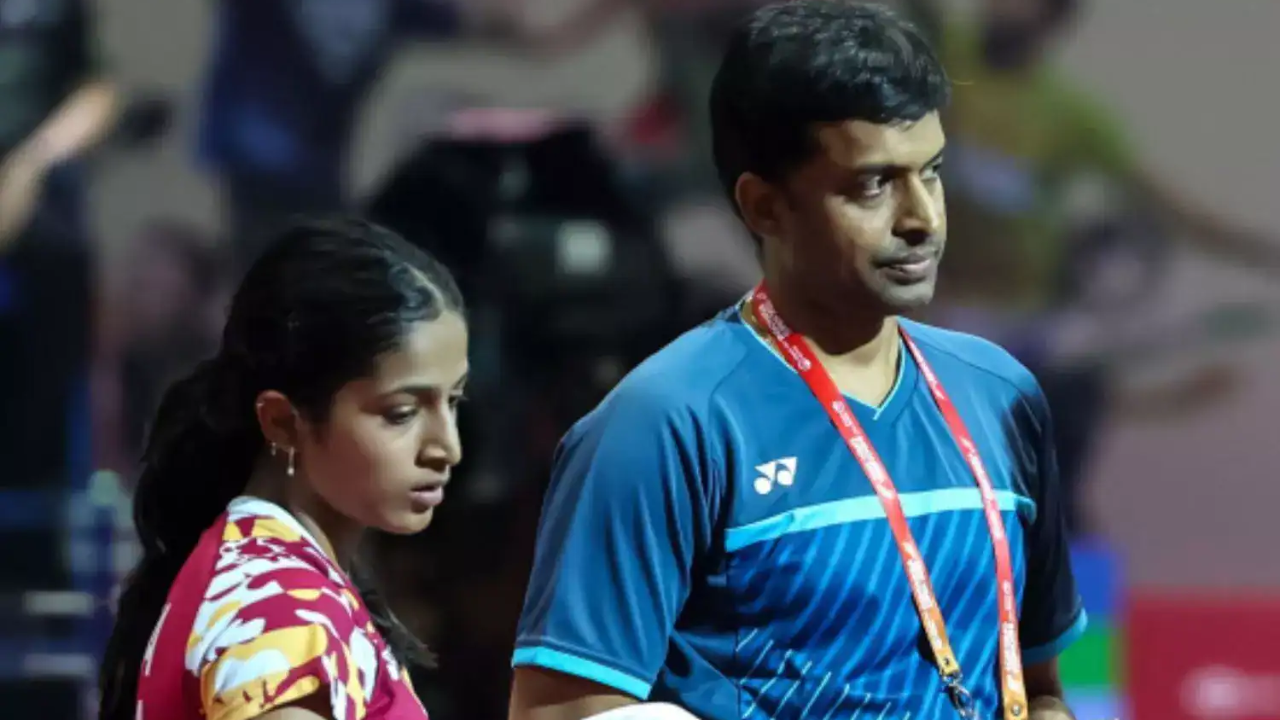
Gayatri with her father Pullela Gopichand.
Gayatri started playing badminton when she was just five. But as a child, she did not fully understand the significance of her father’s achievements. Pullela Gopichand had won the All England Championships in 2001, two years before Gayatri was born. Her mother, PVV Lakshmi, was also a distinguished badminton player and an eight-time national singles champion.Badminton, therefore, was very much part of the family. But having two accomplished parents also meant that Gayatri was growing up in an environment where people knew her surname before they knew her game. That pressure was visible to her father too.When Gopichand was asked about the challenges of raising a star kid, he acknowledged that Gayatri was being watched more closely than other young players at his academy.“She is generally pretty shy and she kind of works on her own in some sense,” he said. He also pointed out that she had won several tournaments at the age-group level, while also going through difficult losses.For him, however, the bigger challenge was the attention surrounding her. “She’s in the academy, everybody is watching her. I’m watching. It’s always eyes on and the coaches are kind of looking at her a little differently,” he said.Gopichand admitted that he may never completely understand what his daughter experienced. “I don’t think I will ever be able to do justice to what she has gone through,” he said, while adding that the family tried to protect her and repeatedly told her that the attention did not matter.But he also understood that telling a child not to feel pressure does not necessarily make the pressure disappear. “In her mind, probably it does,” he said.
The father-daughter relationship was not just about coaching
One of the more revealing parts of Gopichand’s account is that his relationship with Gayatri did not revolve entirely around technical badminton advice.He said he had earned the trust of several players he coached, including the likes of Prannoy and Satwik, who followed his advice even when it did not immediately seem logical. With Gayatri, that trust existed too. “I’ve been very fortunate. Whether it’s Prannoy or Satwik or anyone, most of the players have had blind faith in me and it’s the same with Gayatri as well,” he said.But there was an important difference. Gayatri could question him. “She can express it back,” he said, explaining that because he spent more time with her, she would discuss things with him and respond to his advice.
From being Gopichand’s daughter to creating her own identity
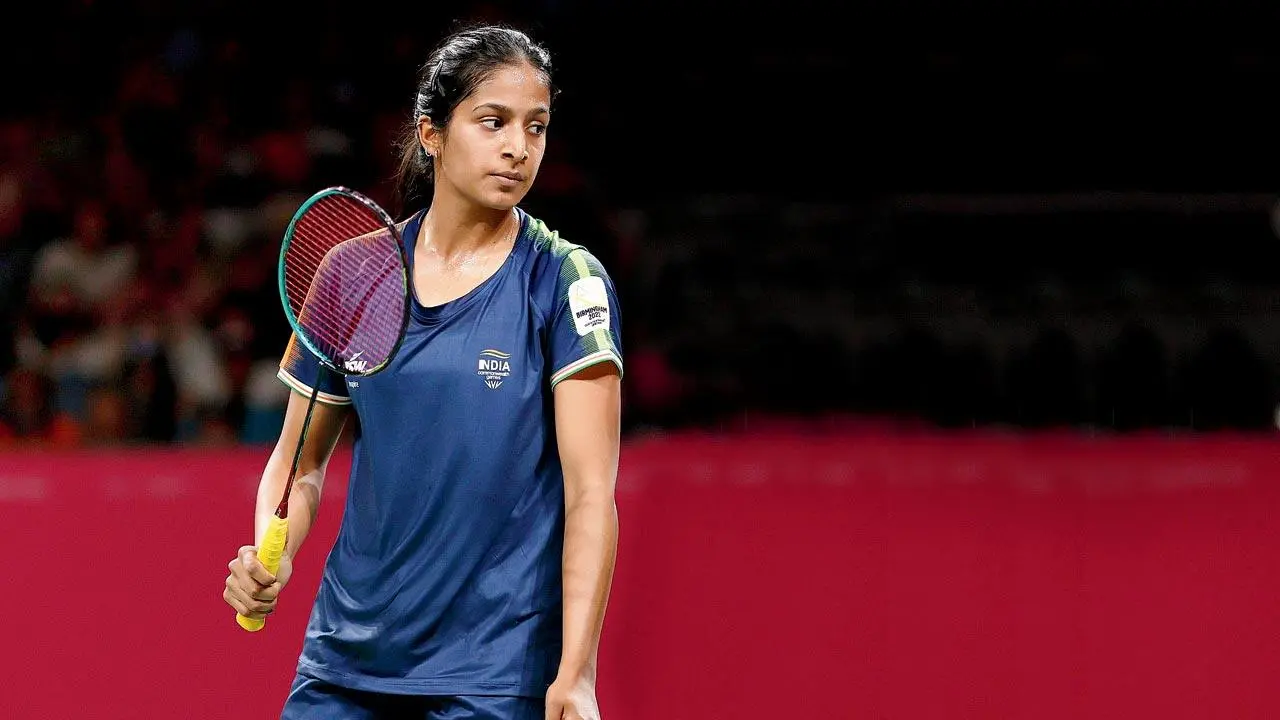
Gayatri is currently playing at the BWF World Championships 2026
Gayatri’s achievements have gradually given her an identity of her own. Together with Treesa Jolly, she became the first Indian women’s doubles pair to reach the semifinals of the All England Championships, 21 years after her father’s famous singles triumph at the same tournament. In 2023, after a victory at a match the Badminton Asia Championships, Gayatri spoke openly about what her father meant to her.“I also wanted to achieve something in this sport. My father is definitely my idol. I look up to him and I just want to make him proud,” she told the Khaleej Times.
Don’t make your child’s achievement the price of your approval
For parents of young athletes, academics, dancers, musicians or children pursuing any competitive field, Gopichand’s approach offers a useful distinction. It is to support the child’s ambition without making your love conditional on the outcome.A child who hears only “Did you win?”, “What was your rank?” or “Why didn’t you perform better?” can slowly start associating the activity with parental approval. A healthier question can be “Did you enjoy it?”That does not mean parents should stop expecting discipline or hard work. Gayatri’s journey clearly involved both. It means separating effort and learning from the final result.Parents can also try three practical things:
- Let home be the place where the child is not being evaluated.
- Praise specific effort rather than only results.
- Allow the child to disagree.
Most importantly, children need to know that their place in the family does not change after a bad performance.