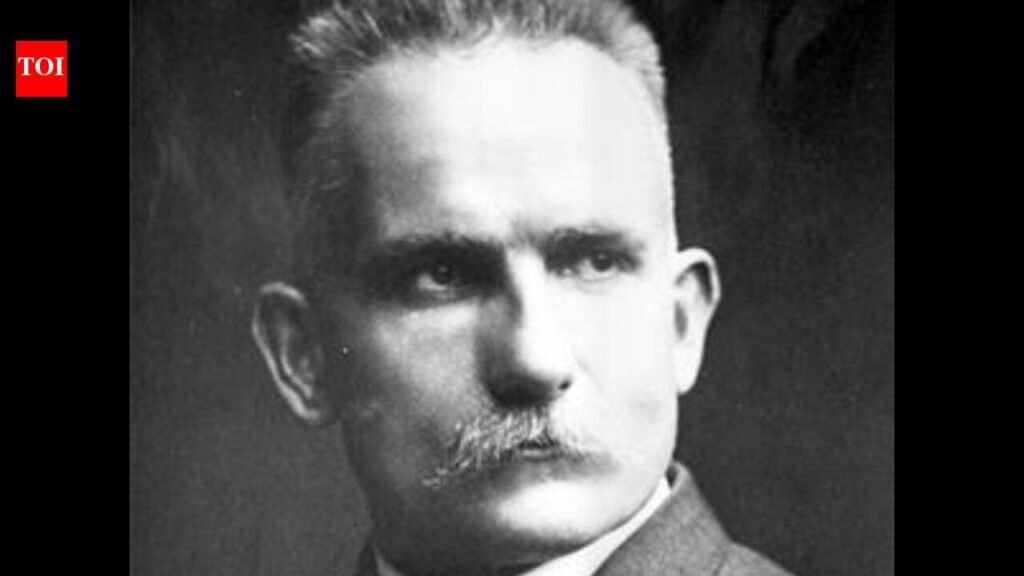
Robert Moran, former mayor of Seattle and shipbuilding magnate was told in 1905, that he only had a few months to live. Resolved to spend his last days peacefully, he sold his business interests for $3.5 million ($126 million in 2025) and moved to Orcas Island where he eventually acquired about 7,000 acres of forest. Eventually, he gave away part of the land as a park and outlived the predictions, as per a report by HistoryLink.org.
Life in the beginning
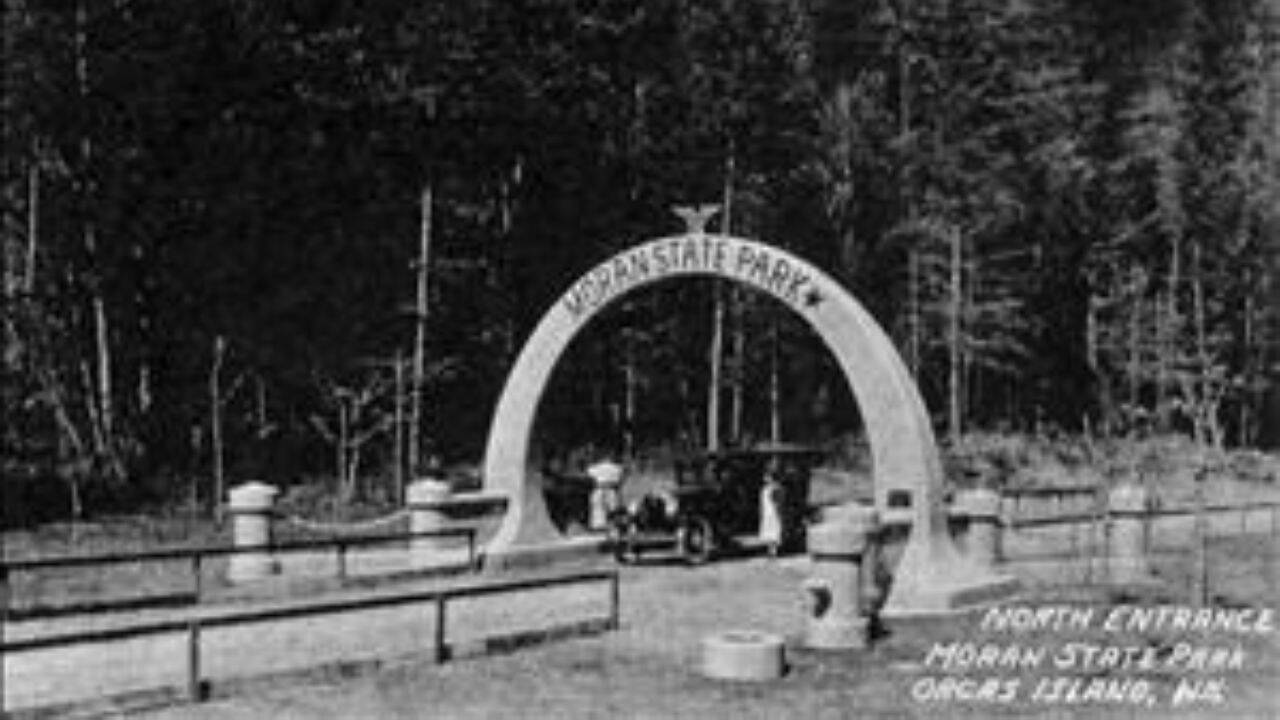
Around 1910, Moran offered to donate a vast tract of land on the island to the State of Washington.
Moran arrived in Seattle in 1875 with only a dime in his pocket. He began his new life by negotiating credit for breakfast. Slowly but strongly, he worked his way up and learned from mentors in the shipping business. In 1879, he was hired as chief engineer on the Cassiar for the steamer’s Alaska run, where he stayed for three years. During this time, Moran became friends with naturalist John Muir, meeting him when he was a guest onboard the ship for a journey to study Southeast Alaska and Glacier Bay. Muir’s approach to nature and spirituality fascinated Moran, and this contact with Muir is credited as the beginning of his interest in land preservation. Eventually, Moran went on to found and manage a major shipbuilding firm and was also elected as the Mayor of Seattle in 1888.In 1906, he was diagnosed with cardiac disease, which he blamed on the stresses of his lifestyle. He was told by medical experts that he only had a few months to live and in order to regain his health, he retired, sold his company and moved to Orcas Island. With considerable wealth at his disposal, he began building an estate and acquiring land. Beginning with a sawmill on the shore of East Sound at the outlet of Cascade Lake, he eventually acquired property from the shore nearly to the summit of Mount Constitution. His purchases included three out of the four original homesteads, the Northern Pacific Land Grant lands and many of the holdings that began as Cash Entry patents. 560 acres of Cash Entry patents had been obtained by his relatives, including his brother John, sister Annie and three nieces. In total, he acquired about 7,000 acres of forest, lakes and saltwater shoreline.
Donating the land
Around 1910, Moran offered to donate a vast tract of land on the island to the State of Washington. It was thought that the state’s first state park would soon be established on Moran’s property. Having frustrated the predictions of his demise, he invited University of Washington history professor and The Mountaineers member Edmond Meany (1862-1935) to visit him at Rosario, the maritime-inspired Arts and Crafts mansion he built on the shores of East Sound. Firmly wedded to the notion that nature was a place for physical and spiritual rejuvenation, Moran told Meany he wanted to donate his land as a park for the people of Washington.In autumn 1912, Meany and Moran convinced a delegation of state legislators and university administrators to come to Orcas and assess the park potential of Moran’s holdings. Although the group was impressed, state Sen. Ralph Nichols told Moran there was no obvious agency in state government to accept, much less manage such a park. Moran kept trying, inviting the editor of the Seattle Post-Intelligencer to visit Orcas and lobbying the district’s state representative, V. J. Capron, to introduce legislation to create a state agency for parks.In 1913, Capron sponsored a bill, successfully creating a State Board of Park Commissioners, composed of the governor, secretary of state, state land commissioner, state auditor, state treasurer, and one other person appointed by the governor. Now Washington had a State Park Board, but the group only had authority to accept donations of land for parks and to recommend the purchase or condemnation of land for parks by the state legislature. It was enough to get started, though, and in 1915 the State Park Board accepted its first two donations of small properties.Moran’s bid was ensnared in red tape while two smaller properties – one in Whatcom County, one in Lewis County – were donated to the state and approved as state parks in 1915. The first was Larrabee State Park, created after Frances Larrabee donated 20 acres of land in the Chuckanut Mountains near Bellingham. The second was the Jackson House near Chehalis; built in 1850, the building had served as a post office, general store, tavern, hotel, and courthouse. In 1852, settlers met there and voted to petition Congress to create Washington Territory.
Moran State Park
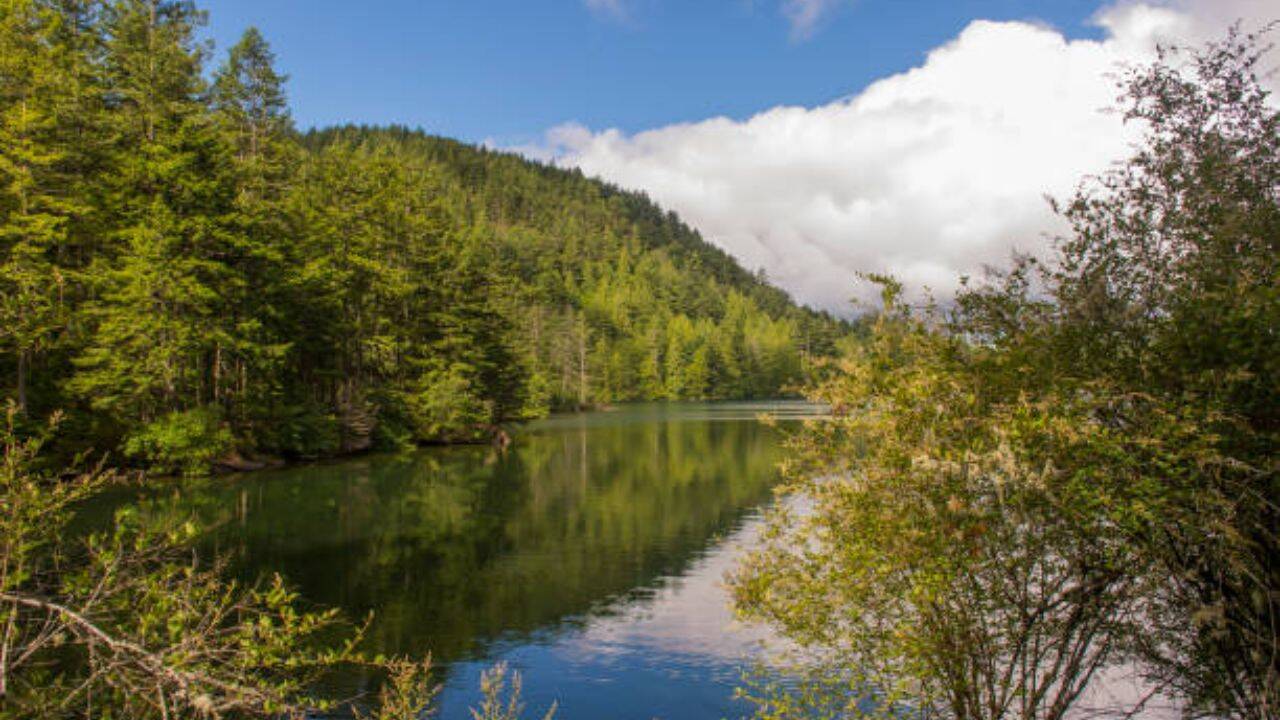
On June 18, 2021, Washington State Parks celebrated Moran State Park’s 100th birthday
It took another six years before the state would accept Moran’s donation, and only then after the legislature expanded the park board’s powers. Renamed the State Parks Committee and given a $50,000 appropriation, it could now acquire new parks, provide camping, and contract with concessioners to raise funds. The system quickly expanded from the initial 20-odd acres to more than 5,500 acres by September 1922, including nearly 2,700 on Orcas Island donated by Robert Moran and named Moran State Park.Moran donated additional parcels in 1925 and 1926, and the State Parks Committee purchased or accepted donations from others, including 80 acres at the summit of Mount Constitution in 1927. An inholding, private land surrounded by park lands, of 320 acres including much of the Mount Constitution Road was acquired by court-approved condemnation in 1932, allowing work to proceed on $40,000 worth of “engineering, construction, betterment” of the road approved by the state legislature in 1931.Robert Moran stayed involved in the park for the rest of his life and commented in his autobiography that “after the State’s acceptance of the gift, I built miles of roads and trails, including bridges, arches, and other improvements at my own cost. This State playground is, in my judgment, the State’s finest nature spot, to be enjoyed by posterity to the end of time.”On June 18, 2021, Washington State Parks celebrated Moran State Park’s 100th birthday with the opening of the Summit Visitor Centre on top of Mount Constitution.